 MineArchive
Baggeridge Colliery
| Location | Gospel End, near Sedgley, West Midlands — 52.5353, -2.1525 (exact) |
|---|---|
| Commodity | Coal |
| Type | Coal |
| Worked | From 1899 (sinking)–2 March 1968 |
| Maximum depth | Both shafts around 1,700 ft deep |
| Operators | Earls of Dudley (1899–1947) |
Overview
The last deep coal mine ever sunk in the Black Country, and the one that closed the region's three-century mining history for good — built by the Earls of Dudley on ground that everyone else thought lay just outside the coalfield.
History
The Earls of Dudley had profited from Black Country mineral extraction for centuries by the time their mining department decided, in the 1890s, to gamble on ground just beyond the South Staffordshire Coalfield's Western Boundary Fault — ground an 1869 geological survey had speculated might still hold workable coal at greater depth than any existing Black Country pit. A trial borehole sunk by Vivian's Boring Company in 1896 confirmed it, and the first shaft at Baggeridge, near Gospel End on the western edge of Sedgley, began sinking in February 1899, reaching about 1,700 feet with a diameter of 14 feet. A second shaft of similar depth but 17 feet across followed from 1910. Both were complete and production had begun by 1912, with a railway link — the Baggeridge branch of the Pensnett Railway — completed in 1907 ahead of full output. Baggeridge kept working long after most of the district's older, shallower pits had closed, finally shutting on 2 March 1968 — the last deep coal mine to close anywhere in the Black Country, and with it the end of roughly three centuries of coal mining in the region.
Geology
Baggeridge proved that workable coal measures of the South Staffordshire Coalfield continued beyond the Western Boundary Fault, the geological structure that had been assumed to mark the coalfield's edge — reaching seams at depths well beyond anything the older, shallower Black Country collieries had needed to work.
Workings
Two shafts, both around 1,700 feet deep, served the colliery: the first sunk from 1899 at 14 feet diameter, the second from 1910 at 17 feet. The Pensnett Railway's Baggeridge branch, completed in 1907, carried the colliery's coal to the wider rail network.
Closure
Baggeridge closed on 2 March 1968, the last deep mine working in the Black Country and the effective end of the region's centuries-old coal industry.
What remains
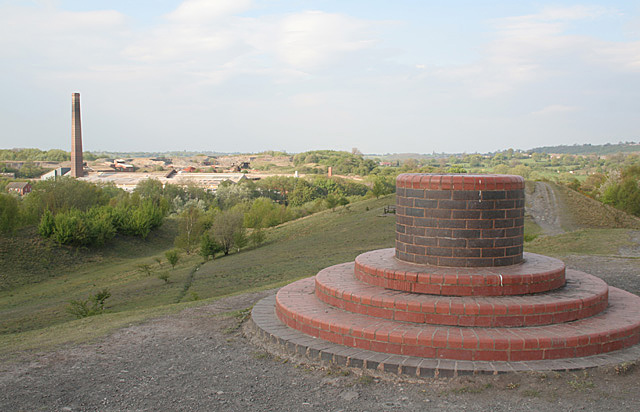
The former colliery site was transformed into Baggeridge Country Park, opened by Princess Anne on 17 June 1983, with landscaped grounds, a lake and woodland walks; a toposcope on high ground within the park gives views back over the former colliery and the brickworks that stood alongside it. A miners' welfare building from the colliery era also survives nearby.
Baggeridge Country Park's lake, woodland and a toposcope on the site's high ground; a surviving miners' welfare building.
Redevelopment
Baggeridge Country Park, opened 1983, now occupies the former colliery site.
Nearby mines
- Foxyards Colliery — 2.4 miles (3.9 km) E
- Wren's Nest Limestone Mines — 2.6 miles (4.1 km) E
- Wednesbury Oak Colliery — 3.6 miles (5.8 km) E
- Brettell Lane Colliery — 4.3 miles (6.9 km) S
- Gospel Oak Colliery — 4.4 miles (7.0 km) E
Straight-line distance, within 9 miles (15 km). Show on the map.
Recorded claims
Individual factual claims, each attached to the source(s) that support it below. Where sources disagree, both are kept.
- A 1896 trial borehole confirmed workable coal beyond the Western Boundary Fault; the first shaft at Baggeridge was sunk from February 1899 to about 1,700 ft, a second from 1910, and production began by 1912. 1
- The Baggeridge branch of the Pensnett Railway, completed in 1907, connected the colliery to the rail network. 1
- Baggeridge closed on 2 March 1968, the last deep coal mine to close in the Black Country. 1
- The site became Baggeridge Country Park, opened by Princess Anne on 17 June 1983. 1
Photographs & further reading
A walking-trail guide to the site's surviving features.
View sourceSources
- (primary) Baggeridge Colliery — Wikipedia
- (secondary) The South Staffordshire Coalfield — Black Country History
Record created: 24 August 2026 · Last researched: 24 August 2026