 MineArchive
Brettell Lane Colliery
| Location | Brettell Lane, Brierley Hill, near Stourbridge, West Midlands — 52.4743, -2.1378 (approximate) |
|---|---|
| Commodities | Coal, Fireclay |
| Type | Coal |
| Worked | by 1875 |
| Maximum depth | Unknown. |
| Operators | Harris and Pearson (1880–?) |
Overview
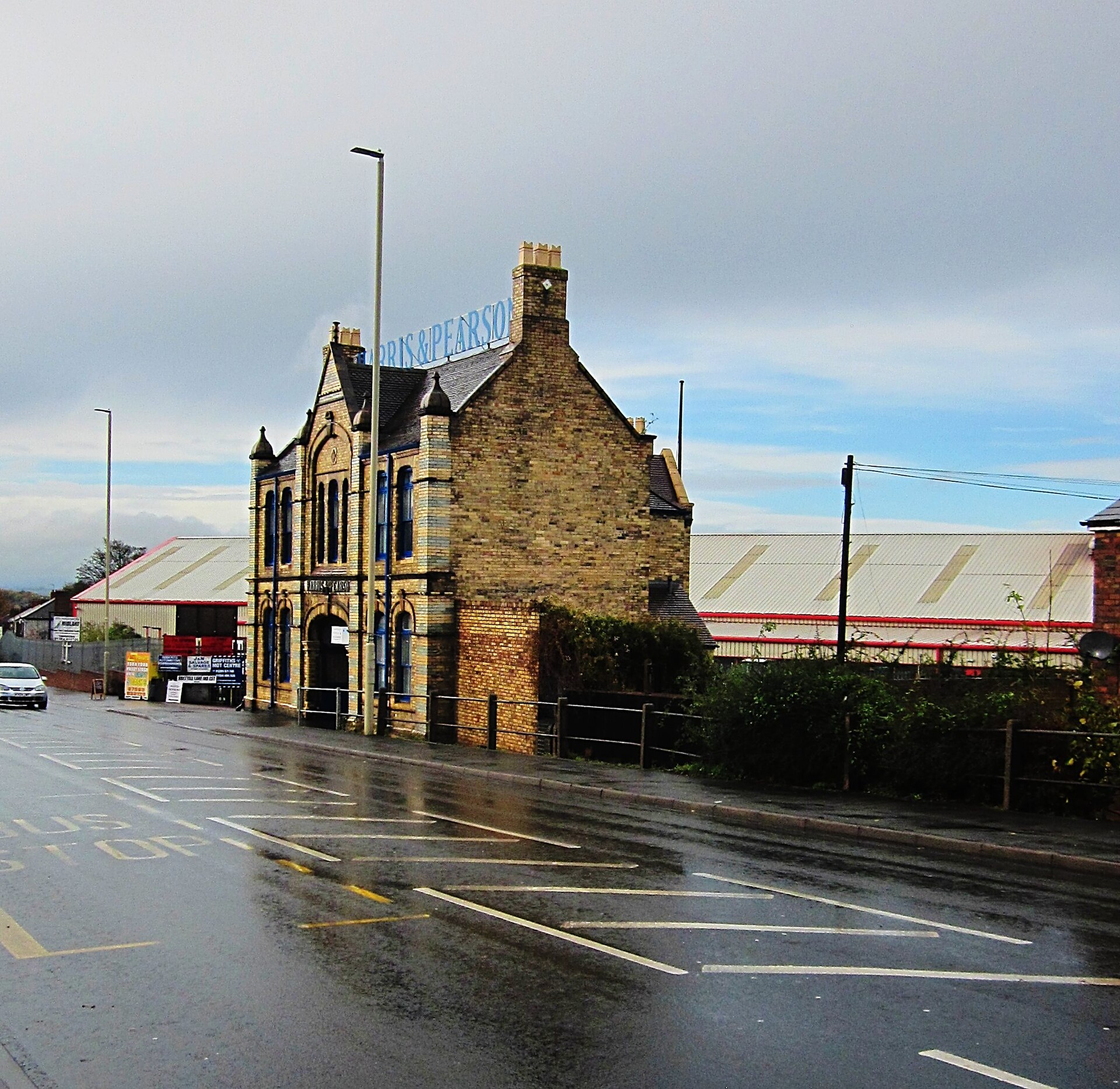
A coal and fireclay pit on Brettell Lane between Brierley Hill and Stourbridge, returned in the official list of collieries at work in 1880 to Harris and Pearson — the firebrick makers whose works stood on the same road. In the South Staffordshire field the clay was found between the coal seams and both were commonly drawn from the same shaft, and Brettell Lane became a centre of the refractories trade on the strength of its fireclay: firebricks, gas retorts and glass-house pots. The company’s 1888 office and weigh house survives, listed grade II, with its weighbridge still inside the carriageway.
History
Brettell Lane sat on high-quality deposits of fireclay and became a centre of the manufacture and trade of firebricks — refractories, the shaped clay articles that line furnaces and stand repeated heating without cracking. Clay was found between the coal seams and both clay and coal were frequently worked from the same shaft, so the district’s brickworks and its pits were the same business. The scale is easy to underrate: over thirty brickyards in the area were making firebricks, and 258,792 tons of fireclay were extracted in 1874 alone. Harris and Pearson were established about 1850 by Peter Harris and George Pearson and began their firebrick works in 1852, the same year Brettell Lane railway station opened on the line between Worcester and Wolverhampton. In 1866 the partners bought the Brettell Lane House estate — seventeen acres and a firebrick works belonging to John Wheeley — and, on Wheeley’s failure, the Hawbush estate. New works covering nine acres were erected in 1870, and other mines were bought and leased until the firm’s mining rights extended over a hundred acres. The fine fireclay under Hawbush was worked and the pits developed; the Nagersfield pits were reopened, with a plant put down for working the minerals and converting the clay into bricks and a railway built from those pits to the Brettell Lane works, worked by electric traction. It is against that background that the official return of collieries at work in 1880 lists a Brettell Lane colliery at Stourbridge under Harris and Pearson. The firm’s offices and weigh house were built in 1888 in yellow brick with blue brick bands and terracotta dressings, the name HARRIS and PEARSON set in terracotta above an elliptically arched carriageway with a twenty-ton Denison weighbridge inside it. The works went on making firebricks, gas retorts and glass-house pots; production on the site continued into the 1980s.
Geology
The South Staffordshire coalfield, whose measures carry beds of fireclay between the coal seams — the reason a Black Country colliery and a firebrick works were so often the same concern. The fireclay under the Hawbush and Nagersfield estates was good enough to build a refractories trade on, and it was the clay rather than the coal that made Brettell Lane nationally important.
Workings
Shafts drawing both coal and fireclay, in the ordinary manner of the district. Harris and Pearson’s mining rights ran over about a hundred acres, taking in the pits under the Hawbush estate and the reopened Nagersfield pits, which were connected to the Brettell Lane works by the firm’s own railway, worked by electric traction. A weighbridge in the carriageway of the 1888 office block weighed what left the site.
Closure
The closure date is not known for the colliery itself. The firebrick works it supplied continued in production on Brettell Lane until the 1980s.
What remains
The pits are gone and the works site has been redeveloped, but the Harris and Pearson office and weigh house of 1888 stands on the north-west side of Brettell Lane, listed grade II since 2 September 1996. It fell into disrepair, was transferred to the West Midlands Historic Buildings Trust in 2003 and restored in 2004–5 at a cost of about £900,000; it is now in use as offices. The weighbridge inside the carriageway survives, inscribed "To weigh 20 tons. S. Denison and Son Ltd. Leeds".
The listed Harris and Pearson office and weigh house of 1888, with its weighbridge still in the carriageway.
Redevelopment
The office building was restored by the West Midlands Historic Buildings Trust in 2004–5 and bought in May 2009 by an environmental consultancy for use as its offices.
Nearby mines
- Saltwells Wood Coal Workings — 1.8 miles (2.8 km) E
- Homer Hill Colliery — 2.0 miles (3.3 km) E
- Beech Tree Colliery — 2.4 miles (3.9 km) SE
- Windmill End Colliery — 3.2 miles (5.1 km) NE
- New Hawne Colliery — 3.3 miles (5.2 km) E
Straight-line distance, within 9 miles (15 km). Show on the map.
What's uncertain
Points where sources disagree or the record could not be settled; both accounts are kept. All open questions in the archive.
- The BGS mine-plans catalogue holds a Mining Remediation Authority abandonment plan titled 'Brettell Lane' (catalogue WM545, Fireclay Thick Brooch Ironstone Ten Feet, dated 1912); the catalogue gives no location and the plan's details do not clearly tie it to this working, so it may belong to another of the same name. (uncertain) 4
Recorded claims
Individual factual claims, each attached to the source(s) that support it below. Where sources disagree, both are kept.
- A Brettell Lane colliery at Stourbridge was returned to Harris and Pearson in the official list of collieries at work in 1880. 1
- Clay was found between the coal seams in the district and both clay and coal were frequently worked from the same shaft; Brettell Lane became a centre of firebrick manufacture on the strength of its fireclay. 2
- Harris and Pearson bought the Brettell Lane House estate and firebrick works from John Wheeley in 1866 and then the Hawbush estate, erected new works of nine acres in 1870, and bought and leased other mines until their mining rights extended over about a hundred acres; the Nagersfield pits were reopened and connected to the works by a railway worked by electric traction. 2
- Over thirty brickyards in the area were making firebricks, and 258,792 tons of fireclay were extracted in 1874 alone. 2
- The offices and weigh house to the brickworks were built in 1888 and listed grade II on 2 September 1996; inside the carriageway is an iron weighbridge inscribed "To weigh 20 tons. S. Denison and Son Ltd. Leeds", and the list entry notes that Harris and Pearson made firebricks, gas retorts and glass-house pots. 3
- The BGS mine-plans catalogue holds a Mining Remediation Authority abandonment plan titled 'Brettell Lane' (catalogue WM545, Fireclay Thick Brooch Ironstone Ten Feet, dated 1912); the catalogue gives no location and the plan's details do not clearly tie it to this working, so it may belong to another of the same name. (uncertain) 4
Photographs & further reading
The statutory description of the firm’s 1888 offices and weigh house, down to the weighbridge in the carriageway and what the works made.
View sourceA local history of the road’s firebrick trade — the estates and pits the firms bought, the tonnages of fireclay raised, and how coal and clay came up the same shafts.
View sourceSources
- (secondary) List of coal mines UK 1880 — Coalmining History Resource Centre
- (secondary) Brettell Lane: another brick in the wall — Storylines
- (primary) Harris and Pearson Entrance Building, Brettell Lane — list entry 1268310 — Historic England, via British Listed Buildings
- (primary) BGS / Mining Remediation Authority mine plans: BRETTELL LANE — British Geological Survey / Mining Remediation Authority
Record created: 6 September 2026 · Last researched: 6 September 2026