 MineArchive
Bathville Colliery
| Also known as | Bathville Nos. 1, 3 and 4 Pits |
|---|---|
| Location | Bathville, Armadale, near Bathgate, West Lothian — 55.8990, -3.6900 (approximate) |
| Commodities | Coal, Fireclay |
| Type | Coal |
| Worked | By 1859–after 1902 |
| Maximum depth | Unknown. |
| Operators | John Watson & Co. (1859–1874), James Wood & Co. (1874–1902) |
Overview
A West Lothian colliery at Bathville, on the edge of Armadale near Bathgate, with a brick and fireclay works beside it from the beginning. John Watson of Glasgow bought the site in June 1859 for £10,000 and built the brickworks shortly afterwards to use the fireclay being mined with the coal; when his firm ran into trouble in 1874 the works were sold to another coalmaster, James Wood. The official list of collieries at work in 1880 returns "Bathville, Bathgate, James Woods". Wood’s concern worked Bathville Nos. 1, 3 and 4 pits among a long list of West Lothian workings, was sequestrated in 1895, recovered, and was absorbed into United Collieries Ltd in the amalgamation of 1902. The brickworks outlived the coal by decades.
History
John Watson of Glasgow bought the Bathville site in June 1859 for £10,000 and shortly afterwards built a brickworks to use the fireclay that was being mined with the coal. Watson & Co. went on to become one of the biggest coalmasters in Lanarkshire, but ran into financial trouble in 1874 and the Bathville works were sold to James Wood, another coalmaster. It is under his name that the official list of collieries at work returns the pit in 1880 — "Bathville, Bathgate, James Woods" — alongside Barbauchlaw, also his, in the same district.
James Wood & Co. of 40 St Enoch Square, Glasgow, were coalmasters with collieries across the Armadale area and at Shields, and their working list runs to Polkemmet, Hartrigg, Northrigg, Colinshiel, Barbauchlaw, Hopetoun, Trees and Bathville Nos. 1, 3 and 4. James and William Wood formed James Wood Ltd in 1893 to take over their interests in the Drumpellier, Westrigg, Neilston and Meiklehill collieries together with the Bathville brickworks. Financial trouble in 1895 saw both brothers’ estates sequestrated; James Wood recovered, and in 1897 joined Daniel Robertson, a firebrick maker at Bathgate, to incorporate Robertson, Love & Co. Ltd with a capital of £6,000.
United Collieries Ltd was formed in 1898 to amalgamate nine collieries, and a further twenty-three were added in 1902, among them James Wood Ltd with the Robertson, Love brickworks subsidiary; the group’s capital was £2 million. A sales catalogue of about 1900 shows the Bathville Brick and Fireclay Works as two substantial groups of buildings served by four railway sidings, with six large and four smaller chimneys drawing the gases from several beehive kilns and three continuous Hoffmann kilns, and a range of firebricks, sewage pipes and decorated chimney pots. Robertson, Love & Co. were liquidated in 1916 but the works carried on making firebricks within United Collieries.
Geology
The West Lothian coalfield around Bathgate and Armadale, where the Coal Measures carry fireclay seatearths good enough to have supported a brick and firebrick industry alongside the coal for more than a century. The same district’s deeper minerals drew repeated speculation: in the 1870s the Boghead Gas Coal Company took a trial lease of 500 to 600 acres nearby and bored to 240 fathoms with a diamond drill hoping for a cannel as rich as the Lesmahagow coal, and found nothing — a failure that did not deter the Woods, already owners of the Bathville collieries, from taking a lease of about 600 acres of the Earl of Hopetoun’s adjoining estate and boring it themselves.
Geological setting: Sedimentary Beds and Seams (well documented example)
Workings
A group of numbered pits — Bathville Nos. 1, 3 and 4 are recorded — worked with a brick and fireclay works on the same site from 1859, the two products coming up together. The works had four railway sidings by about 1900 and fired its bricks in several beehive kilns and three continuous Hoffmann kilns.
Closure
No closing date for the Bathville pits themselves has been established. The colliery passed into United Collieries Ltd with the 1902 amalgamation, and the brick and fireclay works on the same site long outlasted it, carrying on within United Collieries after Robertson, Love & Co. were liquidated in 1916.
What remains
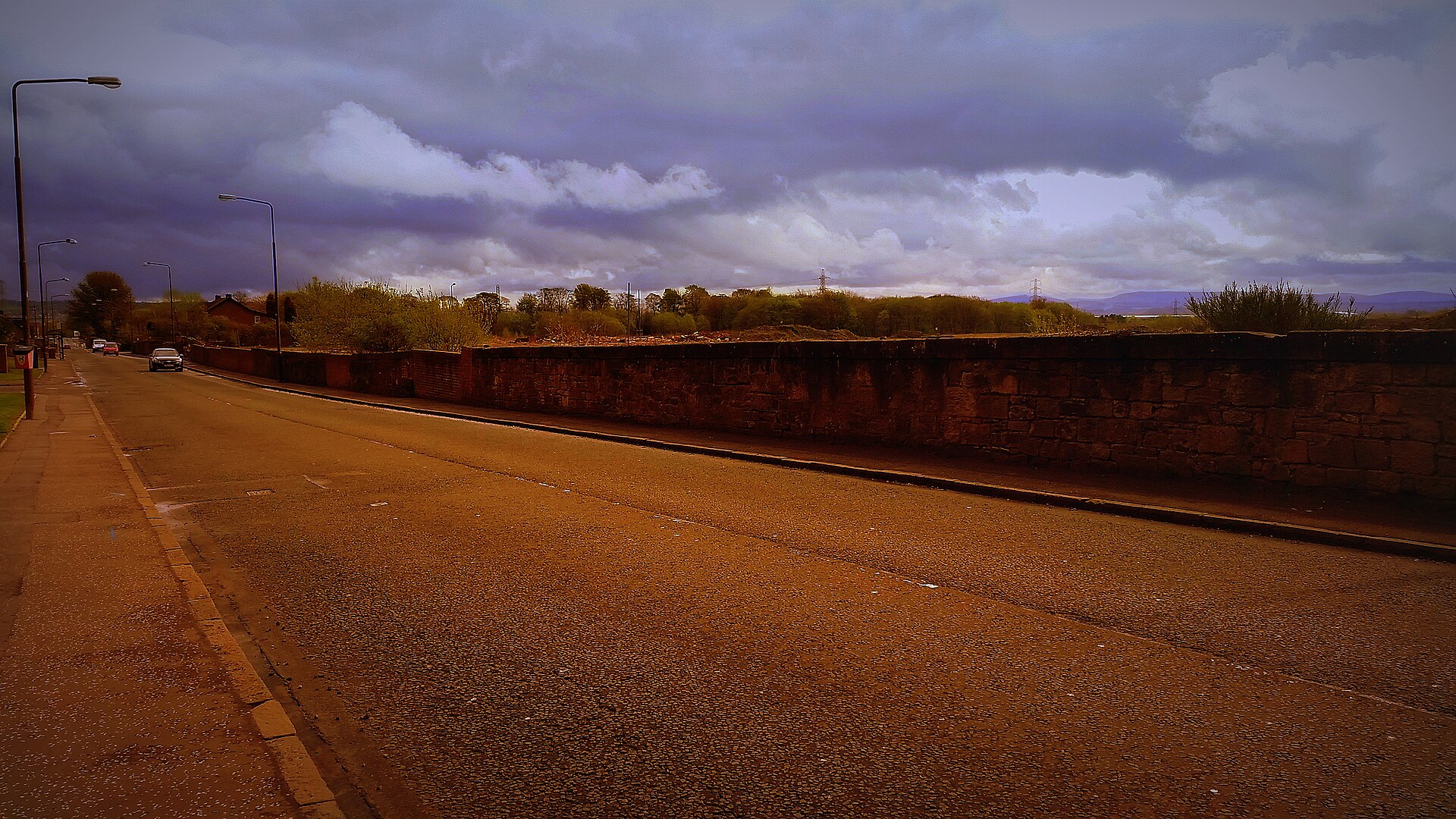
The site is cleared. The brickworks ground at Bathville was photographed empty in 2015, with the works wall still standing along its boundary; Bathville itself is now a housing estate on the southern edge of Armadale, and the mineral railway that served the site is part of the Glasgow-to-Edinburgh cycle route.
The boundary wall of the brickworks and the cleared works site, and the embankment of the former mineral railway, now cycle route 75. Bathville Cottages survive as housing.
Nearby mines
- Barbauchlaw Colliery — 0.1 miles (0.2 km) NW
- Boghead Colliery — 1.1 miles (1.8 km) SE
- Northrigg Colliery — 1.2 miles (1.9 km) SE
- Torbanehill Pits — 1.5 miles (2.4 km) SE
- Balbardie Colliery — 2.1 miles (3.3 km) E
Straight-line distance, within 9 miles (15 km). Show on the map.
What's uncertain
Points where sources disagree or the record could not be settled; both accounts are kept. All open questions in the archive.
- The BGS mine-plans catalogue holds a Mining Remediation Authority abandonment plan titled 'Bathville' (catalogue S3734, Main, dated 1892); the catalogue gives no location and the plan's details do not clearly tie it to this working, so it may belong to another of the same name. (uncertain) 4
Recorded claims
Individual factual claims, each attached to the source(s) that support it below. Where sources disagree, both are kept.
- The official list of collieries at work in 1880 returns the pit as "Bathville, Bathgate, James Woods". 1
- John Watson of Glasgow bought the Bathville site in June 1859 for £10,000 and shortly afterwards built a brickworks to use the fireclay being mined with the coal; his firm ran into financial trouble in 1874 and the works were sold to James Wood. 2
- James Wood & Co., coalmasters of 40 St Enoch Square, Glasgow, worked Bathville Nos. 1, 3 and 4 pits among a list of Armadale-area workings including Polkemmet, Hartrigg, Northrigg, Colinshiel, Barbauchlaw, Hopetoun and Trees. 3
- James and William Wood formed James Wood Ltd in 1893, had their estates sequestrated in the financial trouble of 1895, and James Wood recovered to join the Bathgate firebrick maker Daniel Robertson in incorporating Robertson, Love & Co. Ltd in 1897 with a capital of £6,000. 2
- United Collieries Ltd was formed in 1898 to amalgamate nine collieries, and twenty-three more were added in 1902, among them James Wood Ltd with the Robertson, Love brickworks subsidiary; the group’s capital was £2 million. 2
- A sales catalogue of about 1900 shows the Bathville Brick and Fireclay Works as two substantial groups of buildings served by four railway sidings, with six large and four smaller chimneys drawing the gases from several beehive kilns and three continuous Hoffmann kilns, making firebricks, sewage pipes and decorated chimney pots. 2
- The Boghead Gas Coal Company secured a trial lease of 500 to 600 acres in the district and bored to about 240 fathoms with the Cumberland Diamond-Boring and Tunnelling Company’s machinery hoping to prove a cannel as rich as the Lesmahagow coal; no coal was found, and the Woods, as owners of the Bathville collieries, then took a lease of about 600 acres of the Earl of Hopetoun’s adjoining estate and bored it themselves. 3
- The BGS mine-plans catalogue holds a Mining Remediation Authority abandonment plan titled 'Bathville' (catalogue S3734, Main, dated 1892); the catalogue gives no location and the plan's details do not clearly tie it to this working, so it may belong to another of the same name. (uncertain) 4
Photographs & further reading
The fullest account of the site, following it from John Watson’s £10,000 purchase in 1859 through the Wood sequestration, Robertson Love & Co. and United Collieries, with the c.1900 sales catalogue description of the works kiln by kiln.
View sourceSources
- (secondary) List of coal mines UK 1880 — Coalmining History Resource Centre
- (secondary) Bathville Brick and Fire Clay Works, Armadale, West Lothian — Scotland’s Brick and Tile Manufacturing Industry
- (secondary) James Wood & Co. — Museum of the Scottish Shale Oil Industry
- (primary) BGS / Mining Remediation Authority mine plans: BATHVILLE — British Geological Survey / Mining Remediation Authority
Record created: 6 September 2026 · Last researched: 6 September 2026