 MineArchive
Bankpark Colliery
| Location | Bankpark, just north of Tranent, East Lothian — 55.9487, -2.9632 (approximate) |
|---|---|
| Commodity | Coal |
| Type | Coal |
| Worked | By 1852–1923 |
| Maximum depth | At least 46 fathoms (the upcast shaft, 1913). |
| Operators | John Grieve (1852–1852), Bankpark Coal Company (1913–1923) |
Overview
A colliery at Bankpark, just north of Tranent, worked with a fireclay works by John Grieve by 1852 and by the Bankpark Coal Company in the 1910s-20s. In 1913 its rusted winding rope broke and dropped a cage 46 fathoms down the upcast shaft, killing two. Its Jewel coal was abandoned in 1923, and the site is now a green space.
History
Bankpark lay just north of Tranent, where a colliery and a fireclay works stood side by side; the works was served by the Tranent branch of the North British Railway. In 1852 John Grieve advertised the Preston and Bank Park Collieries and Fire Clay Works near Prestonpans; his Bankpark works, which made fire bricks and chimney cans and had shown fireclay at the Great Exhibition of 1851, was in production from the 1860s to the 1890s, latterly as J. and C. Grieve, firebrick makers and coal merchants. In 1885 the works, with its railway siding, was offered for sale or let.
The colliery's Splint workings were abandoned in 1900 and its Splint and Four Feet in 1913. By then it belonged to the Bankpark Coal Company. On 18 July 1913 its winding rope broke and the cage fell 46 fathoms down the upcast shaft, killing two men (see Disasters, below).
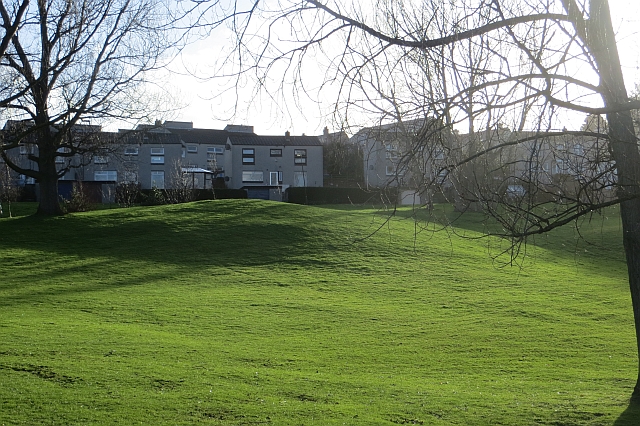
A man was killed at the colliery in May 1923, the year its Jewel coal was abandoned. The site of the colliery and fireclay works is now a grassed green space among houses in Tranent.
Geology
The Splint, Four Feet and Jewel coals, with fireclay worked alongside.
Workings
A colliery with an upcast shaft at least 46 fathoms deep, worked alongside the Bankpark fireclay works, with a railway siding.
Closure
Its Splint workings were abandoned in 1900, the Splint and Four Feet in 1913 and the Jewel in 1923.
What remains
A grassed green space among houses, used as a park, on the site of the colliery and fireclay works.
Redevelopment
Housing and a green space.
Nearby mines
- Meadowmill Mine — 0.4 miles (0.6 km) N
- Bankton Colliery — 0.6 miles (0.9 km) NE
- Tranent Collieries — 1.0 miles (1.6 km) E
- Prestonlinks Colliery — 1.1 miles (1.8 km) N
- Fleets Colliery — 1.3 miles (2.1 km) S
Straight-line distance, within 9 miles (15 km). Show on the map.
Disasters & major incidents
-
Bankpark Colliery cage accident, 1913
18 July 1913 · Winding / Shaft Accident · 2 fatalities
On 18 July 1913 the engineer and a labourer of the Bankpark Coal Company's colliery at Tranent were riding up the upcast shaft when the winding rope broke and the cage fell 46 fathoms to the sump, killing both. The rope, little more than a year old, had lost a strand two days earlier and proved to have rusted through from the inside.
Recorded claims
Individual factual claims, each attached to the source(s) that support it below. Where sources disagree, both are kept.
- In 1852 John Grieve advertised the Preston and Bank Park Collieries and Fire Clay Works near Prestonpans. 1
- Bankpark Colliery belonged to the Bankpark Coal Company in 1913-1923. 2,3
- The site of the colliery and fire clay works is a green space used as a park. 4
- Its Jewel coal was abandoned in 1923. 5
Photographs & further reading
John Grieve's fireclay works and colliery at Bankpark, with directory entries and adverts.
View sourceSources
- (secondary) Scottish Brick History: Bankpark Fire Clay Works, Tranent, East Lothian — Scotland's Brick and Tile Manufacturing Industry
- (primary) NMRS Coal Mining Accidents and Deaths: Bankpark, 1913 (Gardner) — Northern Mine Research Society
- (primary) NMRS Coal Mining Accidents and Deaths: Bankpark, 1923 — Northern Mine Research Society
- (observational) Geograph 3826331: Bankpark (Richard Webb) — Geograph
- (primary) BGS / Mining Remediation Authority mine plan: Bankpark, Jewel, abandoned 1923 — British Geological Survey
- (primary) BGS / Mining Remediation Authority mine plan: Bankpark, Splint and Four Feet, abandoned 1913 — British Geological Survey
- (primary) BGS / Mining Remediation Authority mine plan: Bankpark, Splint, abandoned 1900 — British Geological Survey
- (primary) NMRS Coal Mining Accidents and Deaths: Bankpark, 1913 (Aitken) — Northern Mine Research Society
- (secondary) Scottish Mining Website: Lothians accidents 1901-1914 — Scottish Mining Website
Record created: 15 October 2026 · Last researched: 15 October 2026