 MineArchive
Tranent Collieries
| Also known as | Tranent Colliery |
|---|---|
| Location | Tranent, East Lothian — 55.9436, -2.9388 (approximate) |
| Commodity | Coal |
| Type | Coal |
| Worked | From the 13th century–1963 |
| Operators | York Buildings Company (1719–1750), H. F. Caddell (1854–1866) |
Overview
A coal town in the fullest sense — worked, on and off, for seven centuries, and the starting point of Scotland's first waggonway, built specifically to solve the problem of getting its coal the two and a half miles to the sea.
History
Coal has been worked at Tranent since at least the 13th century, when the monks of Newbattle Abbey dug it as fuel for their kilns — among the earliest documented coal workings anywhere in Scotland. Mining continued through the following centuries, concentrated on the district's 'Great Seam', up to seven feet thick and close to the surface near the town. After the failed Jacobite rising of 1715, the Winton estate, including the Tranent coal pits and the salt pans at Cockenzie, was forfeited by its Jacobite owner and bought by the York Buildings Company, which in 1722 built the Tranent to Cockenzie Waggonway — a two-and-a-half-mile gravity-worked line, with horses hauling the empty wagons back uphill, that is among the very earliest railways anywhere in Scotland. Mining intensified through the 18th and 19th centuries under a succession of owners, including H. F. Caddell from 1854 to 1866 and later Snowdon & Co, as Tranent grew into one of the district's classic mining towns alongside neighbouring Prestonpans. The waggonway itself was converted to iron rails in 1815 and absorbed into the North British Railway network from 1846. The last of Tranent's deep pits closed in 1963, ending direct underground working, though the wider coalfield around the town was not quite finished: a large opencast mine opened at Blindwells, just to the north-east, in the 1970s, supplying Cockenzie Power Station and the export market until it too closed in 2000 — bringing at least eight centuries of coal mining in the area to an end.
Geology
Tranent lies within the Esk Basin Coalfield of the wider Midlothian and East Lothian coal measures, worked here on the district's 'Great Seam', unusually thick at up to seven feet and lying close enough to the surface to have been accessible to simple monastic and early industrial methods long before deep mining became necessary elsewhere in the coalfield.
Workings
Early monastic and pre-industrial working was shallow, following the Great Seam near outcrop; later pits went progressively deeper as accessible coal was exhausted. The Tranent to Cockenzie Waggonway of 1722, built on timber rails with stone sleepers and worked by gravity downhill and horse haulage uphill, was the essential piece of transport infrastructure that let the coal reach the sea at Cockenzie and Port Seton, and its construction is closely tied to the colliery's own expansion in the early 18th century.
Closure
Underground mining at Tranent ended with the closure of the last deep pit in 1963; opencast working at the nearby Blindwells site continued until 2000.
What remains
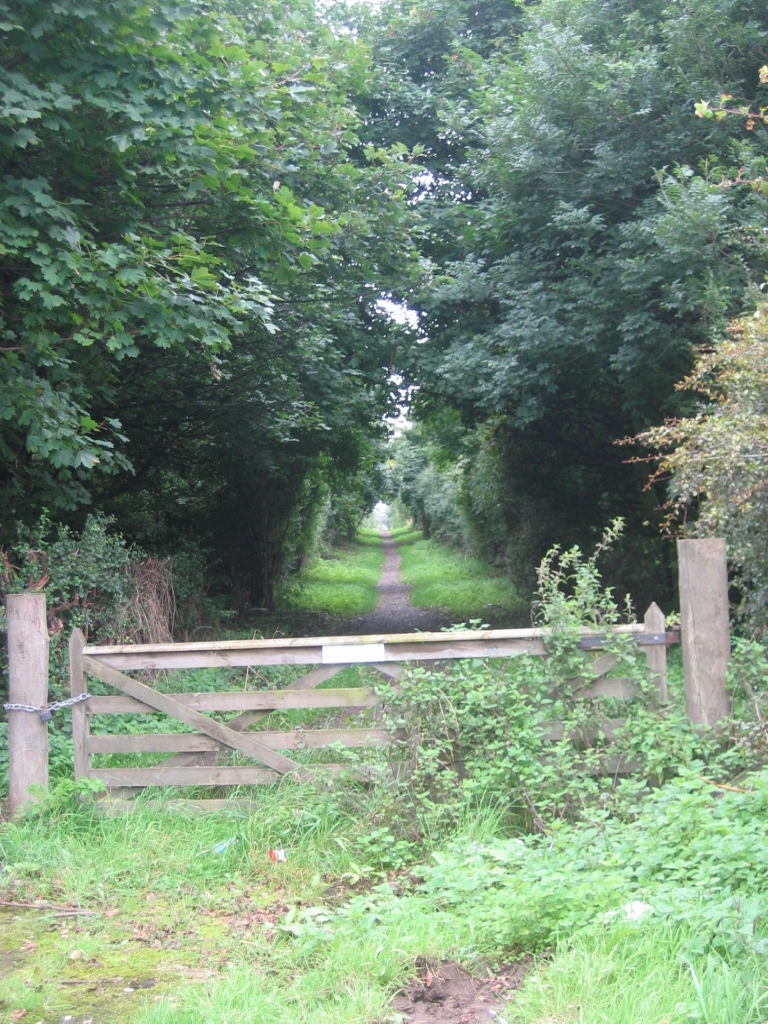
Little survives of the deep collieries themselves within the modern town, though the route of the historic waggonway has been the subject of recent archaeological excavation and rebuilding as a heritage feature, and sections of its trackbed and a commemorative plaque survive near Cockenzie Harbour.
The route and excavated remains of the Tranent to Cockenzie Waggonway, with surviving trackbed sections near Cockenzie Harbour; little trace of the deep collieries themselves within the town.
Redevelopment
Tranent has grown as a modern commuter town around and over its former colliery sites; the former Blindwells opencast site has itself been redeveloped, in part for housing.
Related mines
- Fleets Colliery — Fleets is a Tranent colliery whose earlier pit (1799-1875) was linked to the Tranent to Cockenzie waggonway described on the Tranent record.
Nearby mines
- Bankton Colliery — 0.8 miles (1.4 km) NW
- Meadowmill Mine — 1.1 miles (1.7 km) NW
- Fleets Colliery — 1.1 miles (1.8 km) SW
- Elphingstone Colliery — 1.8 miles (2.9 km) S
- Prestonlinks Colliery — 1.9 miles (3.1 km) NW
Straight-line distance, within 9 miles (15 km). Show on the map.
Disasters & major incidents
-
Tranent Colliery shaft accident, 1854
31 August 1854 · Winding / Shaft Accident · 2 fatalities
Two men working from a hanging scaffold in a shaft at Tranent Colliery fell to the bottom of the pit on 31 August 1854 when the crane holding the scaffold got out of gear.
Recorded claims
Individual factual claims, each attached to the source(s) that support it below. Where sources disagree, both are kept.
- Coal was worked at Tranent from at least the 13th century by the monks of Newbattle Abbey, on the district's 'Great Seam', up to seven feet thick and close to the surface. 1
- After the forfeiture of the Jacobite Winton estate following the 1715 rising, the York Buildings Company built the Tranent to Cockenzie Waggonway in 1722, a 2.5-mile gravity-and-horse-worked line among the earliest railways in Scotland. 2,3
- The waggonway was converted to iron rails in 1815 and absorbed into the North British Railway network from 1846. 3
- Tranent Colliery was operated by H. F. Caddell from 1854 to 1866 and later by Snowdon & Co from 1869 to 1875. 1
- The last deep pit at Tranent closed in 1963; the nearby Blindwells opencast mine continued until 2000, bringing at least eight centuries of coal mining in the area to an end. 2
Sources
- (secondary) Tranent, East Lothian, Scotland, UK — Mindat
- (primary) Rediscovering and Rebuilding the Tranent-Cockenzie Waggonway — EXARC Journal
- (secondary) Tranent to Cockenzie Waggonway — Wikipedia
Record created: 25 August 2026 · Last researched: 25 August 2026