 MineArchive
Fleets Colliery
| Location | Tranent, towards Elphinstone, East Lothian — 55.9303, -2.9559 (approximate) |
|---|---|
| Commodity | Coal |
| Type | Coal |
| Worked | 1866 (sinking)–1959 |
| Maximum depth | 154 metres (deeper shaft) |
| Operators | Edinburgh Collieries Company Limited (?–1947), National Coal Board (1947–1959) |
Overview
Tranent's last colliery, sunk in 1866 and re-sunk in the 1880s, one of East Lothian's largest pits with over 800 men in 1947, a notoriously wet naked-light pit, closed in 1959.
History
Fleets Colliery lay south of Tranent towards Elphinstone. The name is old: a Fleets pit was working from 1799, linked to the Tranent to Cockenzie waggonway. The modern colliery was sunk in 1866 and re-sunk in the 1880s, with two shafts of 73 and 154 metres, and a Cornish beam engine built at Perran in 1847 was moved here from Dolphinston in 1885.
Under the Edinburgh Collieries Company it employed 564 in 1923 and 675 in 1940. It was a naked-light pit, unlike gassy Prestonlinks next door, and one of the wettest in Britain: a few men worked permanently in the water for extra 'water money', and baths were built for them as early as 1926, with modern baths for all in the late 1930s. On 1 March 1929 a shot broke through into flooded old workings in No. 1 Pit and George Johnstone led fifty men out (see Disasters, below).
In 1947 the colliery employed 854, its peak, and in 1948 raised 766 tons a day. The new Coal Board soon proposed closing part of it. Seams were thin, 19 to 34 inches. Closure was announced at the end of 1958, with some 400 men to be absorbed elsewhere, and Fleets, by then the only pit in Tranent, closed in 1959.
Geology
Thin seams of the Midlothian and East Lothian coalfield, 19 to 34 inches thick: the Coronation, Four Feet, Nos. 1 and 2 Diamond, Parrot Rough and Three Feet, and the Ball. The workings were exceptionally wet.
Workings
Two shafts, 73 and 154 metres deep, with a Cornish beam pumping engine of 1847. By 1948 there was a Campbell Reid washer, baths, a canteen and first-aid room. Coal went by rail to the washery at Meadowmill.
Closure
The National Coal Board announced closure at the end of 1958; Fleets closed in 1959 and was abandoned in 1961, and most of its men moved to the new Midlothian pits.
What remains
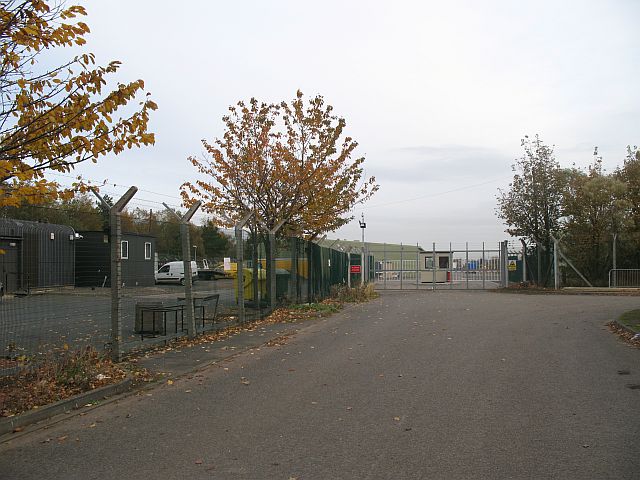
The colliery site is the Fleets Industrial Estate, and the former bath-house site at Elphinstone is occupied by a research company.
Redevelopment
An industrial estate occupies the colliery site.
Related mines
- Prestonlinks Colliery — Neighbouring Edinburgh Collieries Company pits; Fleets was a naked-light pit and Prestonlinks gassy, a contrast its miners remembered.
- Tranent Collieries — Fleets is a Tranent colliery whose earlier pit (1799-1875) was linked to the Tranent to Cockenzie waggonway described on the Tranent record.
Nearby mines
- Elphingstone Colliery — 0.9 miles (1.5 km) S
- Tranent Collieries — 1.1 miles (1.8 km) NE
- Limeylands Colliery — 1.4 miles (2.3 km) SW
- Bankton Colliery — 1.6 miles (2.6 km) N
- Tynemount Colliery — 1.7 miles (2.7 km) S
Straight-line distance, within 9 miles (15 km). Show on the map.
Recorded claims
Individual factual claims, each attached to the source(s) that support it below. Where sources disagree, both are kept.
- Fleets was sunk in 1866 and re-sunk in the 1880s, with two shafts 73 m and 154 m deep; it closed in 1959 and was abandoned in 1961. 1
- Average workforce was 570 and the peak 854 in 1947; in 1948 it raised 766 tons a day, 191,500 a year, with 816 employees. 1
- A Cornish beam engine built at Perran in 1847 was transferred to Fleets from Dolphinston in 1885. 1
- Fleets was a naked-light pit, reckoned one of the wettest in Scotland if not Britain, with baths for the wet men from 1926 and modern baths for all from 1937. 2
- Closure was announced at the end of 1958, with 400 men to be absorbed by neighbouring collieries, and the only pit in Tranent closed in 1959. 2
- A Fleets colliery at Tranent worked from 1799 to 1875, linked to the Tranent and Cockenzie waggonway. 3
- The colliery belonged to the Edinburgh Collieries Co. Ltd and from 1947 the National Coal Board, employing 564 in 1923 and 682 in 1947. 4
- Plans of the Three Foot seam at Fleets record abandonment in 1960. 5
Photographs & further reading
The Fourth Statistical Account's chapter on Tranent's industry, with a miner's recollections of working in the Fleets.
View sourceThe national record entry with the colliery's dates, workforce, shafts and 1948 survey details.
View sourceSources
- (primary) Fleets Colliery (NRHE 130862) - Canmore / trove.scot — Historic Environment Scotland
- (secondary) Tranent: Economy - East Lothian 4 (Fourth Statistical Account) — East Lothian Fourth Statistical Account Society
- (secondary) A Mine of Information: Coal Mining in East Lothian - Haddington's History — Haddington's History Society
- (primary) Durham Mining Museum - Fleets Colliery (UK) — Durham Mining Museum
- (primary) BGS mine plans: Fleets (Three Foot, abandoned 1960) — British Geological Survey / Mining Remediation Authority
Record created: 1 October 2026 · Last researched: 1 October 2026