 MineArchive
Grassmoor Colliery
| Location | Grassmoor, south of Chesterfield, Derbyshire — 53.2043, -1.3839 (exact) |
|---|---|
| Commodity | Coal |
| Type | Coal |
| Worked | 1846 (Blackshale from 1861)–August 1950 (winding) |
| Maximum depth | The No. 1 shaft was 382 yards to the Blackshale with a further 70 yards of sump, 452 yards in all; the main shafts to the Blackshale are also given as 1,350 feet. |
| Operators | Grassmoor Colliery Company (1846–1928), National Coal Board (1947–1950) |
Overview
The Barnes family's great colliery complex south of Chesterfield, begun in 1846 with three shallow pits and grown by 1896 into a group raising 24,000 tons a week from sixty miles of underground roadway, with coke ovens whose gas was piped to Chesterfield, Shirebrook and Mansfield. Fourteen men died in an explosion in its No. 8 pit in November 1933. Winding ended in 1950, after which the shafts served Williamthorpe; the ground is now Grassmoor Country Park.
History
Grassmoor was developed where small enterprises had been working coal for many years. The colliery proper dates from about 1846, when Alfred Barnes came back to the district from abroad and was instructed by his father to sink collieries on land his father had bought at Grassmoor. Three shallow pits went down first, the mineral rights leased from the Duke of Devonshire, and the money they made paid for the deeper shafts into the profitable Blackshale seam at a cost of £40,000; the No. 1 shaft to the Blackshale was sunk in 1861 and was 382 yards deep with a further seventy yards of sump, 452 yards in all. The company sought limited liability in 1884, in the middle of the coal trade's depression, at a cost of around £200,000; every subscriber but one was a Barnes, the exception being the company cashier George Leach, and many men were transferred in from the Barlow collieries. By 1896 the company controlled a great group of pits raising some 24,000 tons a week, with sixty miles of underground roadway including six miles of coal face; the main shafts to the Blackshale were 1,350 feet deep, wound by a steam engine with two thirty-six-inch cylinders and a six-foot stroke, the double-deck chairs taking two tubs on each deck.
These were the Barnes collieries locally, and they coked their coal from 1846 in Otto ovens built by German engineers, replaced by more efficient ones in June 1934. The gas went by pipe to Chesterfield, Shirebrook and Mansfield for domestic and industrial use, which is where the saying came from that Chesterfield depends on Grassmoor. Four ovens of fifteen tons capacity each could turn 404 tons of coal a day into 300 tons of coke, five million cubic feet of gas, nineteen tons of tar, six tons of ammonium sulphate, fifteen thousand gallons of crude benzol and thirteen thousand gallons of motor spirit. The Lists of Mines show the group at its widest in 1900, with seven numbered pits at work on the Tupton, Deep Soft, Ell, Silkstone, Deep Hard and Top Hard and the No. 8 shaft then sinking; the No. 1 pit alone employed 1,137 people that year. The Barnes company went into voluntary liquidation in 1928, ending the family's connection.
On 19 November 1933, just before two in the morning, firedamp exploded on a conveyor face in the Deep Hard seam at the No. 8 pit and killed fourteen of the eighteen men working there (see Disasters, below). The colliery, by then working five shafts, stopped winding coal in August 1950, its shafts kept open as a second means of egress for Williamthorpe in case of a breakdown of plant or winders; the coal itself went by conveyor to the Williamthorpe pit bottom and was wound there. The site became an area training centre in 1957, teaching new miners and putting existing ones through the new technology and safety practice, and the workings remained in production under the Williamthorpe name into the 1960s, on the Tupton, First and Second Piper and Deep Hard seams.
Geology
The colliery's fortune was the Blackshale, the deep seam its founders spent £40,000 reaching in 1861, but the group's numbered pits worked the whole local sequence: the Lists of Mines record the Tupton at No. 1, the Deep Soft at No. 2, the Ell at No. 3, the Silkstone at No. 4, the Deep Hard at No. 5, the Top Hard at No. 6, the Piper standing at No. 1 and the Two Feet at No. 9. In its last decades the workings were on the Tupton, First and Second Piper and Deep Hard.
Geological setting: Sedimentary Beds and Seams (well documented example)
Workings
A group of at least twelve numbered pits rather than a single colliery, five of them still in use at the end. The main Blackshale shafts were wound by a steam engine of two thirty-six-inch cylinders and six-foot stroke, with double-deck chairs carrying two tubs on each deck. By 1896 there were sixty miles of underground roadway and six miles of coal face. On the surface stood the coking plant, its Otto ovens dating from 1846 and renewed in 1934, and after 1950 the shafts were retained purely as an emergency second egress for Williamthorpe.
Closure
Coal stopped being wound at Grassmoor in August 1950, but the colliery did not simply shut: the shafts were kept open as a second means of egress for Williamthorpe, and the coal was taken by conveyor to the Williamthorpe pit bottom and wound there instead. One account has the colliery in production until at least 1961, and the Derbyshire Record Office catalogues its records as covering 1846 to 1967, so the year the workings themselves were abandoned is not the same as the year the headgear stopped turning. The site became an area training centre in 1957.
What remains
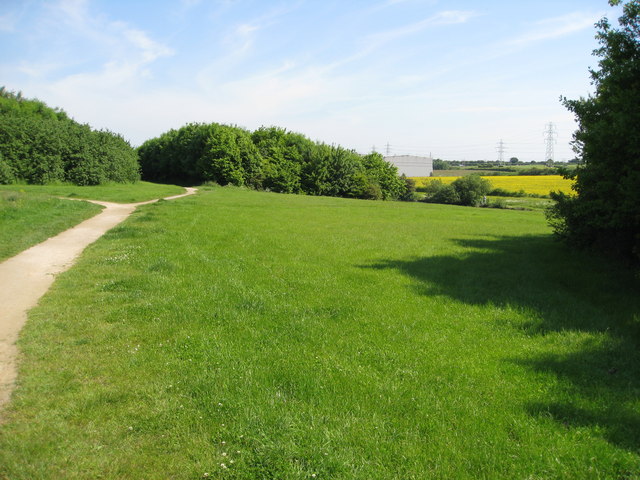
Grassmoor Country Park covers the old colliery tip. Part of that ground was later used by the Avenue coking plant to dump coal tar sludge into lagoons; when the coking plant closed in 1993 Derbyshire County Council inherited the site, clearance of the contaminated land began in 2010 and removal of the lagoons was finished in 2015. The park now has fishing ponds and footpaths and forms part of the Five Pits Trail.
None of the colliery; the tip is landscaped as country park.
Redevelopment
Grassmoor Country Park, after remediation of the coal tar lagoons completed in 2015.
Related mines
- Williamthorpe Colliery — From August 1950 Grassmoor stopped winding its own coal, which went by conveyor to the Williamthorpe pit bottom and was raised there; Grassmoor's shafts were kept open as Williamthorpe's second means of egress.
Nearby mines
- Bonds Main Colliery — 0.5 miles (0.8 km) E
- Williamthorpe Colliery — 1.1 miles (1.8 km) SE
- Avenue Colliery — 1.2 miles (2.0 km) W
- Holmewood Colliery — 1.9 miles (3.0 km) SE
- Arkwright Colliery — 1.9 miles (3.1 km) NE
Straight-line distance, within 9 miles (15 km). Show on the map.
Disasters & major incidents
-
Grassmoor Colliery Sinking Accident, 1856
13 December 1856 · Winding / Shaft Accident · 2 fatalities
On 13 December 1856 two men were killed sinking a new shaft at Grassmoor Colliery, in Derbyshire, when a mass of earth near the shaft top slipped away without warning and carried the timbering down on them. -
Grassmoor Colliery Gas Explosion, 1870
13 June 1870 · Explosion · 2 fatalities
On 13 June 1870 two colliers were killed by an explosion of gas in the Top Hard coal at Grassmoor Colliery, in Derbyshire. -
Grassmoor Colliery Roof Fall, 1892
27 April 1892 · Collapse / Roof Fall · 2 fatalities
On 27 April 1892 two datallers were killed by a fall of roof at Grassmoor No. 3 pit, in Derbyshire. -
Grassmoor Colliery Roof Fall, 1899
11 July 1899 · Collapse / Roof Fall · 2 fatalities
On 11 July 1899 two datallers of the same name were killed by a fall of roof at Grassmoor No. 1 pit, in Derbyshire. -
Grassmoor Colliery Roof Fall, 1914
4 June 1914 · Collapse / Roof Fall · 2 fatalities
On 4 June 1914 two young men were killed at a junction by a heavy fall of unsupported roof at Grassmoor Colliery, in Derbyshire. -
Grassmoor Colliery Explosion, 1933
19 November 1933 · Explosion · 14 fatalities
Firedamp exploded on a ninety-yard conveyor face in the Deep Hard seam at Grassmoor's No. 8 pit just before two on a Sunday morning, killing fourteen of the eighteen men at work there. The source of ignition was never established, an electric cap-lamp headpiece being the likeliest suggestion, and a public inquiry was held under the Coal Mines Act.
What's uncertain
Points where sources disagree or the record could not be settled; both accounts are kept. All open questions in the archive.
- One account has the colliery remaining in production until at least 1961, working the Tupton, First and Second Piper and Deep Hard seams from the mid 1950s. (uncertain) 1
Recorded claims
Individual factual claims, each attached to the source(s) that support it below. Where sources disagree, both are kept.
- The colliery was founded about 1846 when Alfred Barnes, instructed by his father, began sinking on land his father had bought at Grassmoor, three shallow pits going down first under a mineral lease from the Duke of Devonshire. 1
- The revenue from the three shallow pits paid for the deeper shafts into the Blackshale seam at a cost of £40,000; the No. 1 shaft to the Blackshale was sunk in 1861 and was 382 yards deep with a further 70 yards of sump. 1
- By 1896 the company controlled a group of collieries raising about 24,000 tons of coal a week, with some sixty miles of underground roadway including six miles of coal face. 1
- The collieries coked their coal from 1846 in Otto ovens built by German engineers, replaced in June 1934, and piped the gas to Chesterfield, Shirebrook and Mansfield, hence the local saying that Chesterfield depends on Grassmoor. 1
- The company sought limited liability in 1884 at a cost of around £200,000, every subscriber but the cashier George Leach being a member of the Barnes family, and went into voluntary liquidation in 1928. 1
- In 1900 the group's numbered pits worked the Tupton, Deep Soft, Ell, Silkstone, Deep Hard and Top Hard seams, with the No. 8 shaft then sinking; No. 1 pit alone employed 1,137 people. 2
- The colliery ceased to wind coal up its shafts in August 1950; the shafts were kept open as a second means of egress for Williamthorpe and the coal was taken by conveyor to the Williamthorpe pit bottom and wound there. 1
- One account has the colliery remaining in production until at least 1961, working the Tupton, First and Second Piper and Deep Hard seams from the mid 1950s. (uncertain) 1
- Grassmoor Country Park was made on the colliery tip; part of the site was used by the Avenue coking plant for lagoons of coal tar sludge, and after the plant closed in 1993 Derbyshire County Council began clearing the contaminated land in 2010, the lagoons being removed by 2015. 3,4
- The BGS mine-plans catalogue holds a Mining Remediation Authority abandonment plan titled 'Grassmoor' (catalogue EM92, Second Waterloo, dated 1950). 5
Photographs & further reading
Andrew Bridgewater's history of the Barnes collieries, with the sinking costs, the coking plant's daily output and a long run of Derbyshire Times reports from the pits.
View sourceSources
- (secondary) Grassmoor Collieries (oldminer.co.uk) — oldminer.co.uk (Andrew Bridgewater)
- (primary) Durham Mining Museum: Grassmoor Colliery — Durham Mining Museum
- (secondary) Grassmoor (Wikipedia) — Wikipedia
- (secondary) Grassmoor, Hasland and Winsick (Wikipedia) — Wikipedia
- (primary) BGS / Mining Remediation Authority mine plans: GRASSMOOR — British Geological Survey / Mining Remediation Authority
- (primary) Grassmoor Colliery Disaster: statement by the Secretary for Mines, House of Commons, 22 November 1933 (Hansard, HC Deb vol 283 cc85-6) — UK Parliament
Record created: 9 September 2026 · Last researched: 9 September 2026