 MineArchive
Holmewood Colliery
| Location | Holmewood, near Heath and Chesterfield, Derbyshire — 53.1871, -1.3497 (exact) |
|---|---|
| Commodity | Coal |
| Type | Coal |
| Worked | 1867-68–1968 |
| Maximum depth | 458 yards by 1967; the first shaft reached coal at 63 yards in January 1868. |
| Operators | Wingerworth Coal Company (1867–1900), Hardwick Colliery Company (1900–1947), National Coal Board (1947–1968) |
Overview
A Wingerworth and Hardwick company pit begun on the Duke of Devonshire's estate in 1867 and celebrated with a dinner for the sinkers when the coal was struck at sixty-three yards. It grew into a three-pit colliery, was mothballed for ten years between the wars with three men keeping it, reopened for the Second World War and worked on until 1968. In 1920 two men were entombed there for four days and four of their rescuers were given the Edward Medal by the King.
History
Holmewood was developed from 1867-68 by the Wingerworth Coal Company on the Duke of Devonshire's estate at Holmewood. In January 1868 a dinner was given in the company's schoolroom at North Wingfield for the sinkers, foremen and others to celebrate the opening: the shaft was sixty-three yards deep, the coal reached the week before proved a good hard coal of excellent quality averaging about four feet nine inches thick, a substantial plant had been erected, and the whole sinking had been carried out without loss of life or limb. A short railway was to be laid half a mile from the pit mouth to the Duke's line at North Wingfield. The company behind it, formed in 1830 out of the Wingerworth coal company, had already sunk Lings colliery on Williamthorpe Road in 1840; in 1900 it reorganised as the Hardwick Coal Company with £350,000 of share capital and bought up the small colliery companies and private partnerships that had worked the district since the early 1800s, and it was that company that sank Williamthorpe from 1901.
The Lists of Mines show Holmewood working as numbered pits: No. 1 and No. 2 in 1894, with 318 and 296 people, a No. 3 by 1900, and 537 at No. 2 alone that year. Labour history runs through the record, with 400 men going back to work after the great wages dispute in May 1876 and every man coming out on strike in October 1888, and so does the industrial expansion of the district: in May 1911 crowds watched three large boilers being unloaded to raise steam for fifty new coke ovens. In 1920 a heavy fall trapped two men underground for four days and four Holmewood men were decorated for getting them out (see Disasters, below). The colliery was mothballed for ten years from 1929 with three men maintaining it, and reopened for coal in 1939 because of the war, still under the Hardwick company; it was vested in the National Coal Board in 1947, when it raised 283,000 tons of coking, gas, household, manufacturing and steam coal. By 1967 it was 458 yards deep and more than ninety per cent mechanised, nine hundred men producing about 360,000 tons a year from the Deep Hard, Three Quarter and Tupton seams, and its roadways ran downhill into the Williamthorpe pit bottom so that coal came in by gravity. It closed in 1968 and the ground was soon afterwards opencast.
Geology
The coal first struck in 1868 at sixty-three yards was a good hard coal averaging four feet nine inches thick. By the 1960s the colliery was working the Deep Hard, Three Quarter and Tupton seams of the Derbyshire Coal Measures at 458 yards, its roadways deliberately driven downhill so that coal ran by gravity into the Williamthorpe pit bottom next door.
Geological setting: Sedimentary Beds and Seams (well documented example)
Workings
Three numbered pits, with fifty new coke ovens added about 1911 and their boilers brought in by road to public attention. More than ninety per cent of the output was machine-won by 1967. The colliery was connected underground to Williamthorpe, the roadways falling towards that pit bottom, and the two were merged under one manager in 1967.
Closure
Closed in 1968, after which the area was opencast. The National Coal Board's own 1967 account still describes it as a working pit of 900 men, so it went almost straight from that description to closure. The Durham Mining Museum gives the sinking as started in 1870, three years later than the local history's account of the coal being struck in January 1868; both dates are recorded.
What remains
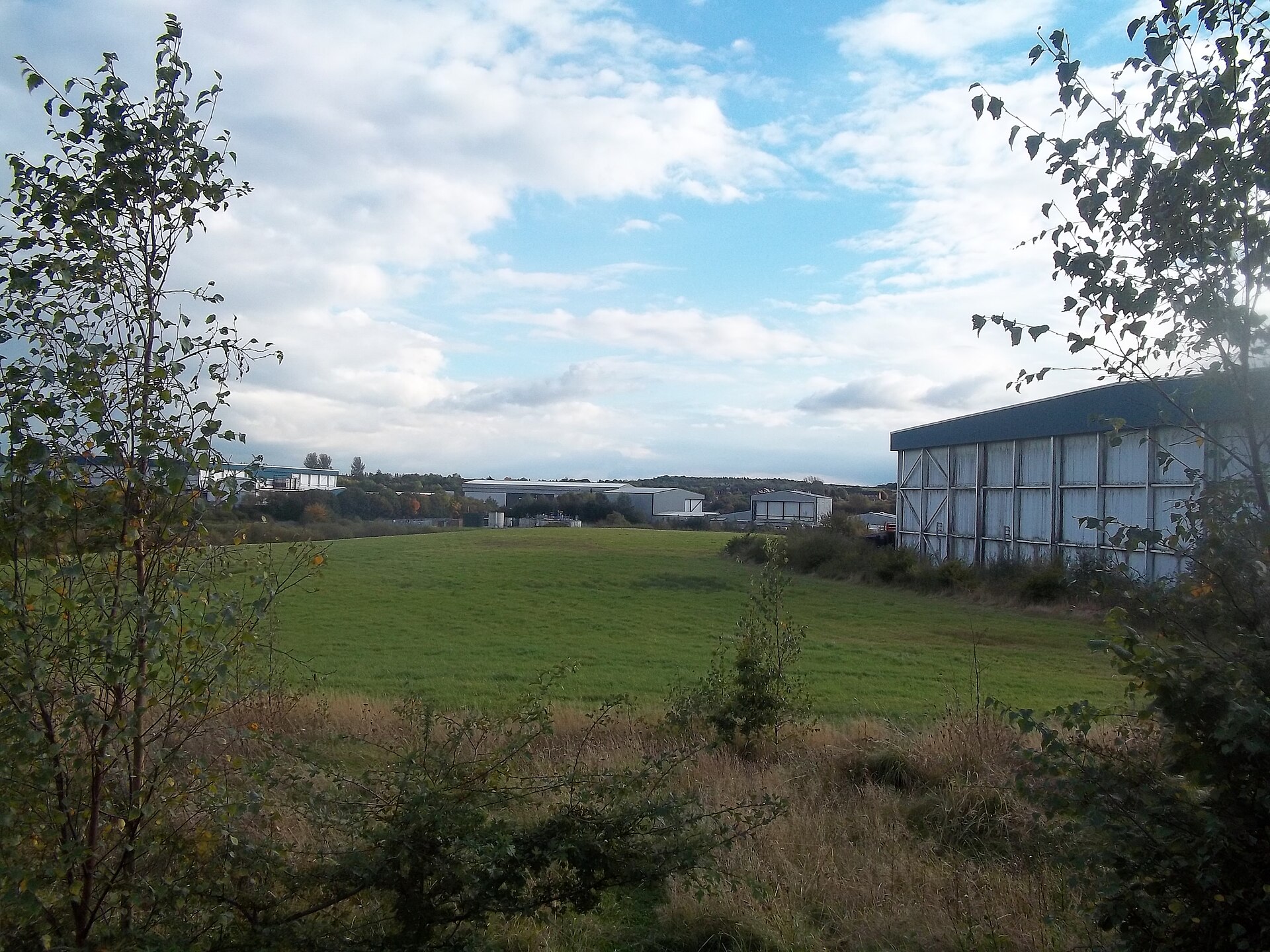
Cleared and opencast after closure, and now industrial. Holmewood Industrial Park occupies the ground, and the village the colliery served stands beside it.
None known; the site was opencast after closure and is now an industrial park.
Redevelopment
Holmewood Industrial Park.
Related mines
- Lings Colliery — Both were Wingerworth and Hardwick company pits in the same corner of north Derbyshire, Holmewood developed from 1868 while Lings was still working.
- Ramcroft Colliery — Hardwick Colliery Company pits.
- Williamthorpe Colliery — Connected underground, the Holmewood roadways being driven downhill into the Williamthorpe pit bottom so that coal ran in by gravity; the two collieries were merged under one manager in 1967.
Nearby mines
- Williamthorpe Colliery — 0.8 miles (1.2 km) NW
- Lings Colliery — 1.1 miles (1.8 km) SW
- Bonds Main Colliery — 1.7 miles (2.7 km) NW
- Ramcroft Colliery — 1.8 miles (2.9 km) NE
- Grassmoor Colliery — 1.9 miles (3.0 km) NW
Straight-line distance, within 9 miles (15 km). Show on the map.
Disasters & major incidents
-
Holmewood Colliery Entombment and Rescue, 1920
22 September 1920 · Collapse / Roof Fall · 0 fatalities
A heavy fall of roof shut two men into a space fifteen yards by ten feet at Holmewood Colliery. They were known to be unhurt but it would take days to reach them, and further falls came down over the next forty-eight hours. They were fed through a pipe and freed after four days, and four of the men who dug them out were given the Edward Medal by the King.
What's uncertain
Points where sources disagree or the record could not be settled; both accounts are kept. All open questions in the archive.
- The Durham Mining Museum gives the sinking as started in 1870. (disputed) 2
- The colliery closed in 1968, after which the area was opencast; one local account gives the closure as 1966. (disputed) 3,1
Recorded claims
Individual factual claims, each attached to the source(s) that support it below. Where sources disagree, both are kept.
- A dinner was given at North Wingfield in January 1868 to celebrate the opening of Holmewood Colliery, begun about seven months earlier on the Duke of Devonshire's estate; the shaft was 63 yards deep and the coal, reached the week before, was a good hard coal averaging about 4 feet 9 inches thick. 1
- The Durham Mining Museum gives the sinking as started in 1870. (disputed) 2
- The Hardwick colliery company was formed in 1830 out of the Wingerworth coal company and sank Lings colliery on Williamthorpe Road in 1840; in 1900 it reorganised as the Hardwick Coal Company with £350,000 of share capital and bought up the small companies and partnerships working the district. 1
- Four hundred men recommenced work at Holmewood in May 1876 after the great wages dispute, and in October 1888 all the men employed at the colliery came out on strike. 1
- In May 1911 large crowds watched three large boilers being unloaded to raise steam for the plant of fifty new coke ovens. 1
- The colliery employed 318 at No. 1 and 296 at No. 2 in 1894, and 537 at No. 2 alone in 1900; at nationalisation in 1947 it raised 283,000 tons of coking, gas, household, manufacturing and steam coal. 2
- The mine was mothballed for a ten-year period from 1929, three men maintaining the colliery, and reopened for coal production in 1939 because of the Second World War, still under the Hardwick colliery company. 1
- By 1967 the colliery was more than 90 per cent mechanised and 458 yards deep, with 900 men producing around 360,000 tons a year from the Deep Hard, Three Quarter and Tupton seams. 2
- The colliery closed in 1968, after which the area was opencast; one local account gives the closure as 1966. (disputed) 3,1
Photographs & further reading
The Wingerworth and Hardwick company's pits, with the 1868 opening dinner, the strikes, the coke ovens and the full account of the 1920 rescue and the Edward Medals.
View sourceSources
- (secondary) Heath and Holmewood collieries (oldminer.co.uk) — oldminer.co.uk (Andrew Bridgewater)
- (primary) Durham Mining Museum: Holmewood Colliery — Durham Mining Museum
- (secondary) Holmewood (Wikipedia) — Wikipedia
- (primary) Edward Medal awards (Durham Mining Museum) — Durham Mining Museum
Record created: 9 September 2026 · Last researched: 9 September 2026