 MineArchive
Williamthorpe Colliery
| Location | Heath Common, near Holmewood and Chesterfield, Derbyshire — 53.1961, -1.3601 (exact) |
|---|---|
| Commodity | Coal |
| Type | Coal |
| Worked | 1905 (sinking from 1901)–28 March 1970 |
| Maximum depth | 545 yards, as given by the National Coal Board in 1967; the sinking was planned at 550 yards. |
| Operators | Hardwick Colliery Company (1901–1947), National Coal Board (1947–1970) |
Overview
A Hardwick Colliery Company pit at Heath Common near Chesterfield, whose shafts had to be driven through a two-mile basin of water left by older workings and were lined with nineteen-foot iron tubbing to hold it back. Completed in 1905 after four years of sinking, it was said to be the deepest colliery in the Midlands, took the output of neighbouring Grassmoor and Holmewood underground, and closed on 28 March 1970. The shafts still pump water for the whole district and the settling ponds are now a nature reserve.
History
The Wingerworth and Hardwick Colliery Company set out to establish a new first-class colliery at Williamthorpe capable of raising four thousand tons of coal a day, the terms of Mrs Hunloke's lease requiring shafts to the Blackshale seam. Sinking began in 1901 and immediately ran into water: the shafts were being put down into a basin two miles across, flooded from the abandoned workings of the old Lings colliery, and in two years only 180 of the 550 yards had been achieved. The answer was to line the shaft with cast-iron tubbing nineteen feet in diameter. Although the ground yielded two and a half tons of water a minute at six to seven hundred pounds to the square inch, the plates held, and the shaft was watertight through the whole depth of the flooded strata. It was finished in 1905 and the colliery was then reckoned the deepest in the Midlands. Its cages had three decks, carrying twelve trams or seven tons of coal in a wind of forty-five seconds, worked by steam engines from Markham and Company of Chesterfield with forty-two-inch cylinders and a seven-foot stroke. The underground roadways from Holmewood were deliberately driven downhill into the Williamthorpe pit bottom so that coal would run in by gravity rather than by powered haulage.
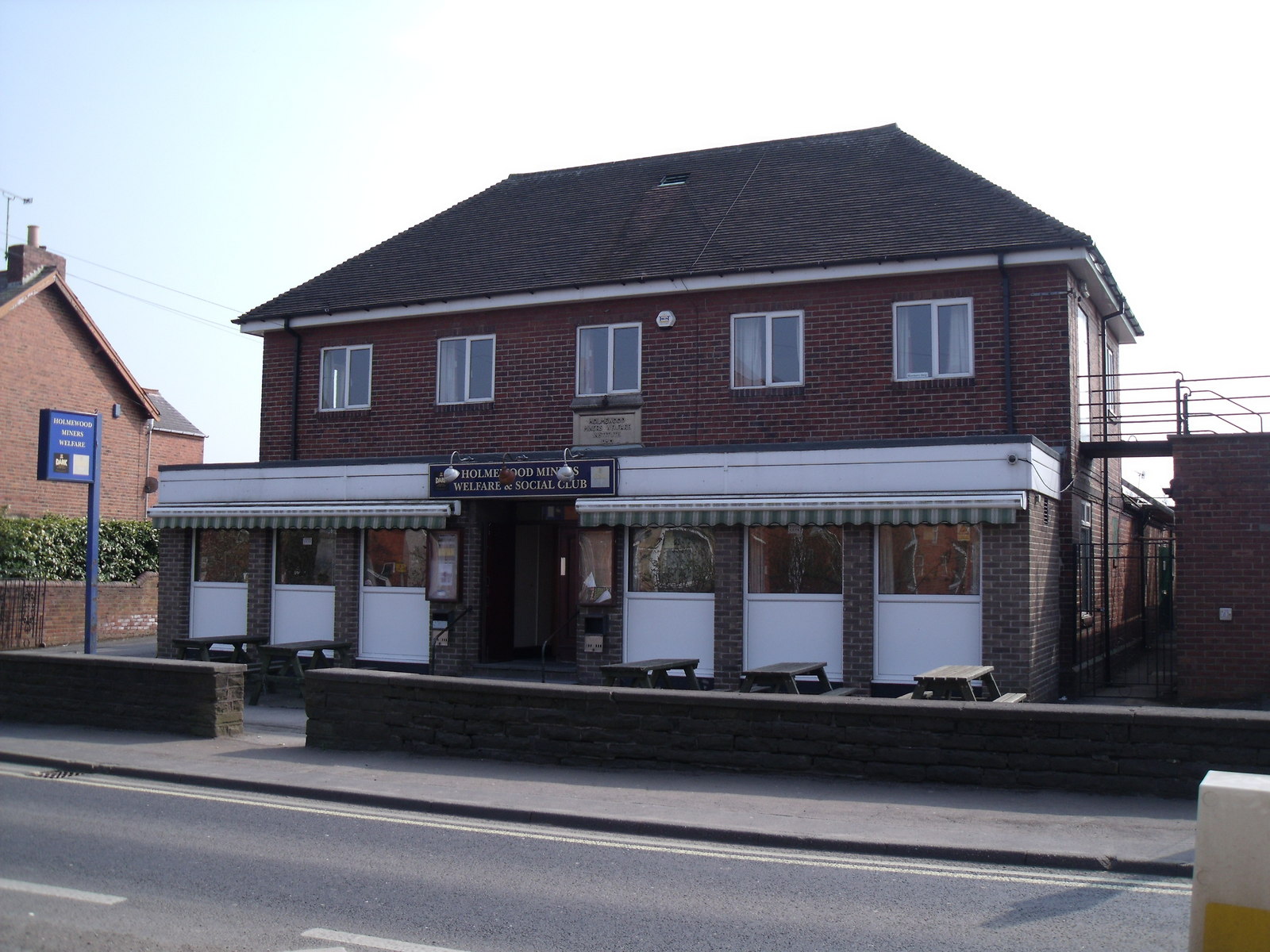
The village of Holmewood was built by the company to house the men. The colliery employed about 1,550 across its two pits in 1923 and again in 1933, dropped to under 1,150 by 1940, and had 998 men in 1947, when it raised 361,000 tons of coking, gas, household, manufacturing and steam coal. Under the National Coal Board it was steadily mechanised: an arc shearer for headings and a Joy loader in 1951, a training centre in 1952, the last horses withdrawn from underground in 1954, a Gloster getter in 1955, pithead baths in 1958, a Huwood power loader and a new Sirocco fan late on. A brickworks on the site was at one time turning out five million bricks a year, and a Tromp washing plant treated the coal. Manpower peaked at 2,767 in 1958. By 1963 the pit had been reorganised underground with a modern coal preparation plant, and it took the output of Grassmoor, sunk in 1875-78, to the surface at Williamthorpe; two thousand men across the combined operation were raising over 800,000 tons a year from the Deep Soft, Ell, First and Second Waterloo and Second Piper seams, virtually all of it machine-won. Williamthorpe and Holmewood were merged under one manager in 1967 and a record 5,430 tons was turned in twenty-four hours. Output reached 1,006,079 tons in 1968-69, the pit's second million-ton year. Water remained the theme to the end: an inrush came from the old Avenue colliery workings when it erupted through the floor of the Second Piper, hampering production until pumping was restored at Avenue No. 9 shaft. In 1969, 150 men over sixty were pushed into early retirement out of a workforce of 1,780, and the colliery closed on 28 March 1970 after sixty-five years, the cost of deep-seam working having told against it.
Geology
The lease required shafts to the Blackshale, the deep seam at the base of the productive Coal Measures here, and the pit worked upward and outward from it: the Tupton into the 1960s, the Blackshale or Silkstone to 1969, and in its reorganised years the Deep Soft, Ell, First and Second Waterloo and Second Piper. The defining geological problem was not the coal but the water: the shafts went down inside a basin some two miles across flooded from the abandoned Lings workings, and the Second Piper workings were later invaded by water erupting through the floor from the old Avenue colliery below.
Geological setting: Sedimentary Beds and Seams (well documented example)
Workings
Two shafts completed in 1905, lined through the flooded strata with cast-iron tubbing nineteen feet in diameter, with triple-deck cages taking twelve trams or seven tons at a wind and steam winders by Markham and Company of Chesterfield. Roadways from Holmewood were driven downhill into the pit bottom so that coal ran in by gravity, and there were underground connections to both Holmewood and Grassmoor. On the surface were a Tromp coal washing plant, a brickworks making up to five million bricks a year, an aerial ropeway and, from 1958, pithead baths.
Closure
Closed on 28 March 1970 after sixty-five years, the high cost of deep-seam mining having told against it; the closure caused heavy unemployment in Holmewood, the village the company had built for the workforce. Pumping was discontinued at closure and the shafts kept open to monitor the expected rise in water, but the site was later brought back into use as a mine-water pumping station and remains one.
What remains
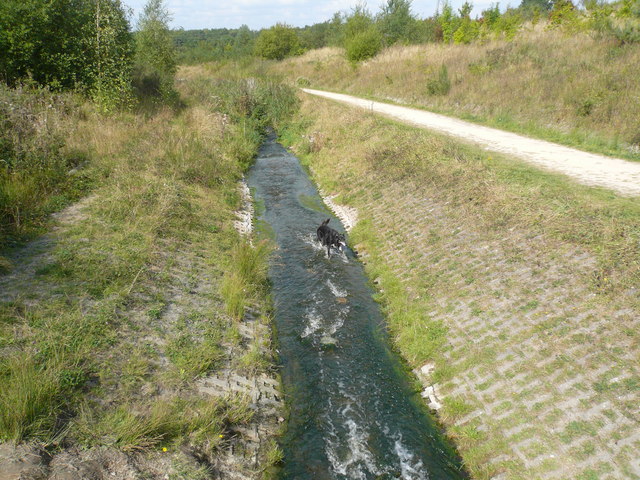
The colliery is gone but the shafts are not. Williamthorpe is a remote mine-water pumping station standing in a compound inside a large industrial estate on Tupton Way off Park Road, Holmewood; part of the original heapstead survives, No. 1 shaft is capped with steel and pipes emerge from it, and No. 2 has a concrete head with an inspection cover suggesting it is still unfilled. Water pumped from the shaft settles in the Williamthorpe pools, where its metal content drops out before the water reaches the watercourse, and those pools are now the Williamthorpe Ponds nature reserve on the Five Pits Trail.
Part of the original heapstead and both capped shafts, inside the pumping-station compound.
Redevelopment
Mine-water pumping station, industrial estate and the Williamthorpe Ponds nature reserve.
Related mines
- Avenue Colliery — Water erupted from the floor of Williamthorpe's Second Piper seam out of these abandoned workings below it, hampering production until pumping was restored at Avenue No. 9 shaft.
- Grassmoor Colliery — From August 1950 Grassmoor stopped winding its own coal, which went by conveyor to the Williamthorpe pit bottom and was raised there; Grassmoor's shafts were kept open as Williamthorpe's second means of egress.
- Holmewood Colliery — Connected underground, the Holmewood roadways being driven downhill into the Williamthorpe pit bottom so that coal ran in by gravity; the two collieries were merged under one manager in 1967.
- Lings Colliery — The same company's later and deeper pit, sunk from 1901 through the two-mile basin of water left standing in Lings's abandoned workings; Lings is named on the Williamthorpe record.
- Ramcroft Colliery — Hardwick Colliery Company pits.
Nearby mines
- Holmewood Colliery — 0.8 miles (1.2 km) SE
- Bonds Main Colliery — 0.9 miles (1.5 km) NW
- Grassmoor Colliery — 1.1 miles (1.8 km) NW
- Lings Colliery — 1.5 miles (2.5 km) S
- Ramcroft Colliery — 1.9 miles (3.1 km) E
Straight-line distance, within 9 miles (15 km). Show on the map.
Disasters & major incidents
-
Williamthorpe Colliery Roof Fall, 1919
20 September 1919 · Collapse / Roof Fall · 2 fatalities
On 20 September 1919 a collier and a deputy were killed by a fall of roof at Williamthorpe Colliery, in Derbyshire. -
Williamthorpe Colliery Explosion, 1930
19 September 1930 · Explosion · 4 fatalities
On 19 September 1930 four men were killed by an explosion of gas at Williamthorpe Colliery, in Derbyshire. -
Williamthorpe Colliery Boiler Explosion, 1931
13 March 1931 · Machinery · 3 fatalities
On 13 March 1931 three men were killed by a boiler explosion on the surface at Williamthorpe Colliery, in Derbyshire.
What's uncertain
Points where sources disagree or the record could not be settled; both accounts are kept. All open questions in the archive.
- The Durham Mining Museum gives the sinking as started in 1905, which is the year the shaft was completed rather than begun. (disputed) 2,3
- The BGS mine-plans catalogue holds a Mining Remediation Authority abandonment plan titled 'Williamthorpe' (catalogue EMST8, Spoil Tips, dated 1979); the catalogue gives no location and the plan's details do not clearly tie it to this working, so it may belong to another of the same name. (uncertain) 7
Recorded claims
Individual factual claims, each attached to the source(s) that support it below. Where sources disagree, both are kept.
- Sinking began in 1901 under a lease from Mrs Hunloke requiring shafts to the Blackshale seam and a first-class colliery raising 4,000 tons a day; the shafts were sunk inside a two-mile-diameter basin of water from the old Lings colliery workings, and only 180 of the 550 yards were achieved in two years. 1
- The shaft was lined with nineteen-foot-diameter iron tubbing; although the ground yielded two and a half tons of water a minute at 600 to 700 pounds per square inch, the plates held and the shaft was watertight through the flooded strata. It was completed in 1905 and the colliery became the deepest in the Midlands. 1
- The Durham Mining Museum gives the sinking as started in 1905, which is the year the shaft was completed rather than begun. (disputed) 2,3
- The colliery had triple-deck cages carrying twelve trams or seven tons of coal with a winding time of forty-five seconds, worked by steam engines by Markham and Company of Chesterfield with forty-two-inch cylinders and a seven-foot stroke. 1
- The underground roadways from Holmewood were driven downhill into the Williamthorpe pit bottom so that coal could run in by gravity rather than by powered haulage. 1
- The two pits together employed 1,548 men in 1923 and 1,567 in 1933, falling to 1,149 in 1940; in 1947 the colliery had 998 men and raised 361,000 tons of coking, gas, household, manufacturing and steam coal. 2
- Manpower peaked at 2,767 in 1958 and output at 1,006,079 tons in 1968-69, the pit's second million-ton year. 3
- By 1967 output from Grassmoor, sunk in 1875-78, reached the surface at Williamthorpe, which had been reorganised underground with a modern coal preparation plant in 1963; the combined manpower of 2,000 produced over 800,000 tons a year, virtually 100 per cent mechanised, from the Deep Soft, Ell, First and Second Waterloo and Second Piper seams. 2
- The colliery closed on 28 March 1970 after sixty-five years; pumping was discontinued and the shafts kept open to monitor the anticipated rise in water level. 3,4
- Williamthorpe is now a mine-water pumping station in a compound within an industrial estate on Tupton Way, Holmewood: part of the original heapstead survives, No. 1 shaft is capped with steel with pipes emerging and No. 2 has a concrete head with an inspection cover, suggesting it is unfilled. 5
- Water pumped from the shaft settles in the Williamthorpe pools, where its metal content drops out before the water enters a nearby watercourse; the pools are now a nature reserve on the Five Pits Trail. 5,6
- Holmewood was formed as a residence by the Williamthorpe Colliery Company and lasted as a colliery village from 1905 until 1970, the pit being the main employer and its closure causing much local unemployment. 4
- The BGS mine-plans catalogue holds a Mining Remediation Authority abandonment plan titled 'Williamthorpe' (catalogue EMST8, Spoil Tips, dated 1979); the catalogue gives no location and the plan's details do not clearly tie it to this working, so it may belong to another of the same name. (uncertain) 7
Photographs & further reading
A full closure account with peak manpower and output, the mechanisation year by year, the managers, the Avenue inrush and the abandonment plans.
View sourceThe sinking through the flooded basin, the iron tubbing, the winding plant and the colliery's present role as a pumping station, with photographs from the Bill Skevington collection.
View sourceSources
- (secondary) Williamthorpe Colliery (oldminer.co.uk) — oldminer.co.uk (Andrew Bridgewater)
- (primary) Durham Mining Museum: Williamthorpe Colliery — Durham Mining Museum
- (secondary) Williamthorpe Colliery (North Derbyshire) 1970: collieries closed in 1970 (Bob Bradley, healeyhero.co.uk) — healeyhero.co.uk
- (secondary) Holmewood (Wikipedia) — Wikipedia
- (observational) Williamthorpe Pit: what survives (healeyhero.co.uk) — healeyhero.co.uk
- (observational) Williamthorpe Ponds Nature Reserve (Geograph photograph, 12 September 2007) — Geograph / Alan Heardman
- (primary) BGS / Mining Remediation Authority mine plans: WILLIAMTHORPE — British Geological Survey / Mining Remediation Authority
- (primary) Derbyshire Record Office D4623/2/6: Williamthorpe Colliery (National Archives Discovery) — The National Archives
Record created: 9 September 2026 · Last researched: 9 September 2026