 MineArchive
Nixon's Navigation Colliery
| Also known as | Navigation Colliery, Mountain Ash |
|---|---|
| Location | Mountain Ash, Cynon Valley, Rhondda Cynon Taf — 51.6817, -3.3755 (approximate) |
| Commodity | Coal |
| Type | Coal |
| Worked | 1860–1940 |
| Maximum depth | 365 yards (about 334 m) to the Four Feet seam as first sunk, the deepest in the coalfield at the time; deepened to the Nine Feet seam in the late 1880s. |
| Operators | Nixon's Navigation Coal Co. Ltd. (1855–1940) |
Overview
The Mountain Ash colliery of John Nixon, the County Durham pitman who taught France to burn Welsh steam coal and then spent the proceeds proving it at home. Sinking began in 1855, took seven years and £113,772, and nearly ruined him; when it came into production in 1860 its shaft to the Four Feet seam at 365 yards was the deepest in the coalfield.
History
John Nixon was born in 1815 at Barlow in County Durham and went into mining as a workman on the Durham coalfield, working his way up. He first came to the South Wales coalfield to carry out mineral surveys around Merthyr Tydfil for the Marquis of Bute, spent a spell in a French coalfield, and then returned to south Wales to sell its coal to the French. The money he made marketing Welsh steam coal in France let him lease the mineral rights of the Mountain Ash area from the Marquis of Bute.
He began sinking the Navigation Colliery in 1855. It nearly ruined him: seven years to reach the Four Feet seam and £113,772 spent. The first coal was raised in 1860, from a single south shaft to the Four Feet at 365 yards, at that time the deepest colliery in the coalfield. During the late 1880s the shaft was deepened to the Nine Feet seam, the one shaft then winding from both seams using two winding engines.
By the Inspector of Mines list of 1896 the owners were Nixon's Navigation Coal Co. Ltd, employing 1,558 men; the Nixon group's output that year was around 1,250,000 tons. The workforce had grown to 1,825 by 1908 by one account; the Northern Mine Research Society gives 1,189 underground and 646 on the surface, 1,835 in all. By 1918 the colliery had been integrated with the neighbouring Deep Duffryn colliery, the combined unit then employing 2,684 men. In 1935 it employed 65 men on the surface and 850 underground and produced 300,000 tons of steam coal. Production ceased in 1940, or as a production unit in 1941 by another account.
The Northern Mine Research Society's account of the colliery adds that the south pit was eighteen feet in diameter and originally sunk to the Four-Feet seam at 1,095 feet, later deepened to 1,350 feet 5 inches, just below the Seven-Feet seam. It was divided in half so that it could wind from the Four-Feet and Nine-Feet landings at once, with two winding engines of 33-inch cylinders and a six-foot stroke, steel ropes and double-decked cages that completed a wind in 75 seconds. The North Pit, 130 yards away and sunk by Nixon with the same history, wound from the Seven-Feet level at 440 yards in a shaft 17 feet across. Two Waddle fans, of 42 and 40 feet in diameter, were installed in 1880 and a third, of 18 feet, in 1889. The coal was classed as dry steam coal, low in volatiles and usually non-caking, and output was 271,142 tons in 1889 and 284,634 tons in 1894.
The 1893 strike was bitter; the men at Nixon's Navigation were the first in the area to break it, returning to work on 25 August. Nixon retired in 1894 and was replaced as head of the company by H. E. Gray; he died in 1899, leaving an estate of £1,155,069. In 1929 Sir David Rees Llewellyn took control and renamed the company Llewellyn (Nixon) Limited. The colliery employed 1,386 in 1913 and 1,898 in 1916, and 575 underground in 1930. It closed as a production unit in 1941 but was kept for pumping and ventilation for Deep Duffryn and for surface workshops, with eight men underground and 226 on the surface in 1945, and after nationalisation in 1947 the National Coal Board used it as a maintenance depot.
Geology
The colliery was sunk to the Four Feet seam at 365 yards, and in the late 1880s deepened to the Nine Feet — the South Wales steam coals that Nixon had built his reputation selling. The depth was the point: at 365 yards this was the deepest colliery in the coalfield when it started, and reaching that coal is what took seven years and very nearly bankrupted him.
Geological setting: Coal Formation and Rank (historical documentary reference), Sedimentary Beds and Seams (well documented example)
Workings
A single south shaft, 18 feet in diameter, sunk to the Four Feet seam at 365 yards (1,095 feet) and later deepened to 1,350 feet 5 inches, divided in half so that one shaft wound from both the Four-Feet and Nine-Feet landings with two winding engines. The North Pit, 130 yards away, wound from the Seven-Feet level at 440 yards. Two Waddle fans served the pits from 1880.
Closure
Production ceased in 1940 by one account and in 1941 by another. The pits were then kept for pumping and ventilation for Deep Duffryn and for surface workshops, and the National Coal Board used the site as a maintenance depot after nationalisation in 1947.
What remains
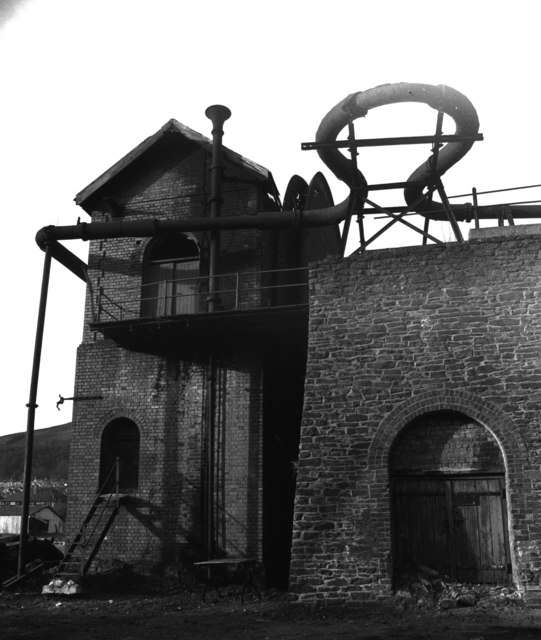
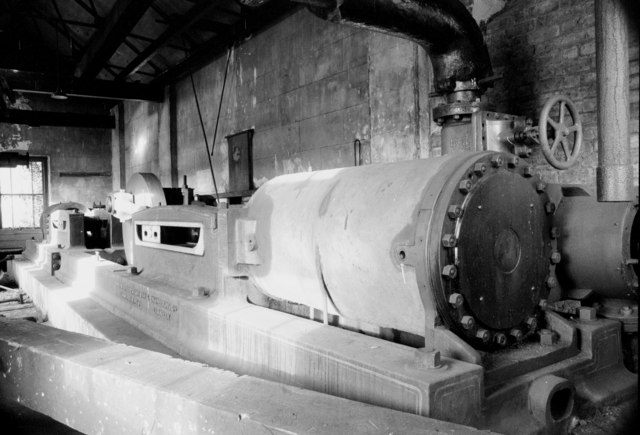
The colliery site has been cleared. The large Waddle fan that stood on the site was cut up in the 1980s and its steam engine, built about 1880 by the Waddle Patent Fan & Engineering Co. of Llanelly, went to Big Pit Mining Museum.
Related mines
- Cwm Cynon Colliery — Both were pits of John Nixon's company in the Cynon valley, run from the Navigation Offices at Mountain Ash; Cwm Cynon was the most southerly of the group.
- Deep Duffryn Colliery — John Nixon's two Mountain Ash collieries: Deep Duffryn, which he bought in 1856, and Nixon's Navigation, which he sank afterwards; the same company worked both.
- Glyngwyn Colliery — Both worked by Nixon's Navigation Coal Company at Mountain Ash.
- Werfa Colliery — John Nixon, who sank Nixon's Navigation, had opened Werfa Colliery earlier.
Nearby mines
- Glyngwyn Colliery — 0.3 miles (0.5 km) S
- Deep Duffryn Colliery — 0.4 miles (0.7 km) NW
- Cwm Cynon Colliery — 0.6 miles (1.0 km) SE
- Lower Duffryn Colliery — 0.9 miles (1.5 km) NW
- Abercwmboi Colliery — 1.3 miles (2.1 km) W
Straight-line distance, within 9 miles (15 km). Show on the map.
Disasters & major incidents
-
Nixon's Navigation Colliery Explosion, 1863
7 February 1863 · Explosion · 2 fatalities
An explosion at Nixon's Navigation Colliery, Mountain Ash, at about five o'clock on the afternoon of Saturday 7 February 1863 killed two colliers, Evan Morgan and Samuel Jones. The inquest heard that a pipe and tobacco were found, and concluded that the men had been smoking in the roadway on their way to their stall.
What's uncertain
Points where sources disagree or the record could not be settled; both accounts are kept. All open questions in the archive.
- The Northern Mine Research Society gives 1,189 men underground and 646 on the surface in 1908, 1,835 in all. (disputed) 3
- The colliery closed as a production unit in 1941 but was retained for pumping and ventilation for Deep Duffryn Colliery and for surface workshops. (disputed) 3
Recorded claims
Individual factual claims, each attached to the source(s) that support it below. Where sources disagree, both are kept.
- John Nixon was born in 1815 at Barlow, County Durham, entered mining as a workman on the Durham coalfield, surveyed the Merthyr Tydfil area for the Marquis of Bute, and financed the lease of the Mountain Ash mineral rights with money made selling Welsh steam coal in France. 1
- Nixon began sinking in 1855; the work took seven years to reach the Four Feet seam, cost £113,772 and nearly ruined him. First coal was raised in 1860. 2,1
- The single south shaft was sunk to the Four Feet seam at 365 yards, at that time the deepest colliery in the coalfield; it was deepened to the Nine Feet seam during the late 1880s, the one shaft then winding from both seams with two winding engines. 2
- The Inspector of Mines list of 1896 records Nixon's Navigation Coal Co. Ltd employing 1,558 men; Welsh Coal Mines gives 1,825 for 1908, and in 1935 the colliery employed 65 on the surface and 850 underground, producing 300,000 tons of steam coal. 2,1
- By 1918 the colliery had become integrated with the Deep Duffryn colliery, the combined unit then employing 2,684 men. 2
- Production ceased in 1940. 2
- The Northern Mine Research Society gives 1,189 men underground and 646 on the surface in 1908, 1,835 in all. (disputed) 3
- The colliery closed as a production unit in 1941 but was retained for pumping and ventilation for Deep Duffryn Colliery and for surface workshops. (disputed) 3
- The south pit was eighteen feet in diameter, sunk to the Four-Feet seam at 1,095 feet and deepened to 1,350 feet 5 inches, and wound from the Four-Feet and Nine-Feet landings with two engines. 3
- Two Waddle fans of 42 and 40 feet in diameter were installed in 1880 and a third of 18 feet in 1889. 3
- The men at Nixon's Navigation were the first in the area to break the bitter strike of 1893, returning to work on 25 August. 3
- In 1929 Sir David Rees Llewellyn took control of Nixon's company and renamed it Llewellyn (Nixon) Limited. 3
- The steam engine that drove the Waddle fan was built about 1880 by the Waddle Patent Fan & Engineering Co. of Llanelly; the fan was cut up and the engine went to Big Pit Mining Museum. 4
- The Northern Mine Research Society lists 33 entries of men killed at the colliery between 1869 and 1929, most by falls of roof. 3
Photographs & further reading
Shaft depths and workforce figures from the Inspector of Mines lists, together with an account of the 1863 explosion and its inquest, and Nixon's own opening speech.
View sourceThe life of the Durham pitman who opened the French market to Welsh steam coal and sank this colliery with the proceeds.
View sourceAccount of Nixon's career, the shaft and engines, the Waddle fans, the 1893 strike, employment and a list of men killed.
View sourceThe neighbouring colliery with which Nixon's Navigation was integrated and for which it later pumped and ventilated.
View sourceSources
- (secondary) John Nixon (mining engineer) — Wikipedia
- (secondary) Nixon's Navigation Colliery, Mountain Ash — Welsh Coal Mines
- (secondary) Nixon's Navigation Colliery - Northern Mine Research Society — Northern Mine Research Society
- (observational) Waddle Fan, Deep Duffryn Colliery, formerly Nixon's Navigation Colliery (Geograph 453388) — Geograph
Record created: 3 September 2026 · Last researched: 30 September 2026