 MineArchive
Deep Duffryn Colliery
| Also known as | Deep Dyffryn Colliery |
|---|---|
| Location | Mountain Ash, Cynon Valley, Rhondda Cynon Taf — 51.6865, -3.3821 (approximate) |
| Commodity | Coal |
| Type | Coal |
| Worked | Sinking from February 1850; Four Feet seam reached at 283 yards–21 September 1979 (NMRS gives 1981) |
| Maximum depth | 409 yards to the Gellideg seam after the 1955 deepening |
| Operators | Nixon's Navigation Coal Co. Ltd. (1856–1928), Llewellyn (Nixon) Ltd (1929–1934), Powell Duffryn Steam Coal Company (1935–1946), National Coal Board (1947–1979) |
Overview
One of the first deep pits of the Cynon Valley, sunk at Mountain Ash from 1850 by David Williams of Ynyscynon and sold in 1856 to John Nixon, who made it the proving ground of his ideas: his patent ventilator replaced the ventilation furnace, output rose from 150 to 1,000 tons a day, and it was here that Nixon first worked the longwall system in the South Wales coalfield. Nixon's Navigation Coal Company employed nearly 2,700 men here by 1918. Deepened three times to reach the Seven Feet and then the Gellideg, and mechanised in 1968, it outlasted most of the coalfield before closing at the end of the 1970s.
History
Sinking began in February 1850 and was abandoned almost at once on striking quicksand; a new site was chosen and work restarted on 15 April 1850. The sinker was David Williams of Ynyscynon, better known by his bardic name Alaw Goch -- the Northern Mine Research Society adds George Insole as his partner -- and the shaft reached the Four Feet seam at 283 yards. In 1856 Williams sold the colliery to John Nixon for 42,000 pounds. Nixon, a Durham man who had come to South Wales as a mining engineer, installed his own patent ventilating apparatus in place of the older furnace method, and output rose from 150 to 1,000 tons a day; it was at Deep Duffryn that he first used the longwall system in the coalfield. The original wooden headgear gave way in 1888 to a lattice structure of his own design. By 1870 the firm was Nixon, Taylor and Cory; the 1896 Inspector of Mines list has Nixon's Navigation Coal Company with 1,285 men here, and by 1918 the workforce had reached 2,684. In 1871, after a long strike, two colliers examined the whole pit on the manager George Brown's invitation and reported district by district on where gas was blowing -- a workmen's inspection the Western Mail printed in full. The shafts were deepened in 1924-27 to the Seven Feet at 382 yards and again in 1955 to the Gellideg at 409 yards. Nixon's company became Llewellyn (Nixon) Limited in 1929, Powell Duffryn took the colliery over in 1935, and it passed to the National Coal Board in 1947. In 1954-55 Deep Duffryn was one of 42 collieries whose accident rate worried both the Board and the union, and a survey of pneumoconiosis between 1948 and 1961 found 213 certifiable cases here. Manpower reached a post-war peak of 708 in 1957 and then fell as the best seams were worked out. In May 1965 the sacking of a young miner for swearing at an official set off unofficial sympathy strikes across the coalfield, and in 1972 the lodge withdrew its safety men during the national strike against the advice of its own executives. An investment of 250,000 pounds in power loading in 1968 raised output per manshift to 47.6 hundredweight, and through the 1970s 514 men were raising 160,000 tons a year from the Five Feet and Gellideg.
Geology
Aberdare steam coals of the South Wales Coal Measures: the Four Feet at 283 yards, the Seven Feet worked extensively at 60 to 66 inches, the Lower Six Feet (nine inches of coal, ten of dirt, thirty-six of coal), and the Yard, Five Feet and Gellideg. The coal was classed 201B dry steam coal, low in volatiles, ash and sulphur and non-caking, raised for ships, locomotives and later power stations.
Geological setting: Sedimentary Beds and Seams (well documented example)
Workings
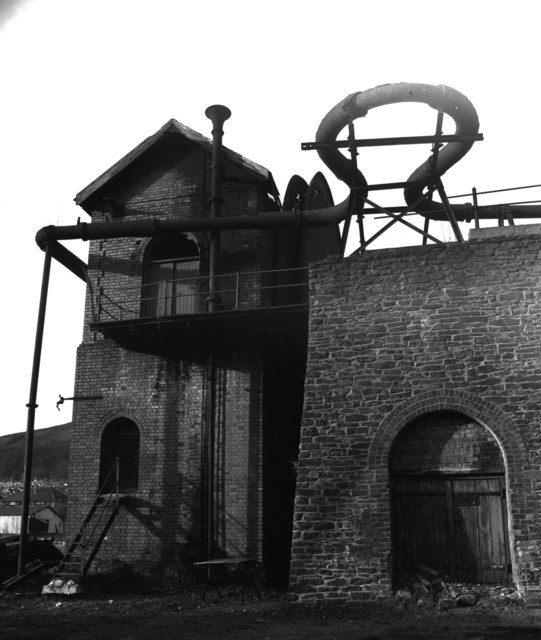
Shafts sunk to 283 yards in 1850, deepened to 382 yards in 1924-27 and to 409 yards in 1955, when a new pit bottom was made in the Gellideg fifty feet below the old one. Ventilated by Nixon's patent apparatus in place of a furnace, and later by a Waddle fan of about 1880 whose steam engine stood by until 1967. Power loading from 1968.
Closure
Welsh Coal Mines gives the closing date as 21 September 1979; the Northern Mine Research Society says the gradual rundown of the 1970s ended in closure in 1981, despite the lodge's efforts to keep the pit open. Both agree the colliery survived the closures of the 1960s and went in the run-down that followed.
What remains
Unknown.
The circa-1880 Waddle ventilating fan, 40 feet across, stood on site into the 1980s and was cut up; its steam engine went to the Big Pit mining museum.
Redevelopment
Unknown.
Related mines
- Merthyr Vale Colliery — Nixon left the Cynon Valley to sink Merthyr Vale after developing Deep Duffryn and Nixon's Navigation.
- Nixon's Navigation Colliery — John Nixon's two Mountain Ash collieries: Deep Duffryn, which he bought in 1856, and Nixon's Navigation, which he sank afterwards; the same company worked both.
Nearby mines
- Nixon's Navigation Colliery — 0.7 km SE
- Abercwmboi Colliery — 1.5 km W
- Middle Duffryn Colliery — 1.8 km NW
- Cwm Cynon Colliery — 2.1 km SE
- Perthyglisson Colliery — 2.2 km NE, Merthyr Tydfil
Straight-line distance, within 15 km. Show on the map.
People
- George Brown · manager, from 1871 — Manager in 1871, when he asked two colliers to examine the whole pit after a strike; their report was printed by the Western Mail on 2 September 1871.
- John Nixon · owner, 1856–1894 — Bought the colliery in 1856, fitted his patent ventilator, designed its 1888 lattice headgear and first worked longwall in the coalfield here; born at Barlow, County Durham, in 1815, he retired in 1894.
- David Williams · owner, 1850–1856 — Sank Deep Duffryn from 1850 and sold it to John Nixon in 1856; a poet known by the bardic name Alaw Goch.
What's uncertain
Points where sources disagree or the record could not be settled; both accounts are kept. All open questions in the archive.
- Welsh Coal Mines dates the closure to 21 September 1979, while the Northern Mine Research Society puts it in 1981 after a gradual rundown through the 1970s. (disputed) 1,2
Recorded claims
Individual factual claims, each attached to the source(s) that support it below. Where sources disagree, both are kept.
- Sinking began in February 1850, was restarted on a new site on 15 April 1850 after quicksand was struck, and reached the Four Feet seam at 283 yards under David Williams of Ynyscynon, the poet Alaw Goch. 1,2
- Williams sold the colliery to John Nixon in 1856 for 42,000 pounds. 1
- Nixon installed his patent ventilating apparatus in place of furnace ventilation, output rose from 150 to 1,000 tons a day, and he first used the longwall system in the South Wales coalfield at this colliery. 1
- The 1896 Inspector of Mines list records 1,285 men at the colliery under Nixon's Navigation Coal Company, and by 1918 the workforce had grown to 2,684. 1
- A South Wales NUM survey of pneumoconiosis covering 1948 to 1961 found 213 certifiable cases at Deep Duffryn, and in 1954-55 the colliery was one of 42 whose accident rate concerned the Coal Board and the union. 2
- Welsh Coal Mines dates the closure to 21 September 1979, while the Northern Mine Research Society puts it in 1981 after a gradual rundown through the 1970s. (disputed) 1,2
Photographs & further reading
The sinking, Nixon's purchase and ventilator, the deepenings and the 1979 closing date, with photographs of the colliery.
View sourceSources
- (secondary) Deep Duffryn Colliery — Welsh Coal Mines
- (secondary) Deep Duffryn Colliery — Northern Mine Research Society (Internet Archive)
Record created: 20 September 2026 · Last researched: 20 September 2026