 MineArchive
Werfa Colliery
| Location | On the mountainside between Aberdare and Merthyr Tydfil, Rhondda Cynon Taf — 51.7180, -3.4200 |
|---|---|
| Commodity | Coal |
| Type | Coal |
| Worked | c. 1835 (level); pit sunk by 1846–1908 or March 1909 |
| Maximum depth | Old Pit 509 ft to below the Five Feet seam (BGS figures, per NMRS); sources vary |
| Operators | Nixon and Company (1835–?), Heath, Evans and Co. (?–1886), James Evans and Co. Ltd (1883–1903), William Lewis, 1st Baron Merthyr (1903–1909) |
Overview
John Nixon's first colliery, on the mountainside between Aberdare and Merthyr, where a level of about 1835 was deepened into a water-balance pit by 1846 and sent the first boat-load of Aberdare steam coal down the Glamorgan Canal to Cardiff. Its early years were deadly, with an explosion in 1849 and a chain breaking in the shaft in 1851. Later worked by Heath, Evans and Co. and James Evans and Co., it raised 152,000 tons in 1889 and was abandoned when the Bute lease ran out in 1908-09.
History
Thomas Rees opened a small level here, which David Williams and John Nixon took over in 1835 under a lease first held by the Abernant Iron Company and later by the Marquis of Bute. Nixon developed it, made an incline down to the Glamorgan Canal at Aberdare, and sent the first boat-load of steam coal from it to Cardiff. By 1846 Nixon and Company, John Nixon with his partners James Evans, Thomas Edwards Heath and David Williams, had finished sinking the Old Pit, an elliptical shaft 20 feet by 13 that cost £20,000; coal was wound by water balance, the water being pumped back up by a steam engine. An explosion on 14 May 1849, a week after another, killed five, and on 4 September 1851 the chain broke in the balance pit and killed fourteen or more (see Disasters, below). Two more died in an explosion at naked lights in March 1856 (see Disasters, below). After the strike of 1858 the returning colliers found the workings covered in thousands of dead and dying rats and mice, carried down in the horses' chaff bags. A steam engine at the pit top from 1861 hauled coal by rope through the shaft and cut the need for horses underground, and output rose from 23,252 tons in 1861 to 67,901 in 1871. In May 1865 an eleven-year-old, Charles Prothero, drowned in the sump, and the owner was fined £5 for employing a boy under twelve. Heath, Evans and Co. held the colliery by 1869; a New Pit was sunk in 1879 to give the second shaft the law required after Hartley, and by 1883 James Evans and Co. worked the Old Pit as upcast and the New Pit as downcast, by longwall or double stall. In March 1886 an explosion in the Seven Feet seam blew away the covering of the shaft and killed four men (see Disasters, below). Output reached 152,020 tons in 1889, though the Seven Feet and Yard seam workings were closed in the 1893 depression with 350 men thrown out. In 1896 James Evans and Co. Ltd employed 663. The lease was not renewed in 1903; Lord Merthyr then worked the colliery on the Marquis of Bute's behalf, a dispute over the Bute seam price list stopped it in 1904, and with reserves short it was abandoned when the lease expired in March 1909, or in 1908 with 257 men by Welsh Coal Mines' account.
Geology
Steam coal seams of the South Wales Coalfield: the Five Feet, Nine Feet (53 inches thick at the New Werfa pit), Seven Feet, Yard and Bute seams.
Geological setting: Sedimentary Beds and Seams (well documented example)
Workings
The Old Pit, elliptical, 20 feet by 13, was sunk to just below the Five Feet at 509 feet by BGS figures; Welsh Coal Mines gives about 66 yards to the bottom of the sump. Coal was raised by water balance. A New Werfa pit reached the Nine Feet at 356 feet, and a New Pit sunk in 1879 became the downcast, 510 feet deep, with the Old Pit, then given as 110 yards, as upcast; a third shaft of 335 feet is also listed. From 1861 a steam engine at the pit top worked rope haulage through the shaft. The coal was worked longwall, by double stalls.
Closure
The Marquis of Bute's lease was not renewed in 1903, and with reserves running short the colliery was abandoned when it expired on 25 March 1909 (NMRS); Welsh Coal Mines gives closure in 1908 with 257 men.
What remains
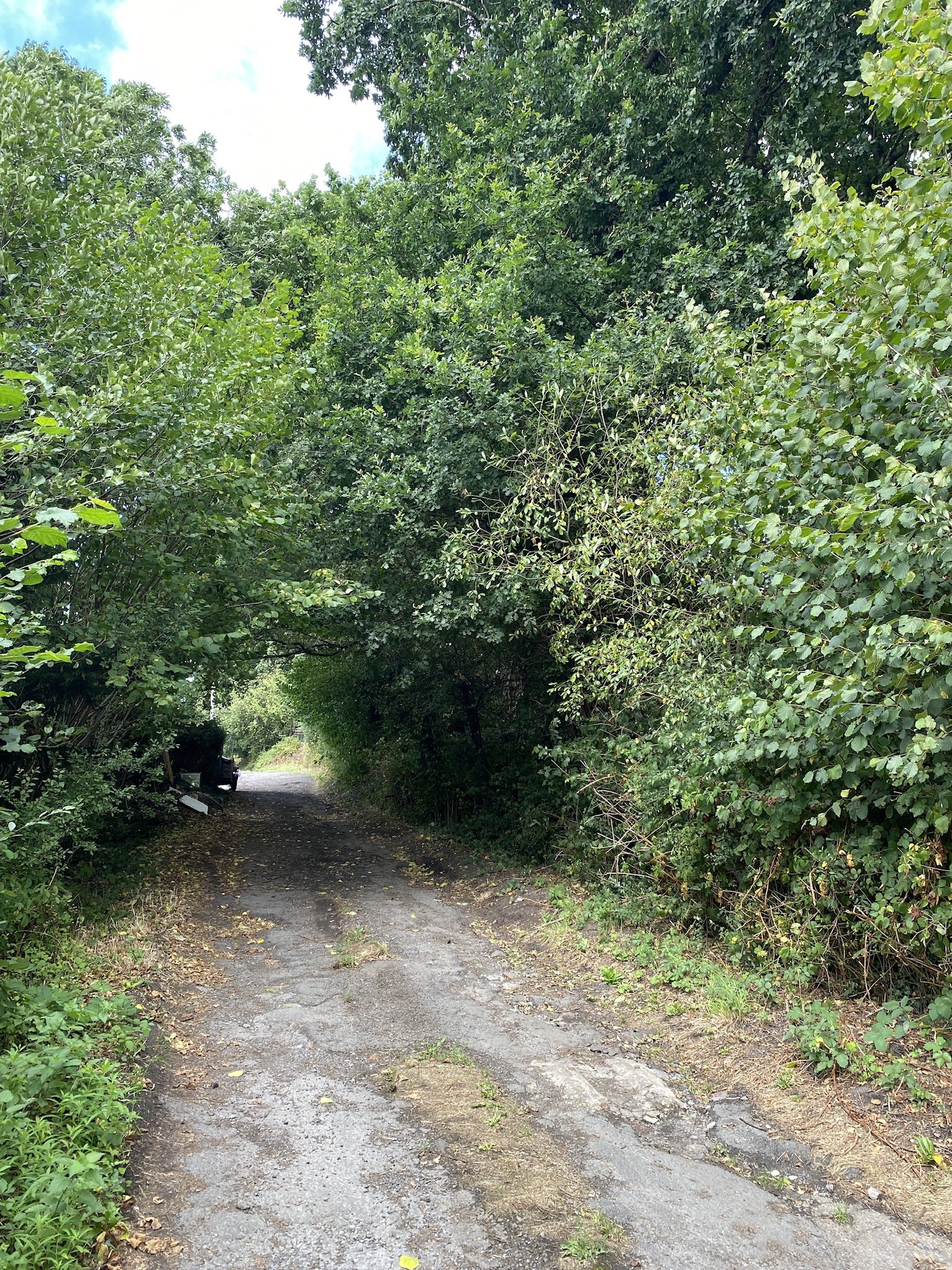
An old track and a former tramline that carried the colliery's coal survive as paths on the hillside, photographed for Geograph (the track in 2022). No report of surviving colliery structures has been found.
Nearby mines
- Blaengwawr Colliery — 1.8 km SW
- Aberaman Colliery — 2.0 km S
- Lletty Shenkin Colliery — 2.2 km S
- Gethin Colliery — 2.9 km E, Merthyr Tydfil
- Middle Duffryn Colliery — 2.9 km S
Straight-line distance, within 15 km. Show on the map.
Disasters & major incidents
-
Werfa Colliery explosion, 1849
14 May 1849 · Explosion · 5 fatalities
On Monday 14 May 1849 a man carrying a Davy lamp went into a heading at Werfa Colliery, above Aberdare, that was fouled with gas, and a boy followed him with a candle. The gas exploded at the candle. Two young colliers were killed and three more died of their burns; twelve were injured in all. It was the colliery's second explosion in a week, and the inquest jury asked for a fireman to inspect the workings before the men went in. -
Werfa Colliery shaft accident, 1851
4 September 1851 · Winding / Shaft Accident · 14 fatalities
At seven in the morning on Thursday 4 September 1851 the chain snapped in the balance pit at Werfa Colliery above Aberdare, and both cages fell down the shaft, 180 feet. Eleven men and boys were in the descending cage and two or three in the ascending one. Word spread quickly through the neighbourhood, but the waiting crowd soon learned that every man had been killed instantly: fourteen by Welsh Coal Mines' count, sixteen by the NMRS. -
Werfa Colliery explosion, 1856
March or April 1856 · Explosion · 2 fatalities
In the spring of 1856 an explosion of gas at naked lights in Werfa Colliery, above Aberdare, killed a collier, Morgan Williams, and his ten-year-old son John, who worked with him. The sources place it on 17 March or 2 April. It was the colliery's third fatal explosion in seven years. -
Werfa Colliery explosion, 1886
26 March 1886 · Explosion · 4 fatalities
At about half past two on the afternoon of Friday 26 March 1886 an explosion in the Seven Feet vein at Werfa Colliery, Aberdare, blew away the covering at the top of the shaft. An exploring party led by the manager found three men dead 600 yards from the shaft bottom, and a fourth died of his injuries a week later. The workings below were little damaged. Safety lamps were in use, and the cause was not known.
Recorded claims
Individual factual claims, each attached to the source(s) that support it below. Where sources disagree, both are kept.
- A level opened by Thomas Rees was taken over by David Williams and John Nixon in 1835; Nixon made an incline to the Glamorgan Canal and sent the first boat-load of steam coal to Cardiff. 1
- The pit, elliptical and 20 feet by 13, was sunk by 1846 by Nixon and Company and worked by water balance. 2,1
- The Old Pit was sunk to just below the Five Feet seam at 509 feet (BGS figures, with a caution that reports vary). (disputed) 1
- The shaft was sunk about 66 yards to the bottom of the sump. (disputed) 2
- The chain breaking in the balance pit on 4 September 1851 killed eleven by one count and fourteen by another on Welsh Coal Mines, and sixteen by NMRS. (disputed) 2,1
- After the 1858 strike the returning colliers found thousands of rats and mice, mostly dead, covering the workings. 1
- Output rose from 23,252 tons in 1861 to 67,901 in 1871 and 152,020 in 1889. 1
- In 1896 James Evans and Co. Ltd employed 663 men raising steam coal. 2
- The lease ran out on 25 March 1909 and the mine was abandoned. (disputed) 1
- The colliery closed in 1908 with 257 men. (disputed) 2
Photographs & further reading
Detailed history from Nixon's level to the 1909 abandonment, with shaft figures, output and a list of deaths.
View sourceShort history with photographs of about 1899 and names of the dead of 1849 and 1851.
View sourceSources
- (secondary) Werfa Dare Colliery (The Werfa Pits) — Northern Mine Research Society (information supplied by Ray Lawrence)
- (secondary) Werfa — Welsh Coal Mines
Record created: 13 September 2026 · Last researched: 14 September 2026