 MineArchive
Blaennant Colliery
| Location | Abernant, Aberdare, Cynon valley, Rhondda Cynon Taf — 51.7311, -3.4197 (exact) |
|---|---|
| Commodity | Coal |
| Type | Coal |
| Worked | c.1840–1927 |
| Maximum depth | Unknown. |
| Operators | Marquis of Bute (1900–1908), Powell Duffryn Steam Coal Company (1918–1927), Aberdare Iron Company, Aberdare Plymouth Company Ltd, Aberdare Works and Collieries Company |
Overview
A water-balance pit at Abernant, Aberdare, sunk by the Aberdare Iron Company around 1840 to feed its ironworks, which passed through the Aberdare Works company and the Marquis of Bute to Powell Duffryn and closed in 1927.
History
Blaennant Colliery, at Abernant, Aberdare, was one of the pits the Aberdare Iron Company opened to supply its ironworks. It was sunk around 1840, or in the 1840s, as a water-balance pit, and lay north of the Werfa pits. By 1880 the company had become the Aberdare and Plymouth Company, and in 1896, as the Aberdare Works and Collieries Company, it employed 319 men at Blaennant raising steam coal.
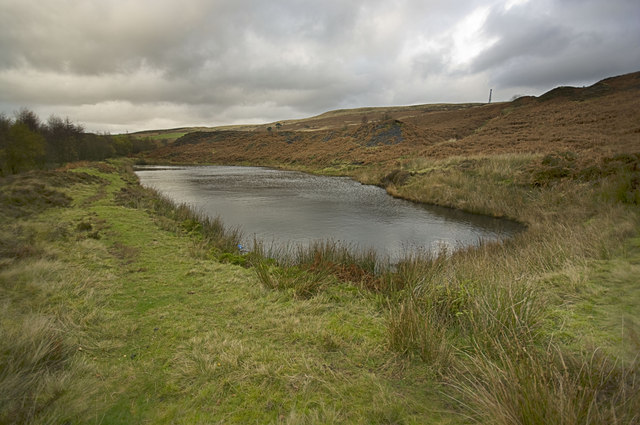
The pit later came to the Marquis of Bute's company, which owned it in 1900, when John Johnson, an 18-year-old assistant hitcher, was crushed under the cage as he tried to cross through the shaft, and Richard Morgan was killed by a fall in the Six Feet seam. It employed 662 men in 1908. By 1918 it was under Powell Duffryn, with 319 men, and in 1923 610 men worked the Bute, Two Feet Nine, Four Feet, Nine Feet, No. 1 Yard and Five Feet seams. Blaennant closed in 1927. By 2009 nothing of it remained at the site, where a pond lies on open moorland.
Geology
South Wales Coalfield: the Bute, Two Feet Nine, Four Feet, Nine Feet, No. 1 Yard, Five Feet and Six Feet seams.
Workings
A shaft wound by water balance at first.
Closure
Closed in 1927.
What remains
Nothing of the colliery remains at the site, where there is now a pond on open moorland.
None.
Redevelopment
Unknown.
Related mines
- Abernant No. 9 Pit — Neighbouring Abernant pits of the Aberdare Works and Collieries Company and then the Marquis of Bute.
- Cwmbach Colliery — Aberdare pits of the Aberdare and Plymouth and Aberdare Works and Collieries companies.
Nearby mines
- Cwmdu Colliery, Merthyr Tydfil — 0.7 miles (1.1 km) NE, Merthyr Tydfil
- Werfa Colliery — 0.7 miles (1.1 km) S
- Winch Fawr Colliery — 1.0 miles (1.6 km) N, Merthyr Tydfil
- River Level Colliery, Aberdare — 1.1 miles (1.7 km) SW
- Dyllas Colliery — 1.1 miles (1.8 km) NW
Straight-line distance, within 9 miles (15 km). Show on the map.
Recorded claims
Individual factual claims, each attached to the source(s) that support it below. Where sources disagree, both are kept.
- Blaennant was sunk as a water-balance pit by the Aberdare Iron Company in the 1840s to supply its Aberdare ironworks. 1
- Blaennant Colliery worked from about 1840 to 1927. 1,2
- Blaennant lay to the north of the Werfa pits. 3
- It employed 319 men in 1896, 662 in 1908, 319 in 1918 and 610 in 1923. 1
- In 1923 it worked the Bute, Two Feet Nine, Four Feet, Nine Feet, No. 1 Yard and Five Feet seams. 1
- The Marquis of Bute owned the colliery in 1900, when John Johnson, assistant hitcher, was crushed under the cage and Richard Morgan was killed by a fall in the Six Feet seam. 4,5
- In 2009 there were no remains of the colliery at the site. 6
- In 1925 it was owned by the Powell Duffryn Steam Coal Company. 1,7
Photographs & further reading
Geograph photograph of the site in 2009, noting that nothing of the colliery remains there.
View sourceSources
- (secondary) Blaennant Colliery, near Aberdare — Welsh Coal Mines
- (secondary) Rhondda Cynon Taf heritage trail: Abernant — Rhondda Cynon Taf County Borough Council
- (secondary) Werfa Dare Colliery (The Werfa Pits) — Northern Mine Research Society (information supplied by Ray Lawrence)
- (primary) NMRS Coal Mining Accidents and Deaths: John Johnson, Blaennant, 1900 — Northern Mine Research Society
- (primary) NMRS Coal Mining Accidents and Deaths: Richard Morgan, Blaennant, 1900 — Northern Mine Research Society
- (observational) Pond near site of Blaennant Colliery — Geograph
- (primary) NMRS Coal Mining Accidents and Deaths: Thomas L. Evans, Blaennant, 1925 — Northern Mine Research Society
Record created: 17 October 2026 · Last researched: 17 October 2026