 MineArchive
Stope
| Also known as | Stoping |
|---|---|
| Category | Mine Workings & Access |
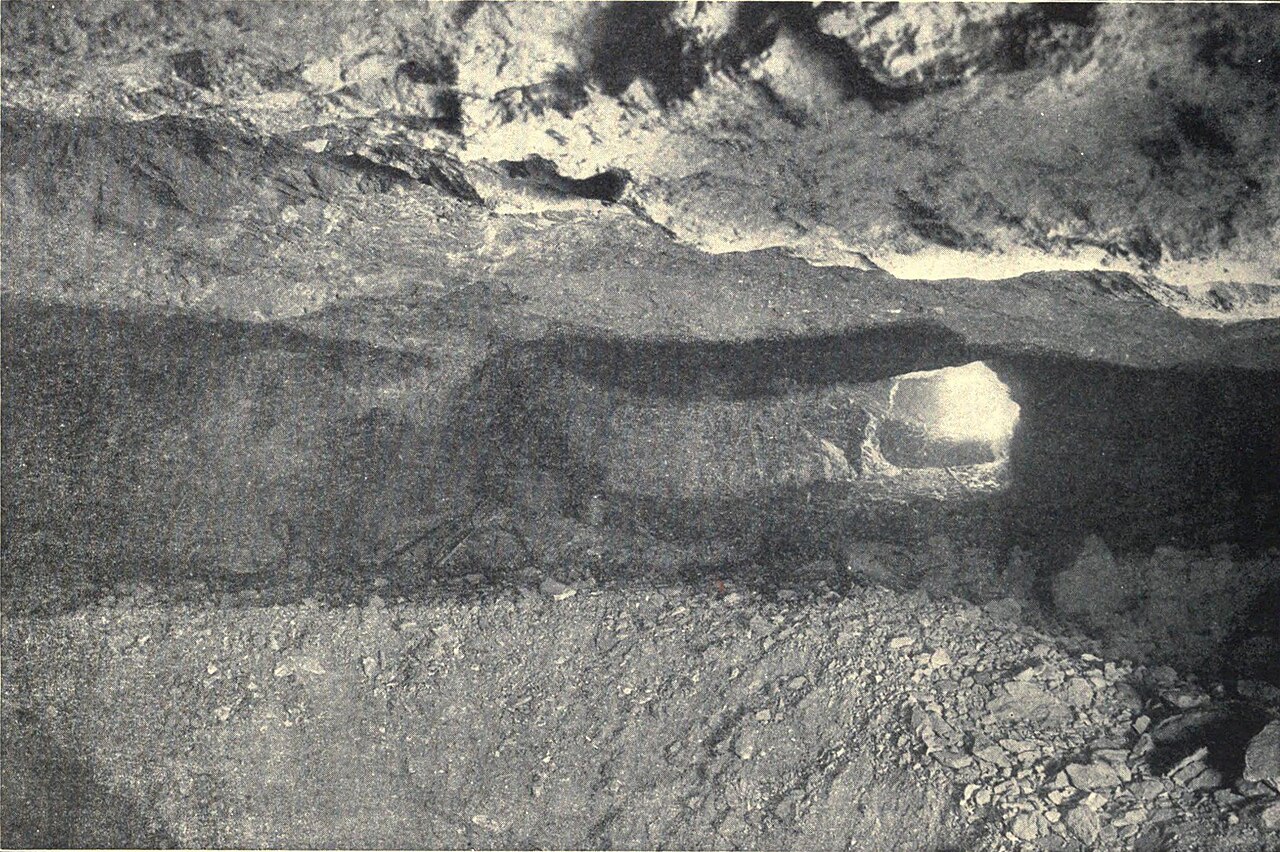
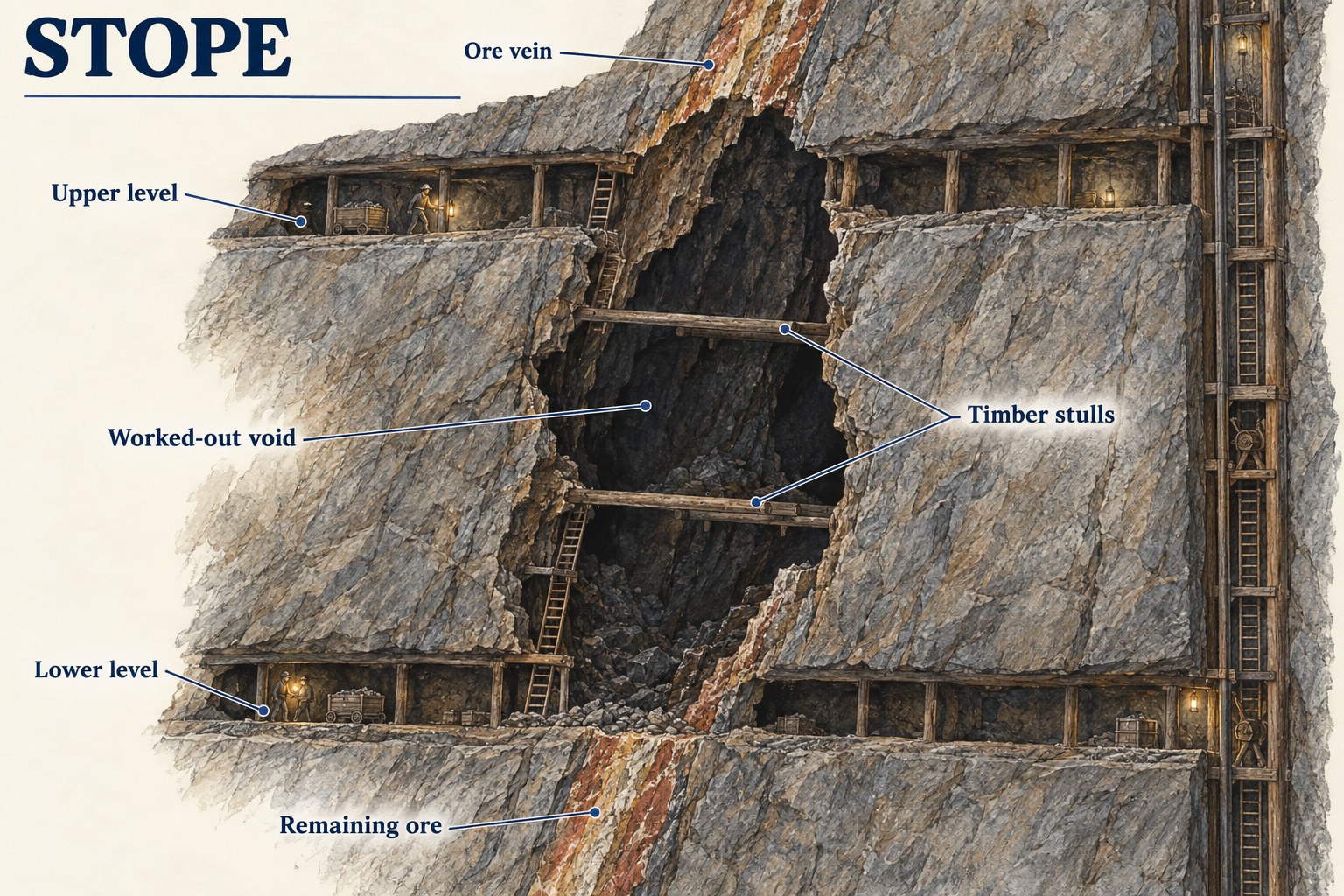
The open void left underground once ore has been extracted from a vein or ore body, and the verb ("to stope") for working ground that way.
Historical usage
Stoping is the general term for almost any underground ore extraction beyond the shafts and levels driven simply to reach and open up a mine — it covers everything from small hand-worked gaps to enormous multi-level voids in a major mine's richest ground.
How it worked
Ore is removed from a vein or ore body working upward, downward or along its length, leaving the excavated space as the stope; the earliest stopes were worked by hand tools or fire-setting, later by gunpowder, and from the 19th century onward by other explosives, power tools and machinery. Depending on the ground's stability, a stope was left open, supported artificially with timber, or backfilled with waste rock as work progressed.
Why it was used
Stoping is, in a real sense, simply what mining an ore body actually is — shafts and levels exist to reach and access the ore, but the ore itself is won by stoping it out.
Risks & limitations
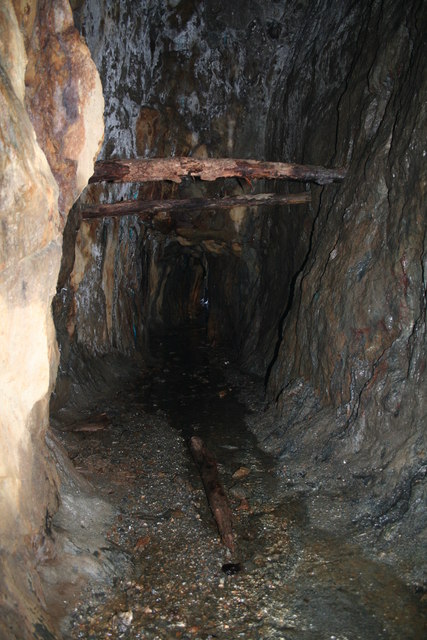
A large stope is an unsupported or artificially supported void, and its stability depends entirely on the strength of the surrounding rock and the adequacy of whatever timbering or packing has been used. Timber supports ("stulls") can rot, dry out, crack or simply be overloaded, and a collapse can happen with little warning — exactly what killed eight miners in a timbered stope at Dolcoath's 412-fathom level in 1893, one of the deepest workings in Cornwall at the time.
Regional variation
"Stope"/"stoping" is standard English-language mining terminology worldwide, with the specific method used (open, supported, cut-and-fill, sublevel, and so on) varying by ground conditions and period rather than by region. The Yorkshire Dales lead mines used the word differently again: there a stope was the timber platform itself, built ever higher into the worked-out vein and reached by wooden ladders, rather than the void it stood in. Miners could end up working at a considerable height on them. The distinction matters when reading Dales sources, where a man works on a stope rather than in one.
Related terminology
Flats, Ore Chute, Shrinkage Stoping, Square-set Timbering, Submarine Mining
Mines associated with this term
5 examples chosen from 37 linked records — the term page is not an index.
- Caplecleugh Mine — Cumbria (well documented example)
Named 4 times in this record, first in the history: “…and west along the Browngill Vein specifically to work this zinc, stoping a total length of 900 metres over 18 metres of height to the west --…” - Ban Garth Mine — Cumbria (well documented example)
Named twice in this record, first in the history: “…part of the mine shows a large opencast pit cut through earlier stopes, truncated adit mouths, trials and spoil heaps, and below them a…” - Burtree Pasture Mine — County Durham (well documented example)
Named 5 times in this record, first in the summary: “…much of it waste the old lead miners had packed back into their stopes, and it closed for good around 1980.” - Bwlch Glas Mine — Ceredigion (well documented example)
Named in this record’s workings: “…bell and sliding safety gates, with a windlass-supported flooded stope nearby and a compressed-air pipe running along the level — the mine…” - Cavanacaw Gold Mine — County Tyrone (well documented example)
Galantas has driven over 3 km of underground development to reach deeper ore on the Kearney vein by stoping rather than opencast.
Disasters associated with this term
Included only where MineArchive's own research gives a reasonable evidential basis, with the nature of the relationship stated — not every disaster where this term might plausibly apply.
- Dolcoath Mine stope collapse (contextual relationship)
The collapse occurred in a large worked-out stope beneath the failed timber support. - Greenside Mine gas exposure, 1960 (contextual relationship)
Old stopes were the killer twice over: Santamara's body was found up a 20-foot ladder in one, and the two men who climbed in to recover it were overcome by the same bad air.
Sources
- (secondary) Definition of stope — Mindat.org Glossary
- (secondary) Mining Methods: Levels, Stopes, Deads and Spoil — Lead Mining in the Yorkshire Dales — MyLearning / Yorkshire Dales
- (secondary) Stoping — Wikipedia
Record created: 20 August 2026 · Last researched: 9 September 2026