 MineArchive
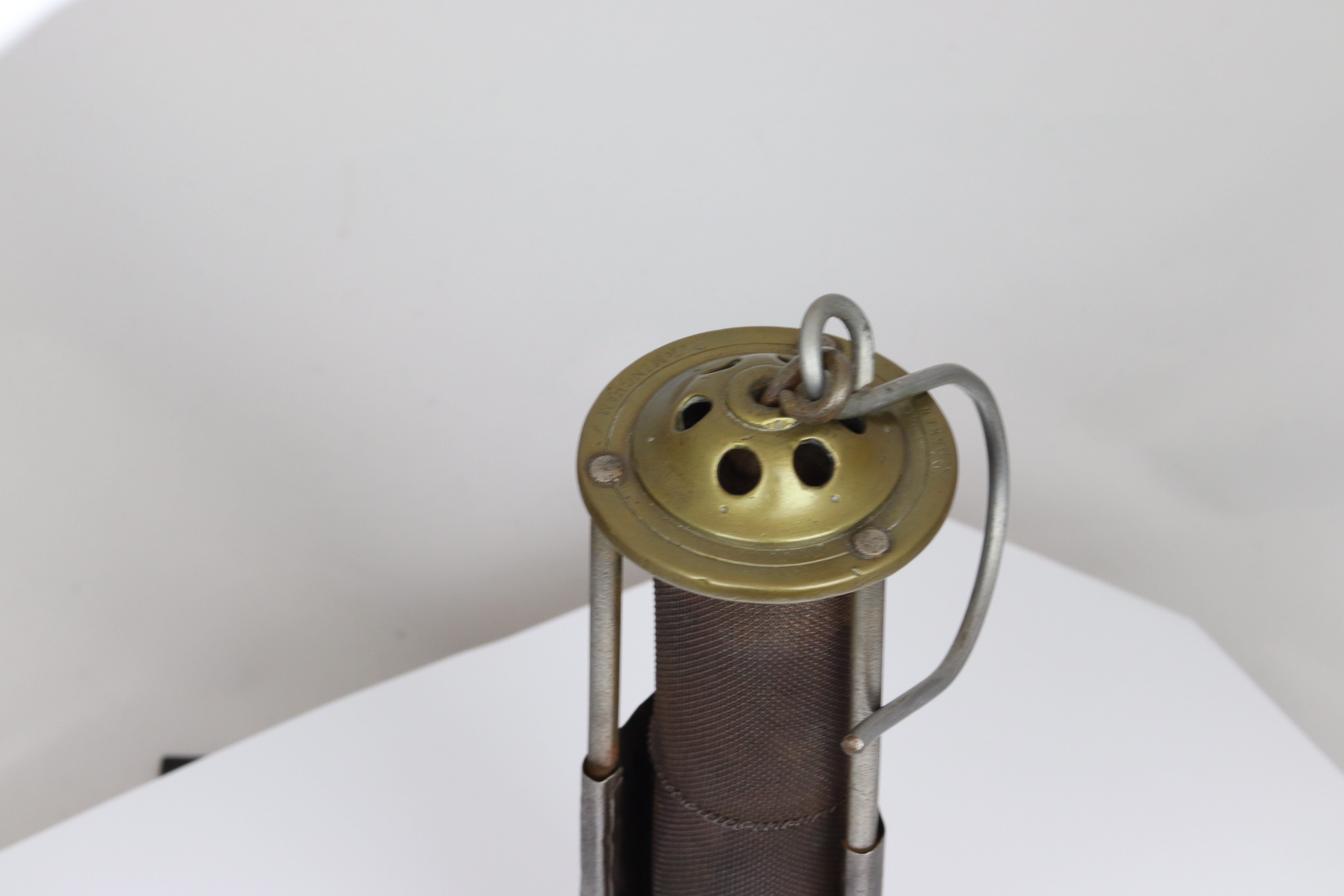
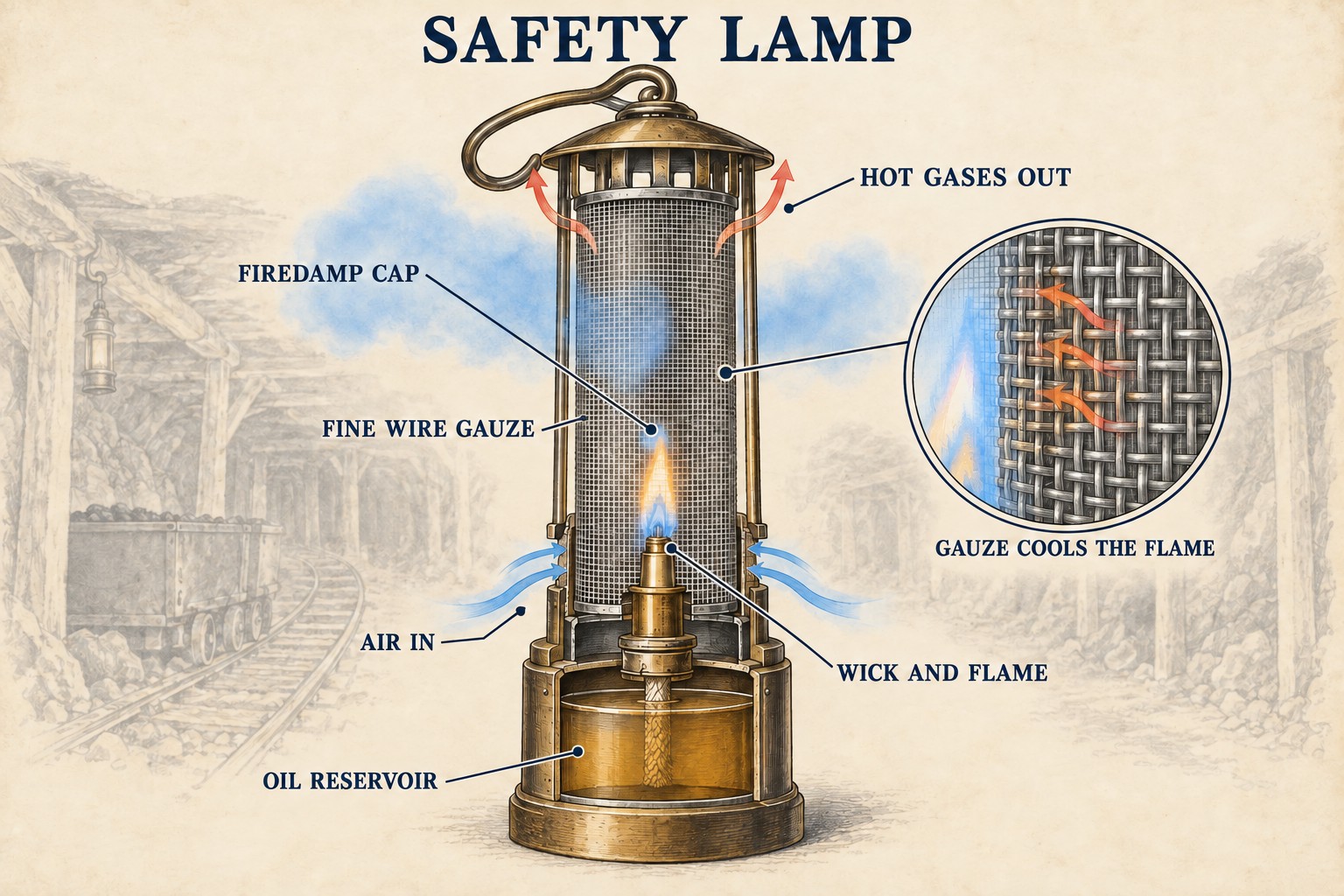
Safety Lamp
| Also known as | Davy Lamp (after Humphry Davy's 1815 design — used loosely for safety lamps generally), Geordie Lamp (North East England), Flame safety lamp |
|---|---|
| Category | Structures & Machinery |
A mine lamp designed to burn safely in air containing firedamp, its flame enclosed inside a fine metal gauze so it could not ignite the surrounding gas.
Historical usage
Before safety lamps, miners working gassy coal seams had only open flames — usually candles — for light, with predictably disastrous results wherever they met firedamp. Humphry Davy developed his lamp at the Royal Institution in 1815, working through several prototypes in only a couple of months; it was successfully tested at Hebburn Colliery in January 1816 and went rapidly into production across British coalfields.
How it worked
Davy enclosed the lamp's flame in a cylinder of fine metal gauze: air could still pass through the mesh to fuel the flame, but the holes were small enough that the gauze cooled the flame before it could pass through and ignite gas in the surrounding air.
Why it was used
The safety lamp let miners work gassy seams that open-flame lighting had made too dangerous to exploit, directly enabling deeper, gassier coal mining — and, as a secondary effect, a lamp's flame behaviour also gave experienced miners a rough, practical way to detect dangerous gas concentrations before an explosion occurred.
Risks & limitations
The safety lamp dramatically cut fatalities per ton of coal produced and let Britain's coalfields be worked far more deeply and extensively than open-flame lighting had allowed, making it one of the most consequential single inventions in the industrialisation of British coal mining.
Related terminology
Acetylene Lamp, Fireman, Naked Light, Shot-firing
Mines associated with this term
5 examples chosen from 51 linked records — the term page is not an index.
- Abercwmboi Colliery — Rhondda Cynon Taf (notable incident)
At the 1870 inquest the dead men's lamps were found locked, ruling them out as the source of ignition. - Gethin Colliery — Merthyr Tydfil (well documented example)
Named in this record’s workings: “…1862 inquest found deficient. Naked lights were in general use, with safety lamps issued only to men working in stalls where gas had already been…” - Wallsend Colliery — Tyne and Wear (well documented example)
Named twice in this record, first in the summary: “…improve colliery ventilation and who worked with Humphry Davy on the safety lamp, managed it from 1806. It was also among the deadliest pits on…” - Abram Colliery — Greater Manchester (well documented example)
Named twice in this record, first in the history: “…in the Yard were below at the time. The mine was worked with locked safety lamps and ventilation was judged sufficient; the jury found that a sudden…” - Bartonholm Colliery — North Ayrshire (well documented example)
Named in this record’s history: “…on the Monday morning he went down to the furnace carrying both a Davy lamp and an open one, with twelve miners going back to work behind him.…”
Disasters associated with this term
5 examples chosen from 138 linked records, most direct relationship first.
- Bryndu Colliery explosion, 1858 (direct cause)
The fireman is believed to have unlocked his lamp. - Cwmtillery Colliery explosion, 1857 (direct cause)
Carried open by the fireman. - Duffryn Main Colliery explosion, 1896 (direct cause)
A partly protected Davy lamp fired the gas. - Featherstone Main Colliery explosion, 1872 (direct cause)
The deputy removed the top of his lamp. - Morfa Colliery explosion, 1858 (direct cause)
A lamp was found opened and unlocked.
Sources
- (secondary) Davy lamp — Wikipedia
- (secondary) The life-saving lamp: Humphry Davy's fight against firedamp — Royal Institution
Record created: 22 August 2026 · Last researched: 22 August 2026