 MineArchive
Wallsend Colliery
| Also known as | Russell's Wallsend, Russell's Colliery |
|---|---|
| Location | Wallsend, 4 miles ENE of Newcastle, Tyne and Wear — 54.9912, -1.5170 (approximate) |
| Commodity | Coal |
| Type | Coal |
| Worked | 1778–1935 |
| Maximum depth | Unknown. |
| Operators | William Russell (1820–1850), Wallsend & Hebburn Coal Co. Ltd (1890–1935) |
Overview
Wallsend Colliery, also known as Russell's Wallsend, worked the ground four miles east-north-east of Newcastle from about 1778 until 1935 through a group of seven pits. Its High Main seam, nearly six feet thick, produced coal of such quality that 'Wallsend' passed into the language as a grade of household coal long after the colliery itself had ceased to supply it. John Buddle, who did more than anyone to improve colliery ventilation and who worked with Humphry Davy on the safety lamp, managed it from 1806. It was also among the deadliest pits on Tyneside: the Durham Mining Museum records ten separate incidents here with five or more killed, the worst of them the explosion of 18 June 1835 in which 102 men and boys died (see Disasters, below).
History
The colliery was sunk from about 1778, and by 1782 was at work. Sinking was difficult and expensive, and the Russell family who owned it are said to have come close to abandoning the attempt; they persevered, and the pit became the foundation of the family fortune. In the 1820s the pits were incorporated as Russell's Colliery, William Russell being recorded as owner; by the 1850s it had passed to Losh, Wilson, Bell & Co., and by the 1890s to the Wallsend & Hebburn Coal Company Ltd. Seven pits were worked in all — A, C or Gas (sinking begun 18 October 1784), Church, Edward, F, G or George, and finally Rising Sun, sunk from 9 July 1906 and opened in 1908. John Buddle was manager for some years from 1806, in the period when the ventilation of Tyneside pits was being transformed and the Davy lamp developed. The colliery's later output was household and steam coal, gas and manufacturing coal, and from 1925 clay as well. Employment figures survive patchily: 124 were on the books in 1894, 55 of them below ground. The last of the pits, Rising Sun, outlived the Wallsend colliery itself and did not close until 26 April 1969.
Geology
The colliery worked the Coal Measures of the Northumberland and Durham coalfield, and its reputation rested on one seam in particular: the High Main, here nearly six feet thick. The High Main was the uppermost and most valuable of the Tyneside seams, and its combination of thickness and quality is what made Wallsend coal a byword — the name was later applied as a grade to coal from quite different pits. Later working took gas and manufacturing coals from lower seams, and clay was raised alongside the coal from 1925.
Geological setting: Sedimentary Beds and Seams (well documented example)
Workings
A group of seven separate shafts rather than a single pit, sunk over more than a century and worked as one concern. The earliest, A and C (or Gas) pit, date from the 1780s; the last, Rising Sun, from 1906-08. The colliery's ventilation was of more than local importance: John Buddle's management from 1806 fell in exactly the years when the coursing of air through Tyneside workings was being rethought, and the repeated explosions here — 1785, 1786, 1790, 1799, 1803, 1821, 1835, 1838 and 1925 — are a measure of how dangerous the deep High Main workings remained despite it.
Closure
The colliery was active between 1778 and 1935. No single closure date applies, since its individual pits closed at very different times: Rising Sun pit, sunk last, continued until 26 April 1969 and is treated as a colliery in its own right. No source gives a reason for the final closure of the Wallsend pits.
What remains
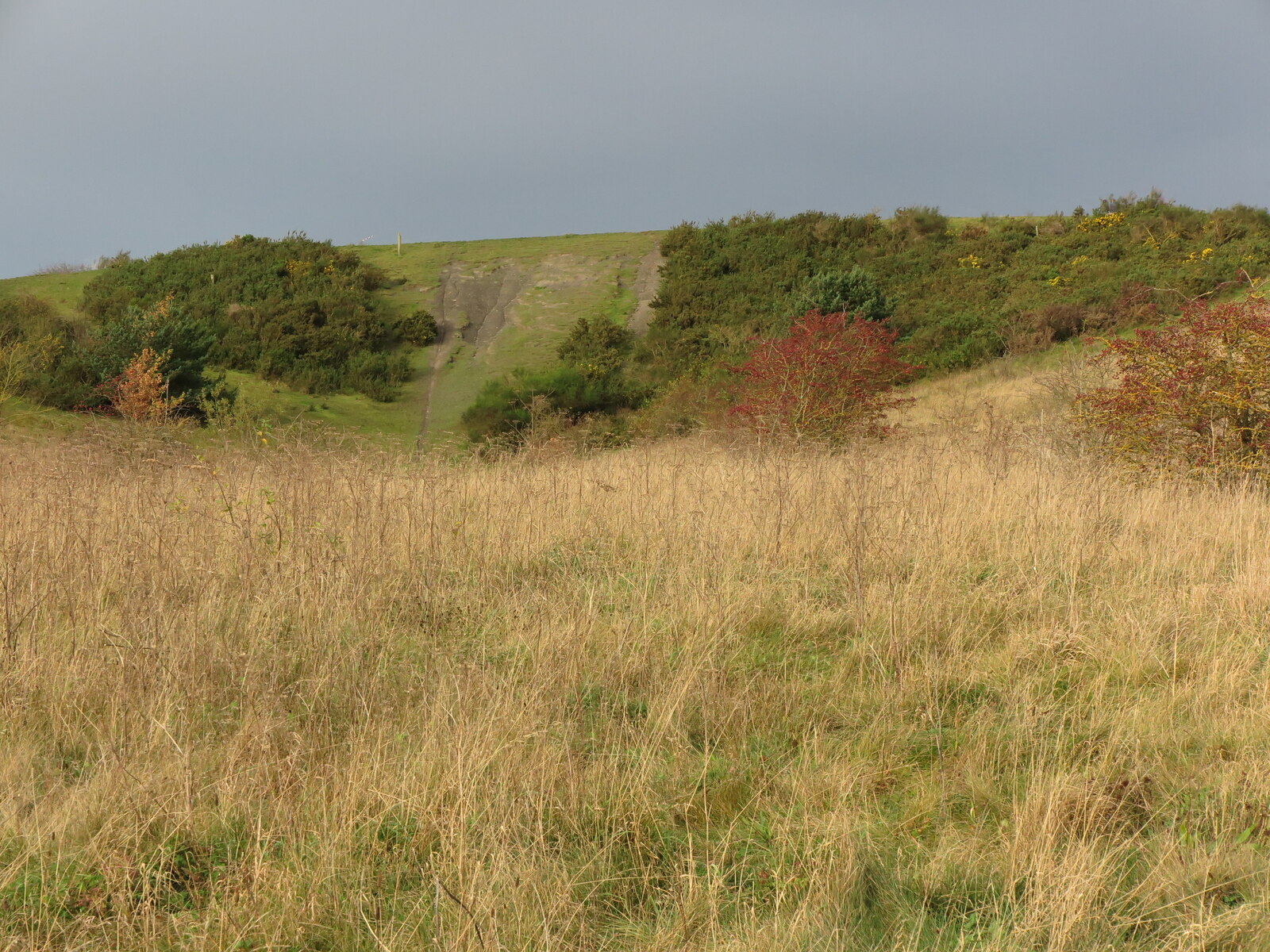
Nothing of the colliery survives as working plant. The site of C Pit is now part of Richardson Dees Park in Wallsend. The ground of the last pit, Rising Sun, is now Rising Sun Country Park, where the grassed-over spoil heap is the most conspicuous surviving feature of the whole enterprise. The dead of the 1835 explosion lie in the churchyard of St Peter's, Wallsend, many in unmarked graves.
No colliery buildings are recorded as surviving. What remains is landscape rather than structure: the reshaped spoil heap in Rising Sun Country Park, and the park ground at Richardson Dees which covers C Pit.
Related mines
- Hebburn Colliery — Both collieries were owned by the Wallsend & Hebburn Coal Co. Ltd from the 1890s — the company took its name from the two pits, and worked them as a single concern into the twentieth century.
- Rising Sun Colliery — Two pits of one company: the Wallsend and Hebburn Coal Co. sank the Rising Sun from 1906 while already working Wallsend Colliery, and the Durham Mining Museum cross-references the two.
- Walker Colliery — From 1842 both collieries' owners shared the cost of the Friar's Goose pumping engine to keep water from reaching the dip workings.
Nearby mines
- Hebburn Colliery — 1.3 miles (2.2 km) S
- Rising Sun Colliery — 1.4 miles (2.2 km) NW
- Bigge Pit, Willington — 1.4 miles (2.3 km) N
- Walker Colliery — 1.4 miles (2.3 km) SW
- Jarrow Colliery — 1.6 miles (2.5 km) E
Straight-line distance, within 9 miles (15 km). Show on the map.
Disasters & major incidents
-
Wallsend Colliery 'Dark Wall' explosion, 1786
1786 · Explosion · 6 fatalities
In 1786 six men were killed by an explosion in the B Pit at Wallsend while cutting a communication with the A Pit through firedamp. The drive, 95 yards long, was afterwards known as the 'Dark Wall', because men chose to cut it in total darkness rather than by the light of a steel mill. -
Wallsend Colliery explosion, 1790
4 October 1790 · Explosion · 7 fatalities
On 4 October 1790 an explosion at Wallsend Colliery, north of the Tyne, killed seven people. It was one of a run of explosions at the colliery in its first sixty years, after those of 1785 and 1786 and before the larger losses of 1799, 1803, 1821 and 1835. -
Wallsend Colliery explosion, 1799
25 September 1799 · Explosion · 13 fatalities
An explosion at Wallsend Colliery on 25 September 1799 killed thirteen men and boys, the youngest named victim thirteen years old. -
Wallsend Colliery C Pit explosion, 1803
September 1803 · Explosion · 13 fatalities
In September 1803 an explosion described at the time as a 'heavy fire' swept the bords of the C Pit at Wallsend Colliery, killing thirteen men and boys and burning twenty others. Most died of suffocation. -
Wallsend Colliery A Pit explosion, 1821
1821 · Explosion · 52 fatalities
On 23 October 1821 the A Pit of Wallsend ('Russell's') Colliery exploded while 56 men and boys were working the Bensham seam close round the shaft. The blast destroyed the brattice that divided the single shaft into upcast and downcast, cutting off the air; 52 died, most suffocated, and only four survived. -
Wallsend Colliery Explosion
18 June 1835 · Explosion · 102 fatalities
At about two o'clock on the afternoon of 18 June 1835, an explosion tore through Wallsend Colliery on Tyneside and killed 102 men and boys — the worst of ten separate disasters recorded at a pit already notorious for them. The youngest of the dead was eight. Among them were trappers and putters of eleven, seventeen and nineteen, and whole families were hit: the Applebys lost Henry, a putter of seventeen, and James, a trapper of eleven. Many of the dead lie in unmarked graves in the churchyard of St Peter's, Wallsend. -
Wallsend Colliery explosion, 1838
1838 · Explosion · 11 fatalities
On the evening of 19 December 1838 the G or Church Pit of Wallsend Colliery fired while eleven shifters were repairing and propping the roads after the hewers had gone. All eleven were killed, three years after an explosion at the same colliery had killed more than a hundred. -
Wallsend Colliery gassing, 1907
28 January 1907 · Gas / Asphyxiation · 2 fatalities
An overman and his back overman went forward in the dark to clear firedamp from two places in the Yard seam at Wallsend Colliery on 28 January 1907 and were overcome when the gas backed on them. -
Wallsend Colliery Edward Pit explosion, 1925
9 August 1925 · Explosion · 5 fatalities
At 6.50 on the morning of Sunday 9 August 1925 firedamp exploded around an electric coal-cutter in the Yard Seam of the Edward Pit, Wallsend. Four machinemen were killed by burns and shock and a fifth man died of afterdamp trying to get out. The inspector blamed lax inspection and ventilation on a 550-yard face that depended on a single brattice sheet; the agent and manager were fined.
What's uncertain
Points where sources disagree or the record could not be settled; both accounts are kept. All open questions in the archive.
- Co-Curate gives the colliery as active between 1778 and 1935; the Durham Mining Museum records it as opened before 1782 and leaves the closure date blank. (disputed) 2,1
- The BGS mine-plans catalogue holds a Mining Remediation Authority abandonment plan titled 'Wallsend' (catalogue 3021, Tupton, dated 1893); the catalogue gives no location and the plan's details do not clearly tie it to this working, so it may belong to another of the same name. (uncertain) 3
Recorded claims
Individual factual claims, each attached to the source(s) that support it below. Where sources disagree, both are kept.
- The High Main seam here was nearly six feet thick, and the term 'Wallsend coal' was at one time widely used, reflecting the richness of the seam. 1
- John Buddle, the mining and railway engineer who improved colliery ventilation and helped develop the Davy lamp, was manager of the colliery for some years from 1806. 1
- William Russell is recorded as owner in the 1820s, Losh, Wilson, Bell & Co. in the 1850s and the Wallsend & Hebburn Coal Co. Ltd in the 1890s. 2
- Seven pits are recorded: A, C or Gas (sinking begun 18 October 1784), Church, Edward, F, G or George, and Rising Sun (sinking begun 9 July 1906, opened 1908, closed 26 April 1969). 2
- The Durham Mining Museum records ten incidents at this colliery with five or more killed, between 1767 and 1925, including 52 dead in the explosion of 23 October 1821 and 102 in that of 18 June 1835. 2
- Co-Curate gives the colliery as active between 1778 and 1935; the Durham Mining Museum records it as opened before 1782 and leaves the closure date blank. (disputed) 2,1
- The BGS mine-plans catalogue holds a Mining Remediation Authority abandonment plan titled 'Wallsend' (catalogue 3021, Tupton, dated 1893); the catalogue gives no location and the plan's details do not clearly tie it to this working, so it may belong to another of the same name. (uncertain) 3
Photographs & further reading
The fullest record of the colliery: every pit with its sinking date and location, the succession of owners, year-by-year output and employment, and the full list of those killed here with their ages, jobs and often their burial places.
View sourceSources
- (secondary) Wallsend Colliery (1778-1935) — Co-Curate, Newcastle University
- (primary) Wallsend Colliery — Durham Mining Museum
- (primary) BGS / Mining Remediation Authority mine plans: WALLSEND — British Geological Survey / Mining Remediation Authority
Record created: 4 September 2026 · Last researched: 4 September 2026