 MineArchive
Cornish Engine
| Dialect | Cornish |
|---|---|
| Category | Structures & Machinery |
A distinctive high-pressure single-acting beam engine, developed in Cornwall in the early 19th century, that became the standard heavy pumping engine of British metal mining — a step beyond the earlier, lower-pressure beam engines associated with James Watt, and expensive fuel is exactly why the improvement mattered so much to Cornish mine owners.
Historical usage
Cornwall has no coalfield of its own, so every ton of coal to fire a mine's boilers had to be shipped in, mostly from South Wales, making fuel one of the largest costs any deep mine faced. Boulton and Watt's earlier low-pressure beam engines had already been widely installed across Cornwall from the 1770s, with the firm charging mine owners a royalty based on a share of the fuel they saved. Richard Trevithick's development of a safe wrought-iron high-pressure boiler in the early 1800s — capable of around 40-50 pounds per square inch, roughly ten times a typical Watt engine's working pressure — allowed a new engine design that used that higher pressure far more efficiently, and the resulting 'Cornish engine' became the standard heavy pumping engine across Cornwall's mines through the 19th century, later spreading to lead- and other metal-mining districts across Britain.
How it worked
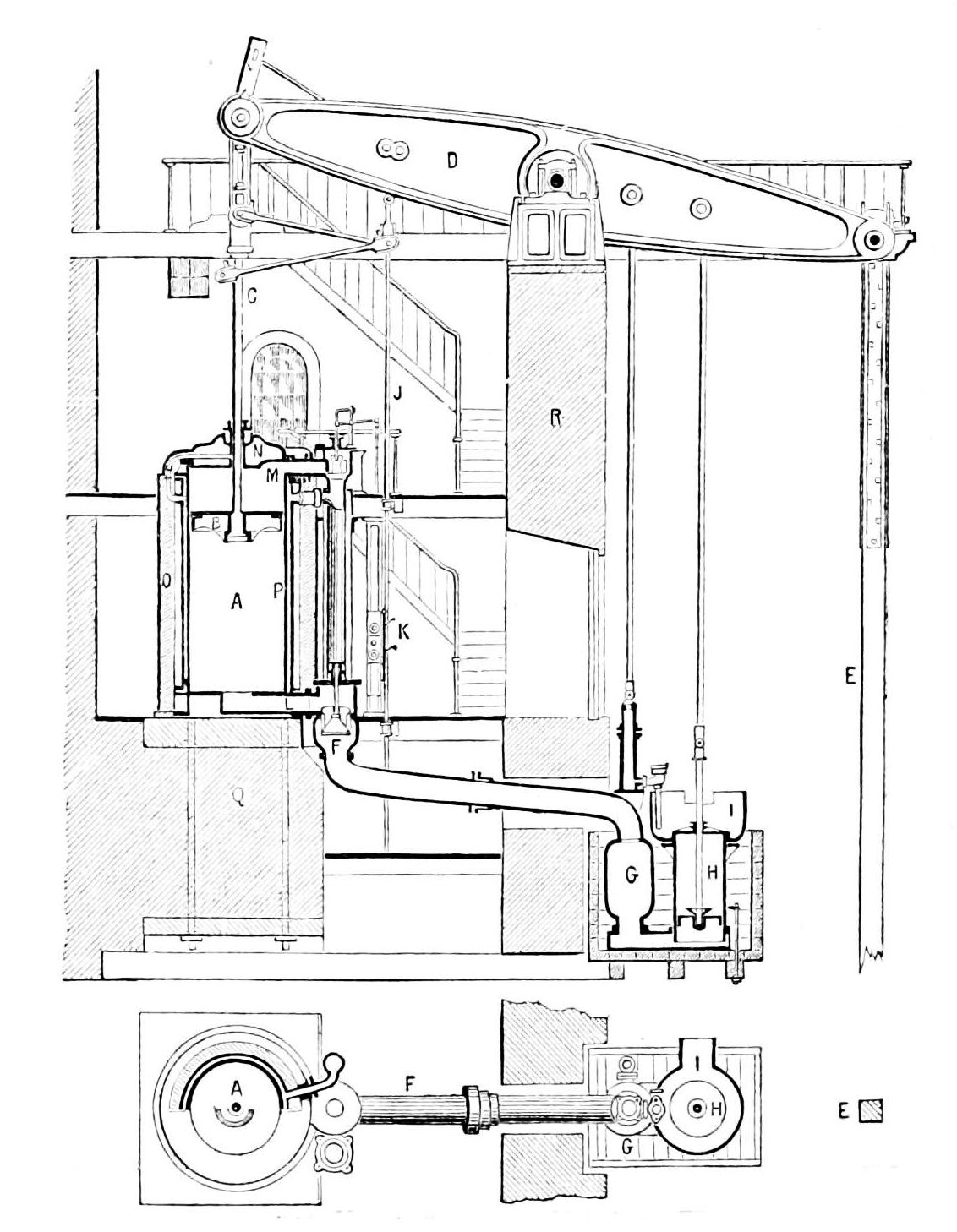
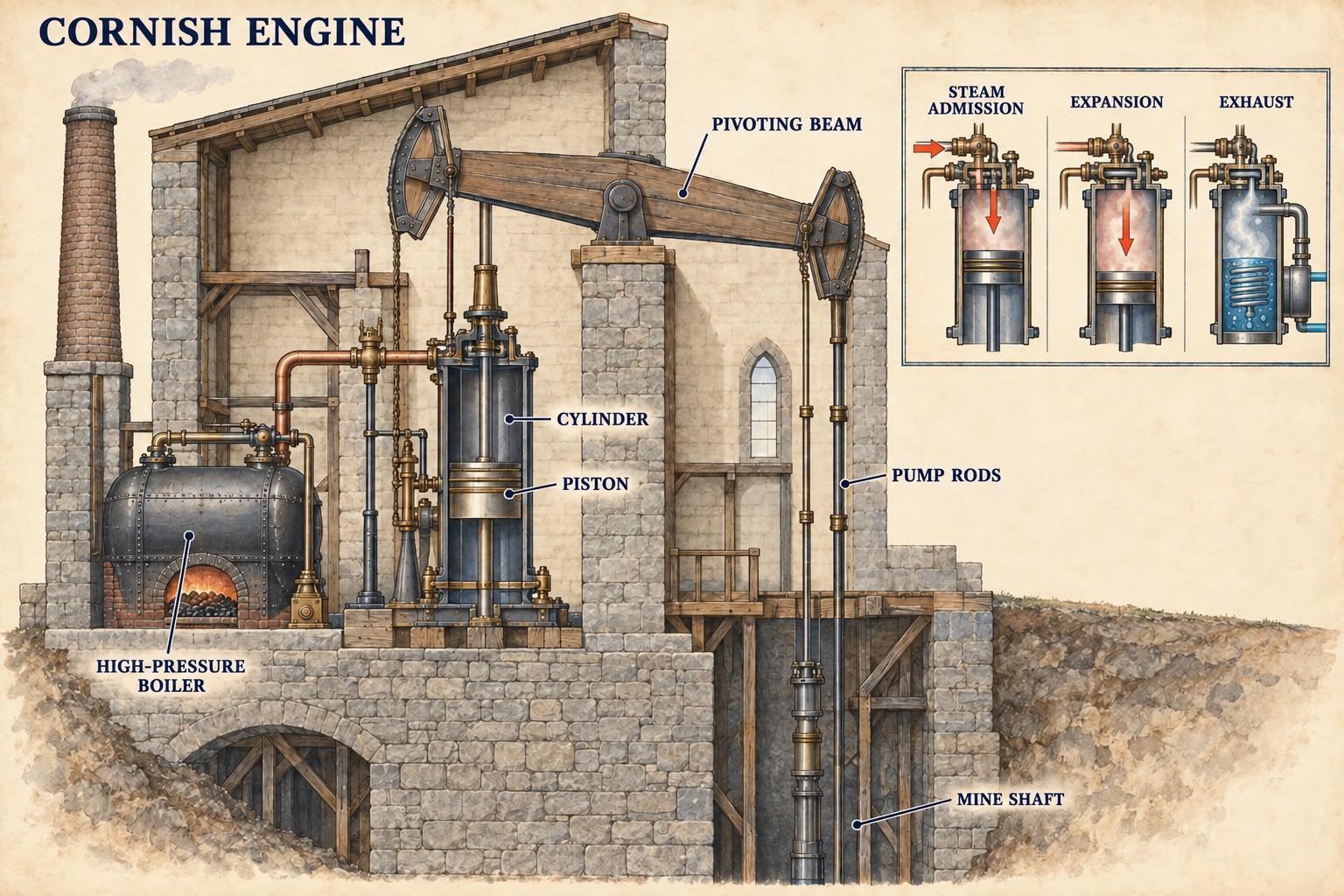
Like earlier beam engines, a Cornish engine used steam pressure to drive a piston connected to one end of a massive pivoted overhead beam, with pumping rods hung from the other end reaching down the shaft. Its key difference was using higher-pressure steam expansively — admitting steam only briefly, then letting it expand and do further work as it cooled and lost pressure, rather than keeping the valve open throughout the stroke — which extracted substantially more work from the same quantity of coal. Beyond pumping, the same basic engine design was also adapted to power man engines, wind ore and materials up the shaft, and drive surface stamps for crushing ore.
Why it was used
Fuel efficiency, measured by an engine's 'duty' — the amount of work, in foot-pounds, delivered per bushel of coal burned — was the industry's own yardstick for a pumping engine's worth, and Cornish engines substantially outperformed earlier Watt designs on this measure: early Watt engines managed a duty of around 20 million, later Cornish engines over 30 million. On a peninsula that had to import every ton of its fuel, that difference translated directly into money a mine could afford to keep spending on pumping instead of losing to coal merchants.
Risks & limitations
The engines themselves were enormous, expensive capital items — Wheal Vor's own 1850s pumping plant included a 100-inch cylinder engine, the largest ever installed in Cornwall — and a mine had to be confident enough of future returns to justify that investment; several mines on this site record decades-old Cornish engines being kept in service long after installation simply because replacing one was such a serious undertaking.
Regional variation
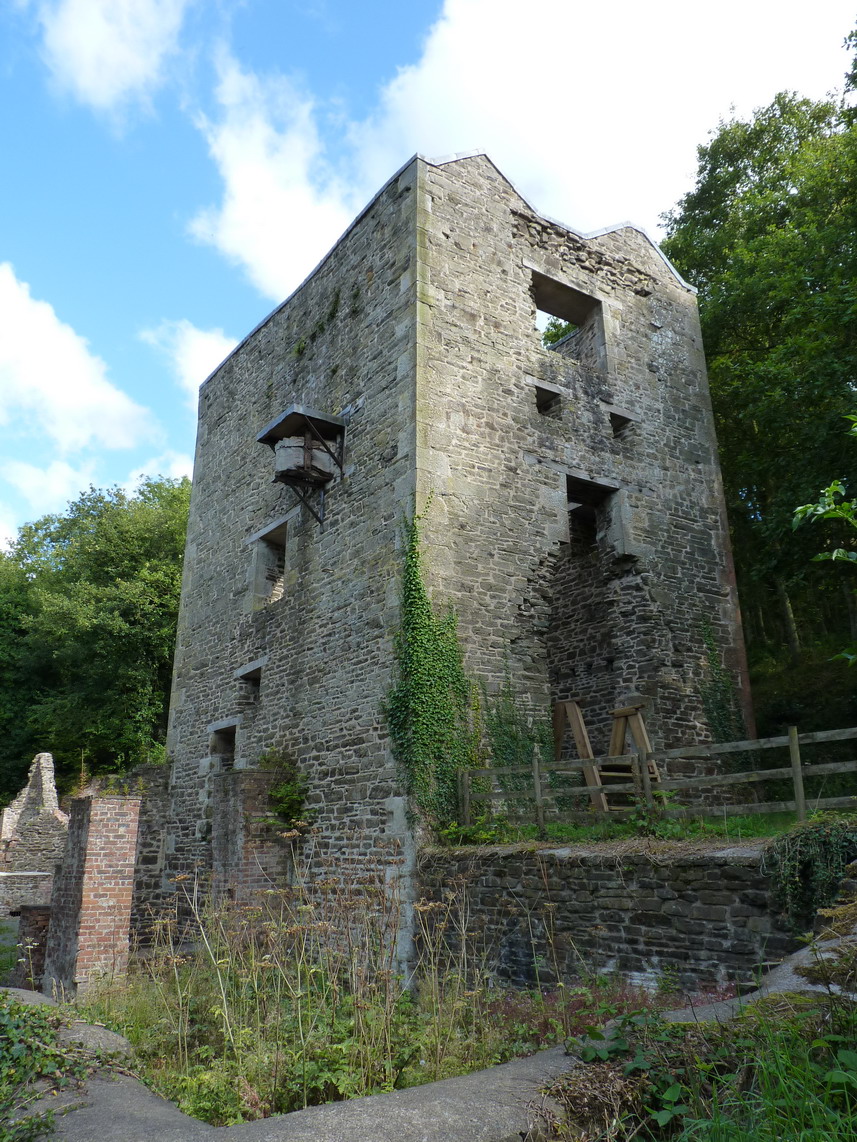
Though named for Cornwall, the design was exported wherever mines faced a similar fuel-cost problem — Cornish engines and Cornish-engine houses survive at lead mines in Derbyshire, Shropshire and North Wales as well as across Cornwall and Devon, often installed by Cornish engineers or engine-building firms working away from home.
Related terminology
Atmospheric Engine, Pumping Engine
Mines associated with this term
5 examples chosen from 34 linked records — the term page is not an index.
- Dorothea Quarry — Gwynedd (well documented example)
The Grade I listed Cornish engine house, engine still inside, is the centrepiece of what survives — a Cornish pumping engine at a Welsh slate quarry. - Hemingfield Colliery — South Yorkshire (well documented example)
Named twice in this record, first in the history: “…workings from reaching live ones; electric pumps replaced the Cornish engine, whose house became a dwelling in 1934. Pumping continued under the…” - Levant Mine — Cornwall (well documented example)
Named twice in this record, first in the current condition: “…Site. The 1840 beam engine was rescued from scrap in 1935 by the Cornish Engines Preservation Committee for £35, restored over decades by volunteers…” - Marke Valley Mine — Cornwall (well documented example)
Named in this record’s workings: “…(10 fathoms) — pumped and wound in its later years by a 70-inch Cornish engine on Salisbury Shaft and a 33-inch combined winding, stamping and…” - Millclose Mine — Derbyshire (well documented example)
The mine's own recorded history explicitly describes the original Cornish engine that worked until the early 1870s.
Sources
- (secondary) Cornish engine — Wikipedia
- (secondary) Engines and Steam Technologies — Cornish Mining World Heritage Site
Record created: 22 August 2026 · Last researched: 22 August 2026