 MineArchive
Man-engine
| Also known as | man engine (Common unhyphenated form.) |
|---|---|
| Category | Structures & Machinery |
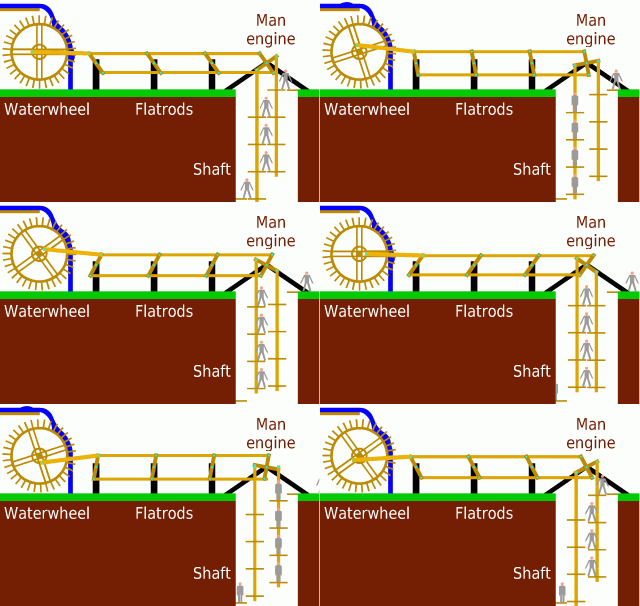
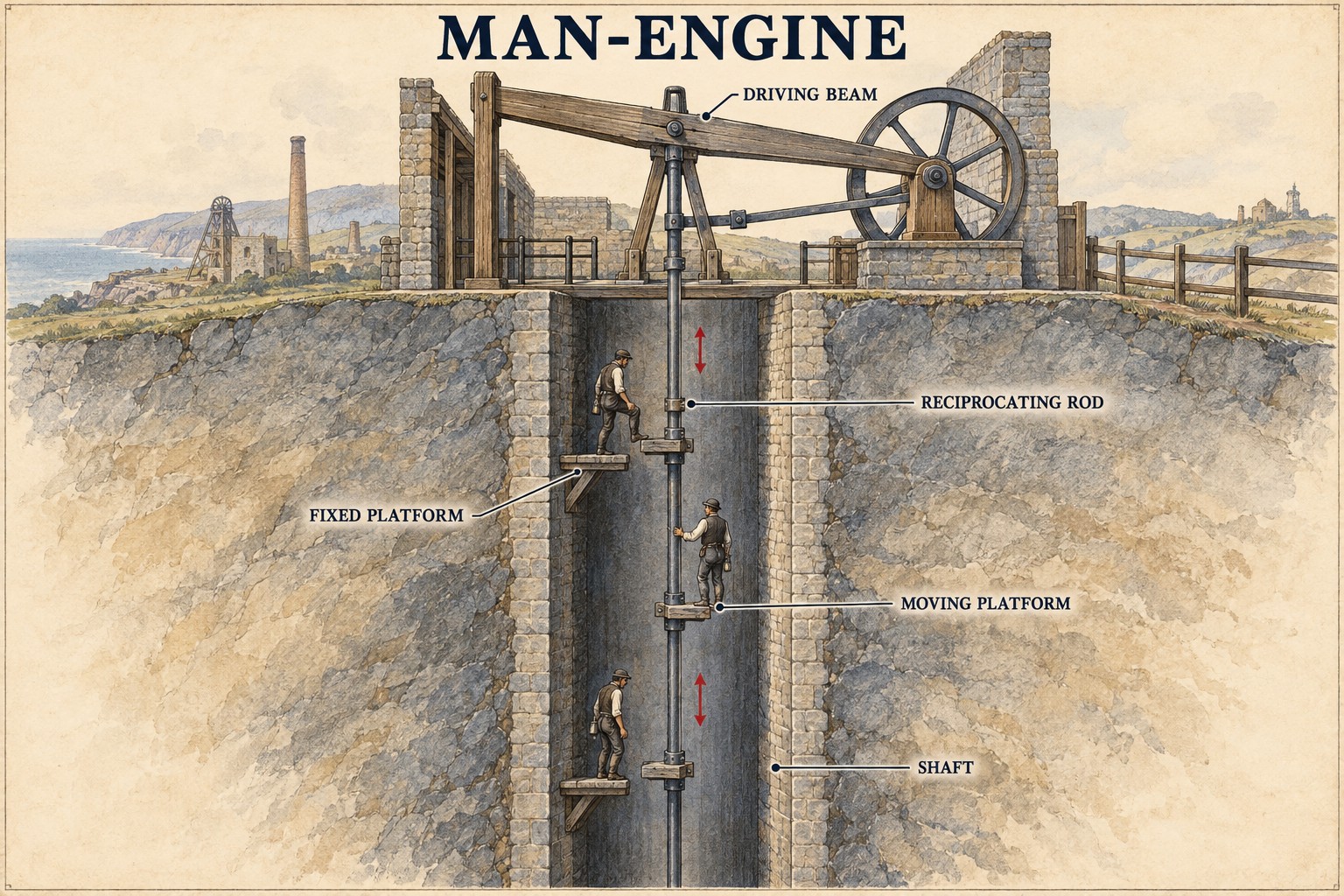
A mechanism of reciprocating rods fitted with steps and fixed platforms, powered by a steam engine or waterwheel, that carried miners up and down a shaft far faster than climbing ladders.
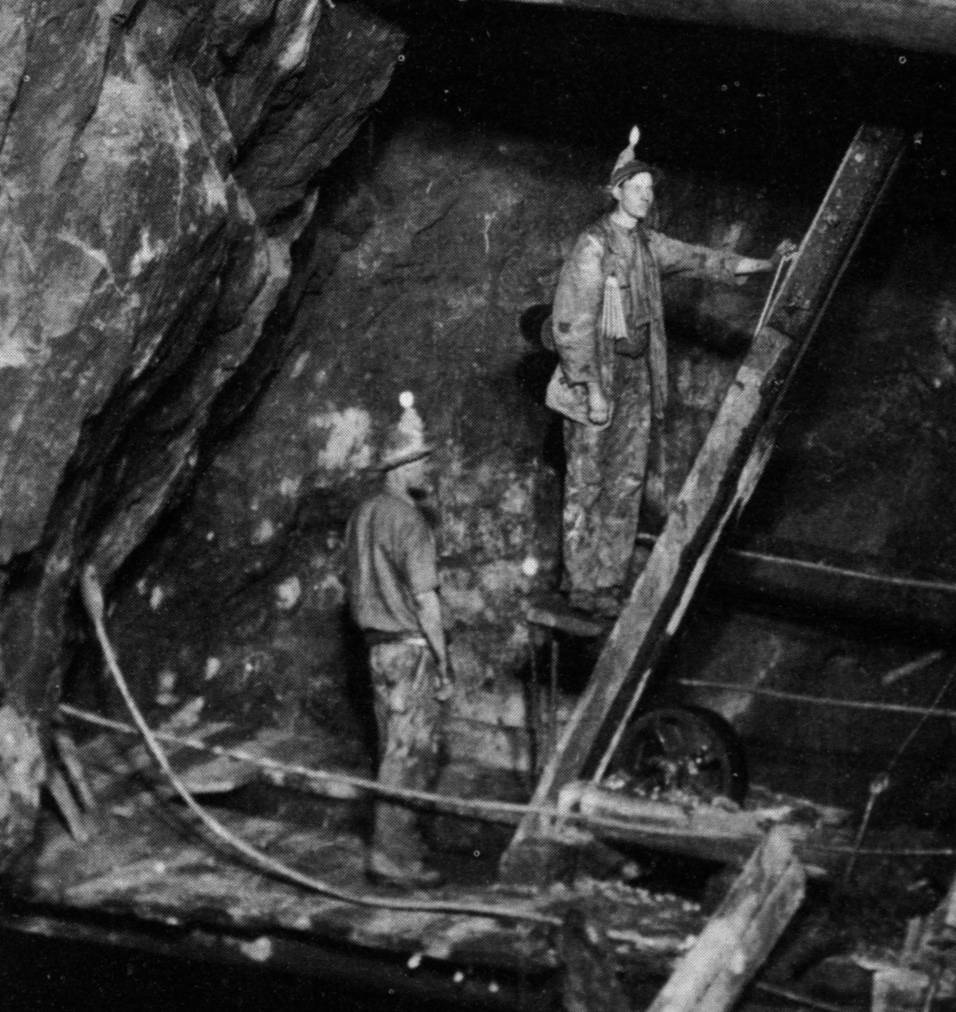
Historical usage
Invented in Germany, where it was known as the fahr-kunst, the man-engine was brought to Cornwall by Michael Loam of Liskeard, who installed the first British example at Tresavean Mine, Gwennap, in 1842 — immediately cutting miners' travelling time and reportedly raising the mine's output by a fifth. Sixteen man-engines were eventually installed in Cornish mines; the last still working, at Levant, collapsed catastrophically in 1919.
How it worked
A rod reaching from surface to the bottom of the shaft was moved up and down by the engine in a reciprocating stroke, typically 12–15 feet. Small platforms ("sollars") were fixed to the rod at intervals matching the stroke length, with matching fixed platforms built into the shaft walls; a miner stepped from a fixed platform onto a rod platform as it reached the top of its stroke, then off again onto the next fixed platform, working up or down the shaft one stroke at a time.
Why it was used
Before the man-engine, the only way in or out of a deep mine on foot was by ladder — exhausting and slow, and a real drain on a miner's stamina and working time at the start and end of every shift. A man-engine could move miners through hundreds of feet of shaft in a fraction of the time and effort, directly increasing a mine's effective output.
Risks & limitations
The system depended entirely on the mechanical soundness of one long rod and its surface connections — exactly the failure that caused the Levant Mine disaster in 1919, when a worn link between the rod and its surface beam broke during the heaviest-loaded moment of the day, the shift change, killing 31 miners. By the 1920s, cages and skips running in guided shafts offered faster and inherently safer transport, and the man-engine fell out of use everywhere.
Regional variation
The German original term, fahr-kunst, is still used for surviving German examples, such as the preserved installation at the Oberharzer Bergwerksmuseum. Beyond Germany and Cornwall, man-engines were also installed in Norway, at Kongsberg.
Related terminology
Ladders, Man-riding, Pumping Engine
Mines associated with this term
5 examples chosen from 8 linked records — the term page is not an index.
- Consolidated Mines — Cornwall (well documented example)
Named in this record’s closure notes: “…twenty engines at work, nine of them pumping, with seven whims, a man engine and a crusher. Grace’s Guide dates the end of Consolidated itself to…” - Cook's Kitchen Mine — Cornwall (well documented example)
The mine's own recorded workings and interest note explicitly describe the man engine photographed in operation around 1893. - Dolcoath Mine — Cornwall (well documented example)
Dolcoath's man engine carried workers between levels; John Charles Burrow's 1893 flash-light photograph of its shaft sollars survives. - South Caradon Mine — Cornwall (well documented example)
Kittow's Shaft housed a man-engine for raising and lowering the miners, at the eastern end of a sett large enough to need one. - Tincroft Mine — Cornwall (well documented example)
The mine's own recorded workings explicitly describe the man engine installed on Dunkin's Shaft in 1859.
Disasters associated with this term
Included only where MineArchive's own research gives a reasonable evidential basis, with the nature of the relationship stated — not every disaster where this term might plausibly apply.
- Levant Mine man-engine disaster (direct cause)
The disaster was a direct mechanical failure of the man-engine itself.
Sources
- (secondary) Man Engine — Grace's Guide to British Industrial History
- (secondary) Man engine — Wikipedia
Record created: 20 August 2026 · Last researched: 20 August 2026