 MineArchive
South Caradon Mine
| Location | Caradon Hill, St Cleer, Cornwall — 50.5028, -4.4430 (exact) |
|---|---|
| Commodity | Copper |
| Type | Metal |
| Worked | 1836–1885 |
Overview
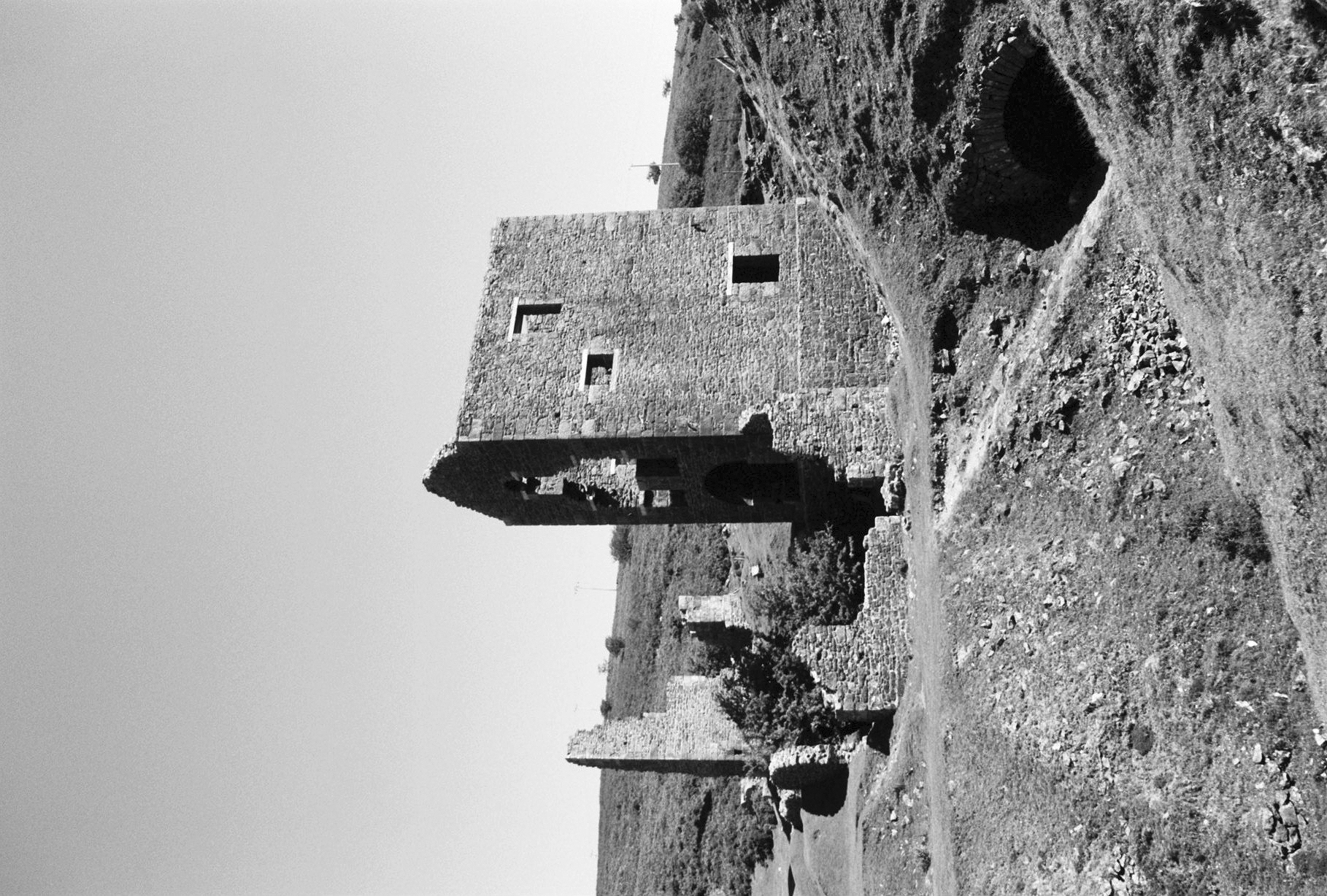
South Caradon, on the slopes of Caradon Hill above St Cleer, went from a group of miners who couldn't raise capital in London to one of the largest copper mines in the world within a few years of striking its main lode in 1836 — and left behind what is now one of the largest collections of surviving engine house remains in Cornwall.
History
A group of miners acquired the South Caradon site in 1833 but struggled for three years to raise capital before finally striking a rich copper lode in 1836. Their shares, once worth almost nothing, rose to around £2,000 apiece — equivalent to roughly a quarter of a million pounds today — and the discovery triggered a mining boom across the wider Caradon and Liskeard district that lasted until the 1890s. South Caradon worked from 1837 to 1885, and over that half-century its copper output ranked third in the whole of Cornwall; within a few years of opening it had become one of the largest copper mines anywhere in the world, employing thousands of men at the district's peak in the 1840s. Kittow's Shaft, at the eastern end of the sett, housed a man-engine for raising and lowering miners; Holman's and Rules' shafts, towards the centre of the workings, retain substantial engine houses and tips. The Liskeard and Caradon Railway was built specifically to carry the mine's ore down to the port of Looe for shipment.
Geology
The mine worked copper lodes within the Cornubian orefield of east Cornwall, the same hydrothermal, granite-related mineralisation worked across the county's other major copper and tin districts.
Geological setting: Hydrothermal Deposits (well documented example), Veins and Lodes (well documented example)
Workings
The sett was worked from numerous shafts across Caradon Hill, including Kittow's Shaft, which housed a man-engine, and the engine house at Holman's Shaft and at Rules' Shaft, where substantial waste tips also survive; an 1860s pumping engine house on the site, of a rare Sims compound design, still stands to its full height.
Closure
The main working closed in 1885 as the district's copper boom subsided; limited further activity continued in the district into the 1890s.
What remains
Engine houses, chimney stacks and thousands of tonnes of waste rock tips encircle Caradon Hill, along with the trackbed of the Liskeard and Caradon Railway, built to link the mines to the port of Looe; the site holds one of the largest collections of surviving Cornish engine houses anywhere.
Related mines
- Cheesewring Quarry — Served by the same mineral railway; the Moorswater line reached South Caradon and then climbed the Gonamena incline to the quarry in 1846.
- Wheal Mary Ann — Both mines were managed by the same man, Clymo.
Nearby mines
- Gonamena — 0.3 miles (0.5 km) NW
- Caradon Hill Medieval and Post-Medieval Mines — 1.0 miles (1.6 km) N
- Marke Valley Mine — 1.6 miles (2.6 km) N
- Phoenix United Mine — 1.6 miles (2.6 km) N
- Cheesewring Quarry — 1.7 miles (2.8 km) NW
Straight-line distance, within 9 miles (15 km). Show on the map.
Culture
- Gonamena (2009) (Literature)
Gonamena is the incline on the flank of Caradon Hill beside this mine's engine houses, and the Caradon copper boom the play dramatises is South Caradon's.
Recorded claims
Individual factual claims, each attached to the source(s) that support it below. Where sources disagree, both are kept.
- Over its fifty-year working life South Caradon's copper output ranked third in the whole of Cornwall, and within a few years of opening it had become one of the largest copper mines anywhere in the world. 1,2
- Kittow's Shaft housed a man-engine for raising and lowering miners; an 1860s pumping engine house on the site, of a rare Sims compound design, survives to its full height. 1,2
- Sump Shaft, sunk in 1837 on the south-west slope of Caradon Hill, remained the mine's main pumping shaft throughout its working life, eventually reaching 457m deep; it was pumped by the mine's first steam engine, with winding initially powered by flat rods from a water wheel in the valley below, and its surviving spoil tips still rise to 20m along the hillside. 1
- Jope's Shaft's pumping engine house was one of only four ever built to house a Sims compound engine; here and at Kittow's Shaft survive features from one of the last man-engines installed at any Cornish mine — both the Jope's Shaft engine house and the adjoining Liskeard and Caradon Railway bridge are separately Grade II listed. 1
- Webb's Whim, a small horse-powered winding engine on a shaft north-east of Pearce's Shaft, retains one of the best-surviving examples nationally of such a shaft-head complex: its circular levelled platform survives complete with pivot stone (a 'mellior' stone) and the impressed track worn by the circling horse. 1
- The mine's working conditions were described at first hand by the writer Collins in 1850, giving the site an unusually rich body of contemporary documentation to set alongside its surviving physical remains. 1
- South Caradon is one of the Cornish Mining World Heritage Site's own listed 'notable sites' within the wider Caradon mining district, one of ten designated Areas making up the Cornwall and West Devon Mining Landscape World Heritage Site. 3
Sources
- (primary) South Caradon 19th century copper mine, St. Cleer — Historic England (Scheduled Monument record)
- (secondary) Caradon Mine, Cornwall — Cornwall Calling
- (primary) A9 Caradon Mining District — Cornish Mining World Heritage Site
- (primary) South Caradon New Kittow's Mine Plan (BGS Mine Plans Catalogue) — British Geological Survey / The Coal Authority
Record created: 22 August 2026 · Last researched: 28 August 2026