 MineArchive
Dolcoath Mine
| Location | Camborne, Cornwall — 50.2172, -5.2804 (exact) |
|---|---|
| Commodities | Copper, Tin, Arsenic, Silver |
| Type | Metal |
| Worked | 1720s–1920 |
| Maximum depth | 3,300ft (New Sump Shaft) |
| Operators | Basset family of Tehidy |
Overview
Dolcoath, ‘the Queen of Cornish Mines’, at Camborne, was Cornwall's deepest and most celebrated mine — first for copper, then, after a dramatic mid-19th-century pivot, the county's biggest producer of tin — before closing in 1920.
History
Mineral rights at Dolcoath were held by the Basset family of Tehidy from at least 1588, when the site was first leased to the Crane family. Copper mining is documented from the 1720s, reaching roughly 300ft by 1746 and nearly 600ft by 1778. The mine closed in 1787 as copper prices fell in the face of competition from Anglesey's Parys Mountain, then reopened in 1799 as prices recovered, going on to become the fifth-largest copper producer among Cornwall and Devon's roughly 470 copper mines. By 1832 falling copper grades again threatened closure, but mine captain Charles Thomas was convinced good tin would be found at greater depth; the first tin dividend was paid in 1853, vindicating him and beginning Dolcoath's second life as a tin mine. Depth reached 2,160ft by 1882, with some 12 miles of passable tunnel. A stope collapse killed eight miners in September 1893 (see Disasters, below). The mine was restructured as a limited company in 1895, and that October work began on the Williams Shaft — intended as the first 3,000ft-deep vertical shaft in Cornwall — which was completed in 1910. The principal shaft, New Sump, eventually reached 3,300ft, making Dolcoath the deepest mine in Cornwall and, for a time, the world's deepest tin mine. Tin output exceeded 100,000 tons of black tin over the mine's life — more than the output of all other Cornish mines combined — though yields fell from 80lb of black tin per ton of rock in 1896 to just 30lb by 1915. The mine finally closed in 1920 following the collapse of tin prices; a successor operation, New Dolcoath, worked a separate sett to the north at Roskear from 1923, which was eventually bought by South Crofty in 1936.
Geology
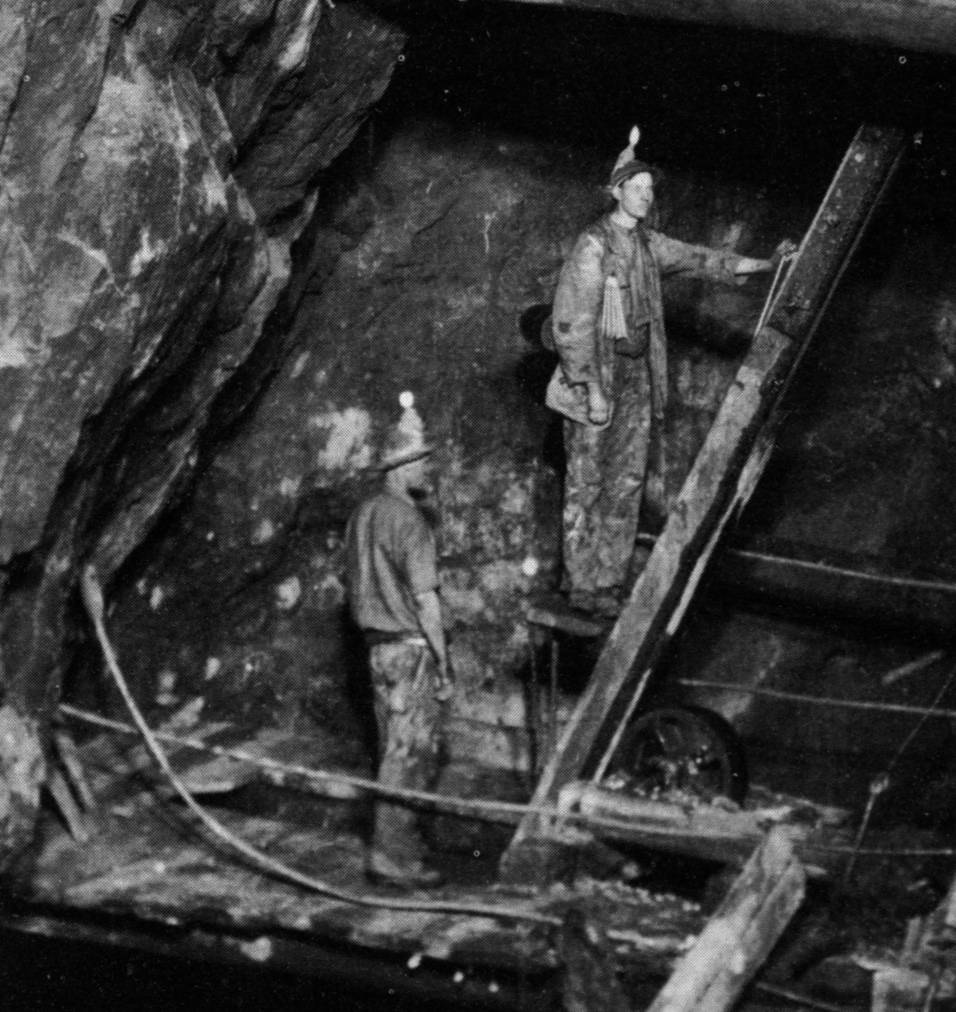
Dolcoath worked the Main Lode through the killas and granite of the Camborne-Redruth district, taking copper from the shallower ground and tin as the workings went deeper — the transition that made the mine's fortune twice over. An exceptionally rich lode was met at the 412 fathom (2,472 ft) level.
Geological setting: Veins and Lodes (well documented example)
Workings
Workings included the Williams Shaft (begun October 1895, completed 1910) and the New Sump Shaft, which reached 3,300ft; a man engine carried workers between levels, and an 1815 pumping engine, with a 76-inch cylinder later upgraded to 85 inches, is preserved by the Trevithick Society.
Closure
Dolcoath closed in 1920 after the post-war collapse in tin prices; the workforce had already fallen from a peak of 1,356 in 1893 to 447 by 1920, and to just 10 by 1927.
What remains
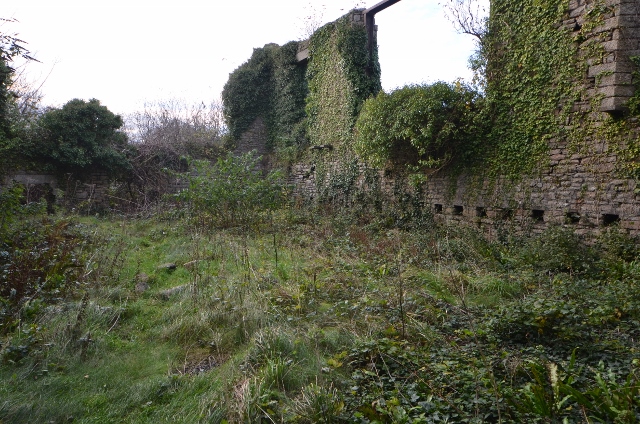
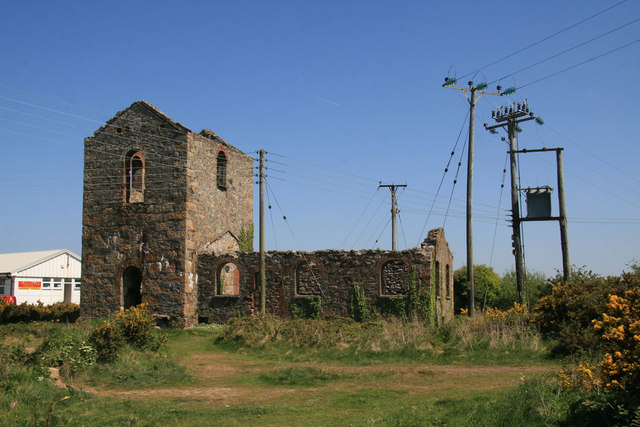
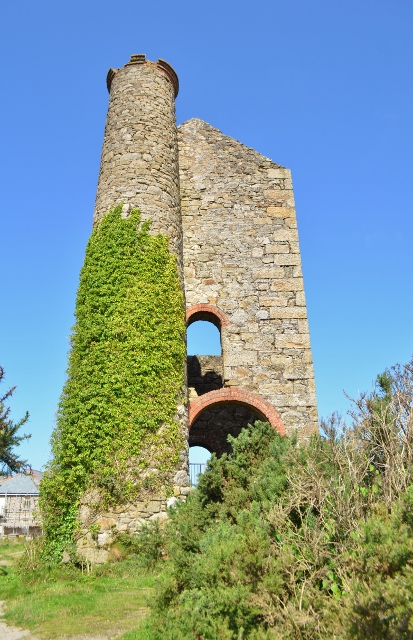
Some engine house structures survive as part of the Cornwall and West Devon Mining Landscape World Heritage Site; the mine's 1815 pumping engine, later upgraded, is preserved by the Trevithick Society.
Surviving structures include the New East Shaft engine house, the Wheal Harriet pumping house and whim house, and the head of Williams Shaft; the mine's 1815 pumping engine, later upgraded from a 76-inch to an 85-inch cylinder, is preserved by the Trevithick Society.
Redevelopment
No major redevelopment of the mine site has taken place; the surviving engine houses stand within the Cornwall and West Devon Mining Landscape World Heritage Site.
Related mines
- Carn Camborne Mine — Carn Camborne was absorbed by Dolcoath, with Camborne Vean and Wheal Harriet, in 1897.
- South Crofty — South Crofty absorbed the historic Dolcoath mine in 1936.
Nearby mines
- Cook's Kitchen Mine — 0.0 miles (0.0 km) SE
- Tincroft Mine — 0.2 miles (0.3 km) NE
- Carn Brea Mine — 0.3 miles (0.5 km) NE
- South Crofty — 0.5 miles (0.7 km) NE
- Wheal Basset (Basset Mines) — 0.5 miles (0.9 km) S
Straight-line distance, within 9 miles (15 km). Show on the map.
Disasters & major incidents
-
Dolcoath Mine stope collapse
20 September 1893 · Collapse / Roof Fall · 8 fatalities
A timbered stope collapsed at the 412-fathom level, one of the deepest workings in Cornwall, killing eight miners and trapping a ninth for over a day and a half before he was rescued unhurt.
What's uncertain
Points where sources disagree or the record could not be settled; both accounts are kept. All open questions in the archive.
- Grace's Guide records Dolcoath as producing over 350,000 tons of copper across its working life and over 100,000 tons of tin between 1853 and 1920, and values total mineral production at over £10 million — against the figure of over £9 million for 1799-1920 given elsewhere. The two are not directly comparable, covering different periods. (disputed) 1,2
- Sources disagree on the closing year: most give 1920, while Grace's Guide records operations ceasing in 1921. (disputed) 1,2
Recorded claims
Individual factual claims, each attached to the source(s) that support it below. Where sources disagree, both are kept.
- Dolcoath's New Sump Shaft eventually reached 3,300 feet, making it the deepest mine in Cornwall and, for a period, the world's deepest tin mine. 1
- Research published by Boycott and Haldane in 1903 found that around 94% of Dolcoath's workforce was infected with hookworm (ankylostomiasis) — the true cause of a debilitating anaemia long blamed on poor ventilation. 1
- Over its working life, Dolcoath produced more than 100,000 tons of black tin — more than the combined output of every other Cornish mine. 1
- Total mineral production at Dolcoath between 1799 and 1920 has been valued at over £9 million. 1
- A man engine was installed in 1854 and eventually carried men to nearly 1,500 ft, saving the climb up and down ladders that had exhausted miners at the end of a shift. 1,2
- Grace's Guide records Dolcoath as producing over 350,000 tons of copper across its working life and over 100,000 tons of tin between 1853 and 1920, and values total mineral production at over £10 million — against the figure of over £9 million for 1799-1920 given elsewhere. The two are not directly comparable, covering different periods. (disputed) 1,2
- Sources disagree on the closing year: most give 1920, while Grace's Guide records operations ceasing in 1921. (disputed) 1,2
- The Williams Shaft was begun on 26 October 1895, designed to reach 3,000 ft; it was completed in 1910 and brought into use the following year. An exceptionally rich lode was found at the 412 fathom (2,472 ft) level. 2
- The BGS holds 36 catalogued Dolcoath plan records, several with publicly viewable scans, including a Dolcoath Main Lode project plan, Ordnance Survey maps of the Dolcoath area including the 1906 edition, and a combined abandonment sheet naming the constituent setts. 3
Photographs & further reading
A photographic collection of the mine as it was worked and as it survives, useful for seeing what the engine houses and shaft tops actually looked like.
View sourceSources
- (secondary) Dolcoath mine — Wikipedia
- (secondary) Dolcoath Mine — Grace's Guide — Grace's Guide to British Industrial History
- (primary) Dolcoath mine plans (BGS catalogue) — British Geological Survey
Record created: 19 August 2026 · Last researched: 28 August 2026