 MineArchive
Killas
| Also known as | Kellus (Earliest recorded spelling, 1674) |
|---|---|
| Dialect | Cornish |
| Category | Place-names & Language |
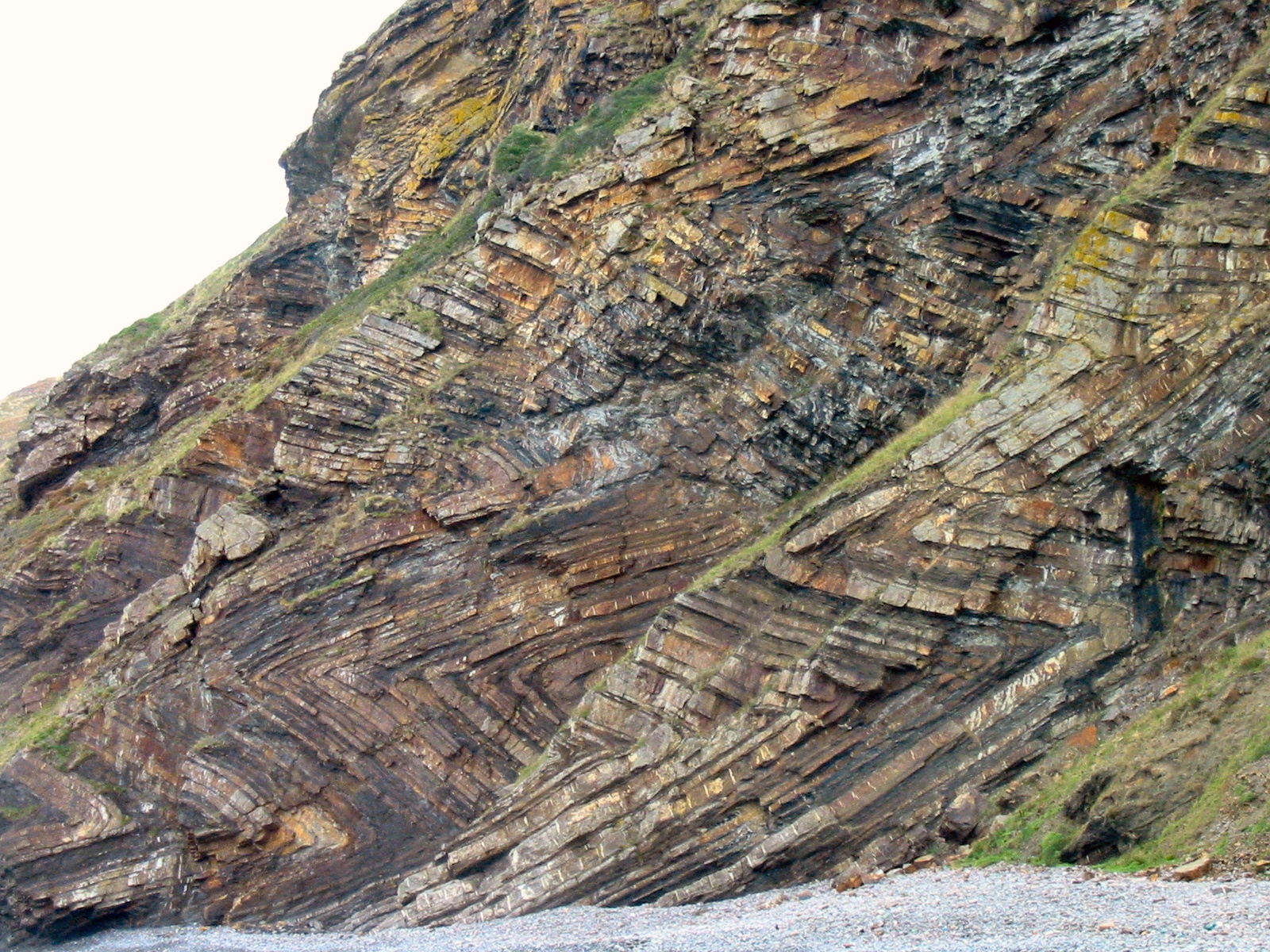
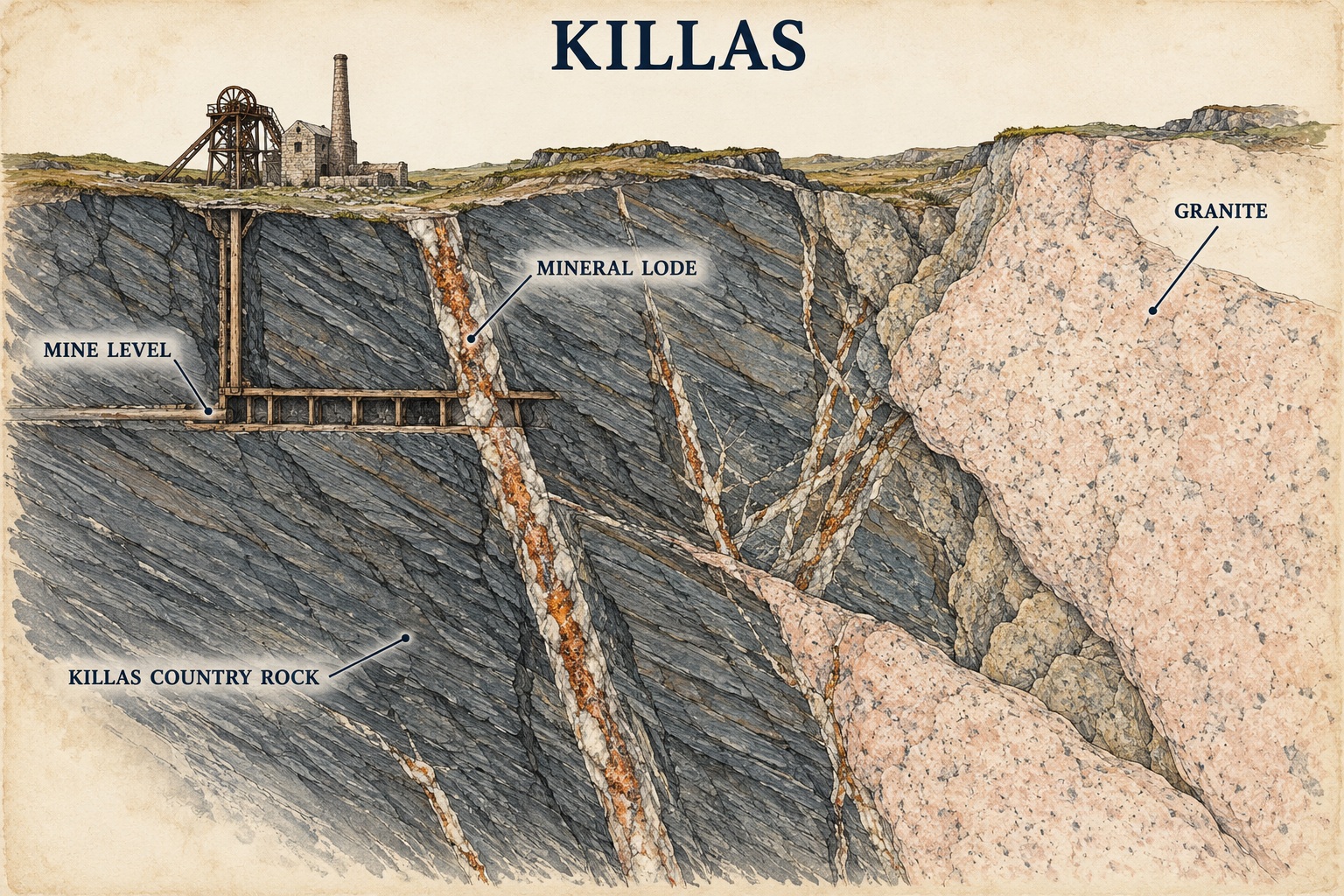
The Cornish mining word for the dark, slaty metamorphic rock that makes up most of the country rock of Cornwall and western Devon — not itself an ore, but the rock the tin and copper lodes actually run through.
Historical usage
First recorded in print in 1674 as 'kellus', killas has been in continuous use among Cornish and Devon miners and geologists ever since as the everyday name for the county's dominant slate-like bedrock, distinguishing it from the granite that intrudes through it in places like Bodmin Moor, Dartmoor and the Land's End peninsula.
Why it was used
Miners needed a quick, practical word for the rock they were actually driving through day to day, long before formal geological terminology existed to describe it — killas served that purpose, and stuck, even though it never became a standard term in academic stratigraphy outside Cornwall and Devon.
Regional variation
Confined almost entirely to Cornwall and adjoining west Devon, including the fringes of Dartmoor — a genuinely local word for a genuinely local rock, rather than a term with any currency elsewhere in Britain.
Related terminology
Mines associated with this term
5 examples chosen from 25 linked records — the term page is not an index.
- Consolidated Mines — Cornwall (well documented example)
Around eight main lodes cut through killas, crossed by intrusive elvan dykes; the Virgin Lode alone was stoped continuously for more than 1.3 miles. - Geevor Tin Mine — Cornwall (well documented example)
Geevor's tin lodes lie in Carboniferous granite intruded into Devonian killas — the Cornish name for the metamorphosed country rock around a granite. - Ramsley Mine — Devon (well documented example)
Named in this record’s geology: “…on a spur of Dartmoor granite at its junction with the surrounding killas (clay slate) of the Carboniferous Lower Culm Measures. Its three…” - Devon United Mine — Devon (well documented example)
Named in this record’s geology: “…the country rock is metamorphosed Carboniferous grits and shales — killas — heavily intruded by greenstones. All three worked east-west…” - Marke Valley Mine — Cornwall (well documented example)
Named in this record’s geology: “…Fisher's, Sara Maria and Cottage — running broadly east-west through killas (metamorphosed slate) close to its contact with the Bodmin Moor…”
Sources
- (secondary) Cornish Killas — National Character Area Profiles
- (secondary) Killas — Wikipedia
Record created: 22 August 2026 · Last researched: 22 August 2026