 MineArchive
Wistow Mine
| Also known as | Wistow Colliery |
|---|---|
| Location | Wistow, near Selby, North Yorkshire — 53.8127, -1.1303 (approximate) |
| Commodity | Coal |
| Type | Coal |
| Worked | June 1983–13 May 2004 |
| Maximum depth | 411 m at No. 1 shaft, carried below the Barnsley seam to form a sump. |
| Operators | National Coal Board (1983–1997), UK Coal (1997–2004) |
Overview
The first of the Selby coalfield's five satellite pits to produce, from June 1983, and the one whose 10 km conveyor drift set the pattern for the whole complex: coal was won here but raised at Gascoigne Wood, miles away. Its undoing was water — the beds above the worked-out faces sagged rather than collapsing, opening voids that filled from the Permian aquifer above. UK Coal took its last coal on 13 May 2004.
History
Wistow was one of six pitheads in the Selby complex, alongside Stillingfleet, Riccall, North Selby, Whitemoor and the drift at Gascoigne Wood. Under the scheme's design the five satellite pits won the coal and sent it underground by long conveyor drift to Gascoigne Wood, the single point at which all of it reached the surface; Wistow's drift ran about 10 kilometres.
The No. 1 shaft reached the Barnsley seam during 1981 and was carried on to a full depth of 411 metres to form a sump. Production began in June 1983, the first in the complex to start. Output reached a little over three million tonnes a year during the 1990s before falling back to nearer half that.
The trouble was hydrogeological. As the conventional faces retreated, the beds above the caved areas sagged rather than collapsing completely; voids opened, filled from the overlying Permian aquifer, and the water then entered the workings in large volumes. Combined with the withdrawal of subsidy and low coal prices, that made the complex unprofitable, and UK Coal announced a phased closure in July 2002. The last coal at Wistow was mined on 13 May 2004.
Geology
Wistow worked the Barnsley seam of the concealed coalfield beneath the Vale of York, reached by shaft at around 411 metres. What defined the mine was what lay above rather than the seam itself: a Permian aquifer over the Coal Measures. Where longwall faces retreat, the roof is expected to cave and consolidate; here the overlying beds sagged instead, leaving voids that drew water down from the aquifer into the workings.
Geological setting: Sedimentary Beds and Seams (well documented example)
Workings
A shaft mine that raised no coal of its own. No. 1 shaft reached the Barnsley seam in 1981 and was deepened to 411 metres to form a sump; the coal went out along a conveyor drift roughly 10 kilometres long to Gascoigne Wood, part of what was then the longest mine conveyor network in Europe. Faces were worked conventionally on the retreat.
Closure
UK Coal announced the phased closure of the Selby complex in July 2002 after sustained losses; the last coal at Wistow was mined on 13 May 2004. Water entering from the overlying Permian aquifer through voids left by sagging strata was a persistent problem throughout the mine's life.
What remains
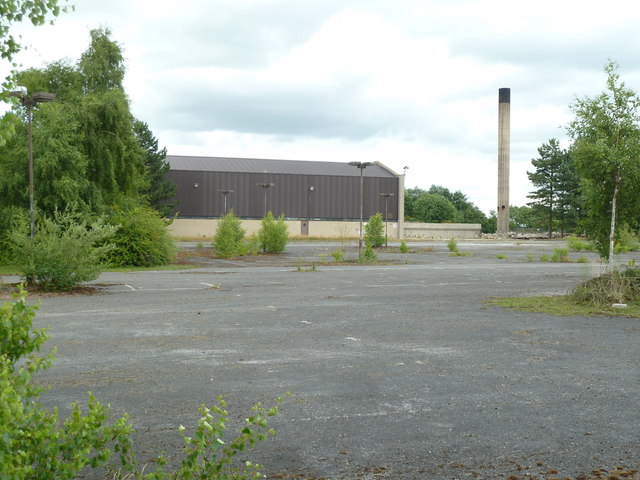
Disused and largely cleared. The site of the mine and its former shaft have been photographed since closure, and a 28DaysLater report covering both Wistow and Gascoigne Wood documents what remained. Part of the wider Selby infrastructure has been reused, and the trackbed of its railway has been taken forward as a greenway project.
Little; the site has been cleared, though the former shaft position and some hardstanding have been recorded photographically.
Related mines
- Gascoigne Wood Mine — The two were physically connected underground by a conveyor drift about 10 km long: Wistow won the coal and Gascoigne Wood raised it, Wistow having no coal winding of its own. Both were part of the Selby complex, designed so that five satellite pits fed a single surface point.
- Kellingley Colliery — Both were UK Coal deep mines after privatisation in 1994.
- Riccall Mine — Both satellite pits of the Selby complex, sending their coal underground to Gascoigne Wood; Wistow cut its last coal in May 2004 and Riccall in October, the complex's last.
Nearby mines
- Gascoigne Wood Mine — 3.6 miles (5.8 km) SW
- Stillingfleet Mine — 3.6 miles (5.8 km) NE
- Riccall Mine — 4.1 miles (6.6 km) E
- Whitemoor Mine — 5.7 miles (9.1 km) E
- North Selby Mine — 7.2 miles (11.5 km) NE
Straight-line distance, within 9 miles (15 km). Show on the map.
Recorded claims
Individual factual claims, each attached to the source(s) that support it below. Where sources disagree, both are kept.
- Production began at Wistow in June 1983, the first of the Selby pits to start. 1,2
- No. 1 shaft reached the Barnsley seam during 1981 and was continued to a full depth of 411 metres in order to form a sump. 2
- Production reached a little over three million tonnes a year during the 1990s before falling back to nearer half that. 2
- As the conventional faces retreated the beds above the caved areas sagged rather than collapsing totally; the voids that developed filled with water from the overlying Permian aquifer, which then entered the workings in large volumes. 2
- Coal was carried from Wistow to Gascoigne Wood by a conveyor drift about 10 kilometres long, part of the underground network by which all five satellite pits sent their coal to the single surface point. 1
- UK Coal mined its last coal at Wistow on 13 May 2004. 2
Photographs & further reading
A photographic record of what was left at both sites after closure.
View sourceA detailed local account of the complex, including the shaft depths at Wistow and the sagging-strata mechanism by which the Permian aquifer got into the workings.
View sourceSources
- (secondary) Selby Coalfield — Wikipedia
- (secondary) The Selby Coalfield — Railway to Greenway
- (observational) Selby Coalfield — Gascoigne Wood and Wistow visit — 28DaysLater
Record created: 3 September 2026 · Last researched: 3 September 2026