 MineArchive
Pithead
| Also known as | Pit Head, Bank (The colliery surface; hence banksman.), Pit-mouth, Skreens, Colliery Surface |
|---|---|
| Category | Structures & Machinery |
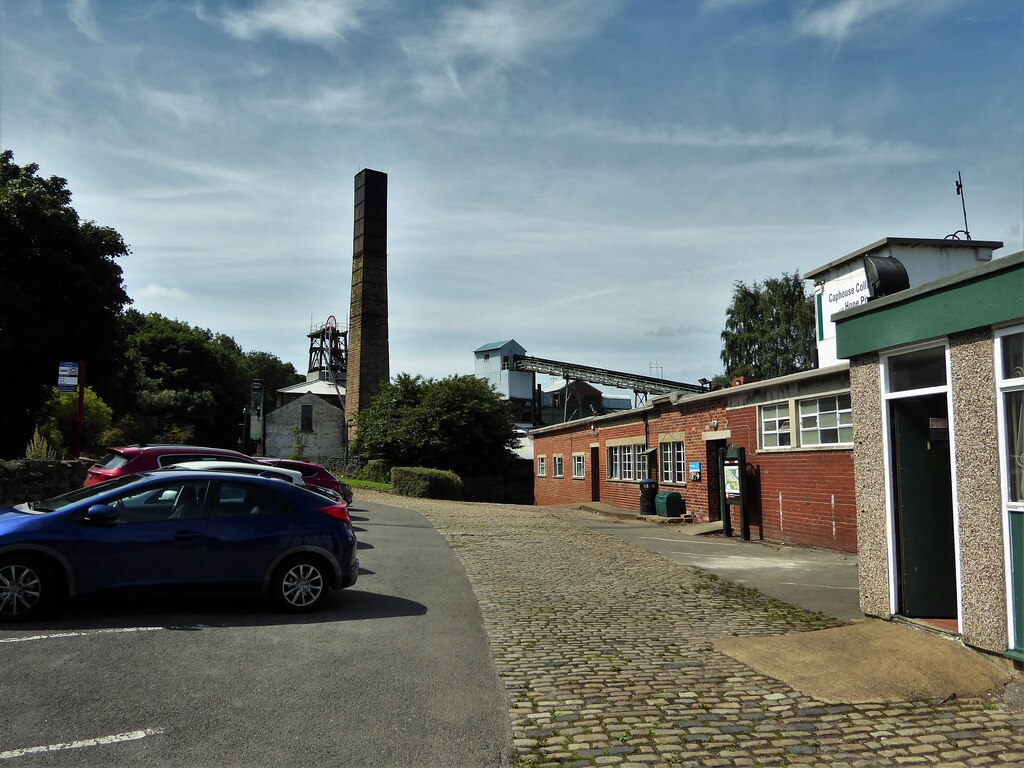
The surface of a colliery at the top of the shaft, and the buildings and works standing on it. Barrowman gives pit-mouth as the surface of the ground at the top of a shaft, and the pithead as the place where the cages are unloaded and the mineral weighed; in practice the word covers the whole working surface — headgear, winding house, heapstead, screens, offices, lamp room, workshops and sidings.
Historical usage
The pithead was the public face of a colliery and the only part of it most people ever saw. Its layout followed the technology: early pits had little more than a headgear, a whim or winding engine and a heap; by the late nineteenth century a large colliery's surface was a small industrial town of screens, washeries, boiler houses, workshops and railway sidings. Nationalisation brought further concentration, with reorganisation schemes rebuilding heapsteads for larger mine cars and replacing hand picking with mechanical cleaning. Almost all of it went at closure: headgear and screens were the first structures demolished, and a colliery site is usually identified today by its spoil heap rather than by anything that stood at the pithead.
How it worked
Coal arrived at the pithead in tubs riding the cage. The banksman, the man in charge of the surface shaft side, drew the full tubs off the cage as it landed, replaced them with empties, and sent them on to the weighing machine and then to the screens.
The heapstead was the platform built up around the shaft mouth, raised above ground level so that tubs could be tipped over the screens or onto a conveyor without further lifting. The screens were where the coal was graded and the dirt taken out, originally by hand: the coal ran over bars or perforated plates set at a fall, the small sizes dropping through and the large passing on, while pickers standing at the belts threw out stone, shale and rubbish. The word is older than the machinery, and the building kept the name long after mechanical screening and washeries took over the work.
Round these stood the winding engine house with its drum, the lamp room, the fan house drawing air from the upcast shaft, the stores and smithy, the offices where the checks were kept, and from the 1920s the pithead baths. The sidings took the graded coal away.
Why it was used
Everything a mine produced and everything it consumed passed through one point, the shaft top, and the pithead existed to handle that traffic without stopping the winding. Coal had to be taken off the cage, weighed for the men's pay, graded for the market and loaded, all at the rate the shaft delivered it; men, timber, rails and ponies had to go the other way.
Risks & limitations
The surface had its own accident record, separate from underground: men crushed between wagons in the sidings, run over while crossing the colliery railway, caught in screen machinery, or killed by objects dropped down the shaft from the bank. The pithead was also the choke point of the whole colliery — if the screens stopped or a cage was out of action the pit stopped with them — and because it was built up around the shaft it was awkward and expensive to enlarge as output grew.
Regional variation
Heapstead is a northern word for the raised platform and its buildings; bank is the general term for the surface, giving banksman for the man in charge there, whom Barrowman also calls the pitheadman. Screens is sometimes written skreens. Pit-mouth and pit top carry the same sense as pithead.
Mines associated with this term
5 examples chosen from 149 linked records — the term page is not an index.
- Bank Hall Colliery — Lancashire (well documented example)
Named 6 times in this record, first in the summary: “Burnley's largest and deepest pit, sunk on the Hargreaves family's Bank Hall estate between 1865 and 1869 and worked for more than a…” - Barrington Chalk Pit — Cambridgeshire (well documented example)
Named 4 times in this record, first in the history: “…Portland Cement Company, floated in 1914 by the corrupt Farrow's Bank, acquired Hill Farm at Barrington and began building works that…” - Bere Alston Silver-Lead Mines — Devon (well documented example)
Named in this record’s summary: “…royal silver mines around Bere Alston and Bere Ferrers, on the west bank of the Tamar, were an industrial-scale medieval operation unmatched…” - Bowhill Colliery — Fife (well documented example)
Named twice in this record, first in the history: “…ever after. The sinking met payable coal from 81 fathoms (the Bower Bank seam) down to 219 fathoms (the Two Feet, or Dunfermline Splint,…” - Bramley Fall Quarry — West Yorkshire (well documented example)
Named in this record’s current condition: “…Fall Park, a public park managed by Leeds City Council on the north bank of the Aire west of Kirkstall, and the workings survive within it as…”
Disasters associated with this term
5 examples chosen from 29 linked records, most direct relationship first.
- Auchengeich Colliery explosion, 1931 (contextual relationship)
Named in this record’s rescue and recovery: “…tubes while others brought the bodies out. Crowds gathered at the pithead in the dark and the cold, waiting for news of relatives underground.” - Blaenclydach Colliery spake runaway, 1941 (contextual relationship)
Named in this record’s rescue and recovery: “…in the Bush Houses, a row of miners' cottages overlooking the pithead, brought hot drinks, food and blankets. Ambulances came from other…” - Byermoor Colliery boiler explosion, 1862 (contextual relationship)
Named in this record’s narrative: “James Hunter, aged 40, of Busty Bank, who left a widow and four children, and John Robson, aged 26,…” - Cadder Colliery fire (contextual relationship)
Named in this record’s rescue and recovery: “…after two in the morning, brought back the news the crowd at the pithead had been dreading: five bodies found, and twenty-two men certainly…” - Cardowan Colliery explosion, 1982 (contextual relationship)
Named in this record’s narrative: “…lay 1,700 feet (516 m) underground and two miles (3.2 km) from the pit head; it took two hours for casualties to reach hospital in Glasgow. Of…”
Sources
- (primary) Glossary of Mining and Geordie Words — Durham Mining Museum
- (primary) Glossary of Scotch Mining Terms — James Barrowman (1886), via Scottish Mining Website
- (secondary) Pit Terminology — Healey Hero
- (secondary) Voices in the Coalshed: Skreens or Screens — National Coal Mining Museum for England
Record created: 29 September 2026 · Last researched: 29 September 2026