 MineArchive
Elsecar Colliery
| Also known as | Elsecar New Colliery, Elsecar Old Colliery |
|---|---|
| Location | Elsecar, near Barnsley, South Yorkshire — 53.4939, -1.4197 (approximate) |
| Commodity | Coal |
| Type | Coal |
| Worked | 1794–1923 |
| Maximum depth | Unknown. |
| Operators | Earls Fitzwilliam of Wentworth Woodhouse (1794–1923) |
Overview
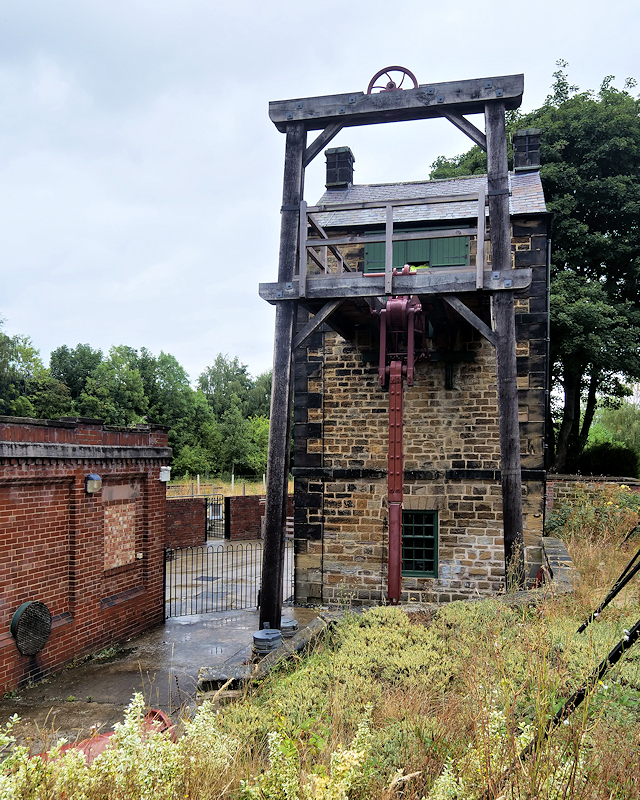
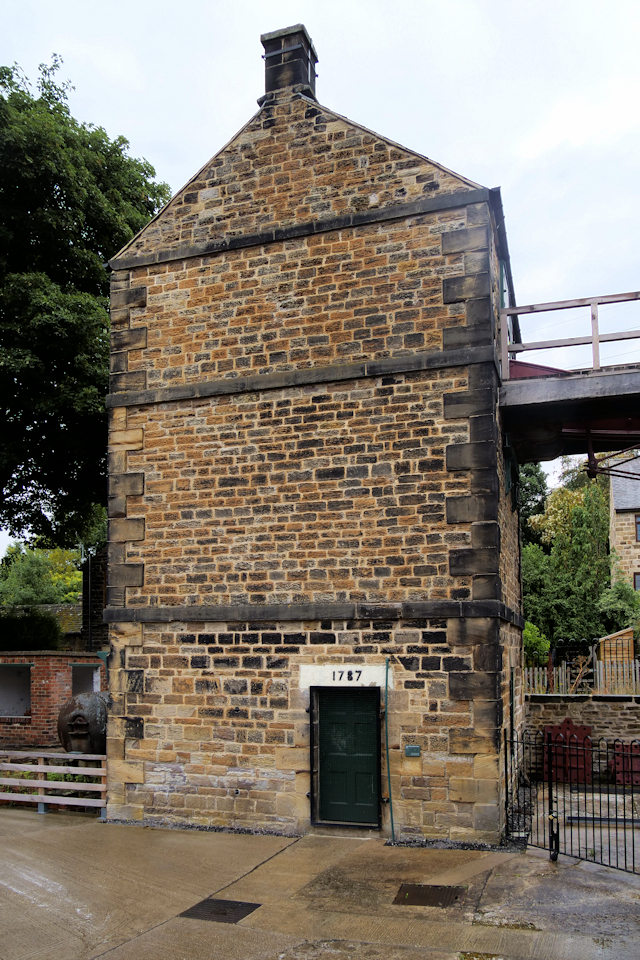
Elsecar New Colliery was sunk in 1794 for the Earls Fitzwilliam of Wentworth Woodhouse, as part of the model industrial village of ironworks and collieries they built at Elsecar. The following year an atmospheric beam engine of Thomas Newcomen's type was erected over its pumping shaft to drain the workings and let deeper coal be reached. That engine is still there. It is the only Newcomen engine anywhere in the world remaining on its original site, and is now understood to be the oldest steam engine still standing where it was built. It pumped from 1795 until 1923, was scheduled in 1973, and was restored to working order between 2012 and 2014.
History
Elsecar was not an ordinary colliery village but a planned one, laid out by the Earls Fitzwilliam around their ironworks and pits and now recognised as one of Britain's first model villages and a precursor of places like Saltaire. Elsecar Old Colliery was at work by 1750. The New Colliery was sunk in 1794, and in 1795, at the instruction of William Wentworth, 4th Earl Fitzwilliam, an atmospheric engine was built over its pumping shaft. Its parts came from across south Yorkshire: castings from Longden, and from Newton and Chambers of Thorncliffe Ironworks at Chapeltown; further work from John Darwin & Co. of Sheffield; pumps and pipes from Park Iron Works, Sheffield; and the great wooden beam from the Earl's own woodland at Wentworth. The engine itself was put together by John Bargh, near Chesterfield. It pumped water from the colliery for over 125 years, until electric pumps replaced it in 1923 under the South Yorkshire Pumping Association, and even then it was steamed occasionally from a Lancashire boiler in the Elsecar workshops into the 1950s. Henry Ford twice tried to buy it for America and was twice refused by Earl Fitzwilliam. The New Yard workshops nearby, built for the Earl in 1850 for the carpenters, engineers, joiners and blacksmiths who served the collieries and ironworks, later passed to the National Coal Board and closed in the 1980s.
Geology
The colliery worked the Coal Measures of the South Yorkshire coalfield on the Fitzwilliam estate at Elsecar. The engine is the clearest evidence of the practical problem the geology posed: water standing in the workings limited how deep the coal could be followed, and it was the ability to pump continuously from 1795 that let the New Colliery reach the deeper seams at all. No source names the individual seams worked.
Geological setting: Sedimentary Beds and Seams (historical documentary reference)
Workings
The surviving structure is the pumping arrangement rather than the winding plant: a three-storey sandstone engine house with a gabled roof, standing directly over the original pumping shaft, containing an atmospheric beam engine of the Newcomen type. Excavation has since shown that substantial remains of the associated colliery pit head survive around it, which is why the scheduled area was later extended beyond the engine and its house.
Closure
The Newcomen engine ceased regular pumping in 1923 when electric pumps took over, though it was steamed occasionally until the 1950s. No source gives a closure date for the colliery workings themselves; the New Yard workshops that served them closed in the 1980s under the National Coal Board.
What remains
The engine, its pumping shaft and its engine house were restored to working order — worked hydraulically — in a conservation project of 2012-14 funded by the Heritage Lottery Fund and English Heritage, and public access was opened up at the same time. The engine can be visited seven days a week except in extreme weather, with tours between Easter and October. The wider site is Elsecar Heritage Centre: the 1850 New Yard workshops now hold independent shops, galleries and cafes, and the rolling mill of the former ironworks is an events space. Sixteen historic buildings in the village were newly listed or upgraded by Historic England.
The Newcomen engine house stands complete over its shaft, a three-storey sandstone building with a gabled roof, with buried pit head remains around it inside the extended scheduled area. The site of Elsecar Old Colliery of 1750 survives separately nearby, and the Fitzwilliam workshops of 1850 stand in use.
Related mines
- Hemingfield Colliery — Both Elsecar pits of the Earls Fitzwilliam, worked as one group under Benjamin Biram and his successors.
- New Stubbin Colliery — Both were collieries of the Earls Fitzwilliam on the Wentworth estates in South Yorkshire, Elsecar sunk in 1794 and New Stubbin in 1913, and both passed to Earl Fitzwilliam's Collieries Co. before nationalisation.
Nearby mines
- Hemingfield Colliery — 0.8 miles (1.3 km) NE
- Cortonwood Colliery — 1.4 miles (2.2 km) SE
- Hoyland Silkstone Colliery — 1.4 miles (2.3 km) NW
- Lidgett Colliery — 1.4 miles (2.3 km) W
- Lundhill Colliery — 1.5 miles (2.4 km) NE
Straight-line distance, within 9 miles (15 km). Show on the map.
What's uncertain
Points where sources disagree or the record could not be settled; both accounts are kept. All open questions in the archive.
- Henry Ford twice tried to buy the engine to take it to America and was refused by Earl Fitzwilliam. (uncertain) 1
- The BGS mine-plans catalogue holds a Mining Remediation Authority abandonment plan titled 'Elsecar' (catalogue NEST36, Spoil Tip, dated 1987); the catalogue gives no location and the plan's details do not clearly tie it to this working, so it may belong to another of the same name. (uncertain) 3
Recorded claims
Individual factual claims, each attached to the source(s) that support it below. Where sources disagree, both are kept.
- The beam engine at Elsecar New Colliery, built in 1795 at the instruction of William Wentworth, 4th Earl Fitzwilliam, is the only atmospheric engine by Thomas Newcomen remaining at its original site anywhere in the world, and is understood to be the world's oldest steam engine still in place. 1,2
- Components came from Longden and from Newton and Chambers of Thorncliffe Ironworks at Chapeltown, and from John Darwin & Co. of Sheffield; the pumps and pipes from Park Iron Works, Sheffield; the wooden beam from the Earl's woodland at Wentworth. The engine was constructed by John Bargh near Chesterfield. 1
- The engine pumped water from the colliery from 1795 until 1923, when it was replaced by electric pumps under the South Yorkshire Pumping Association, and continued to be steamed occasionally from a Lancashire boiler in the Elsecar workshops until the 1950s. 1,2
- The engine was scheduled as a monument in 1973, and it, its pumping shaft and engine house were restored to working order in a Heritage Lottery Fund and English Heritage project; Barnsley Museums dates this to 2014 and Wikipedia to 2012-14. 1,2
- Henry Ford twice tried to buy the engine to take it to America and was refused by Earl Fitzwilliam. (uncertain) 1
- The BGS mine-plans catalogue holds a Mining Remediation Authority abandonment plan titled 'Elsecar' (catalogue NEST36, Spoil Tip, dated 1987); the catalogue gives no location and the plan's details do not clearly tie it to this working, so it may belong to another of the same name. (uncertain) 3
Photographs & further reading
The custodians' own account of the engine — who made each part of it and where, how long it pumped, and the practical detail of visiting a machine that has stood over its shaft since 1795.
View sourceSources
- (secondary) The Newcomen Engine at Elsecar — Barnsley Museums & Heritage Trust
- (secondary) Elsecar Heritage Centre — Wikipedia
- (primary) BGS / Mining Remediation Authority mine plans: ELSECAR — British Geological Survey / Mining Remediation Authority
Record created: 4 September 2026 · Last researched: 4 September 2026