 MineArchive
Hoyland Silkstone Colliery
| Also known as | Hoyland Silkstone Collieries, Hoyland and Elsecar Colliery, Vizard's |
|---|---|
| Location | Platts Common, Hoyland, South Yorkshire — 53.5084, -1.4443 (exact) |
| Commodity | Coal |
| Type | Coal |
| Worked | 1840 (Hoyland and Elsecar)–May 1928 |
| Maximum depth | 509 yards (Silkstone seam level); also given as 510 yards |
| Operators | William Vizard (1840–?), John Woodhouse Day (?–1864), Wells, Birch, Ryde and Co. (1864–1888), Hoyland Silkstone Coal and Coke Co., Ltd. (1888–1929), Newton, Chambers and Co. Ltd (1929–?), Earls Fitzwilliam of Wentworth Woodhouse |
Overview
A large colliery at Platts Common, Hoyland, begun in 1840 as William Vizard's Hoyland and Elsecar Colliery and deepened between 1873 and 1876 with a shaft 20 feet across and over 500 yards deep to the Silkstone seam. Worked from 1888 by the Hoyland Silkstone Coal and Coke Company, it employed up to 2,000 people, was discontinued in 1928 and became part of Rockingham Colliery. Its site is now an industrial estate.
History
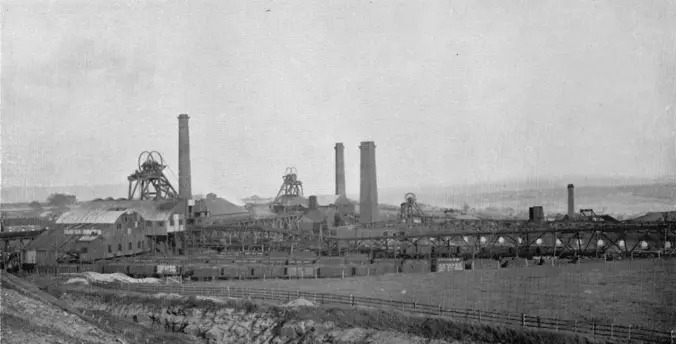
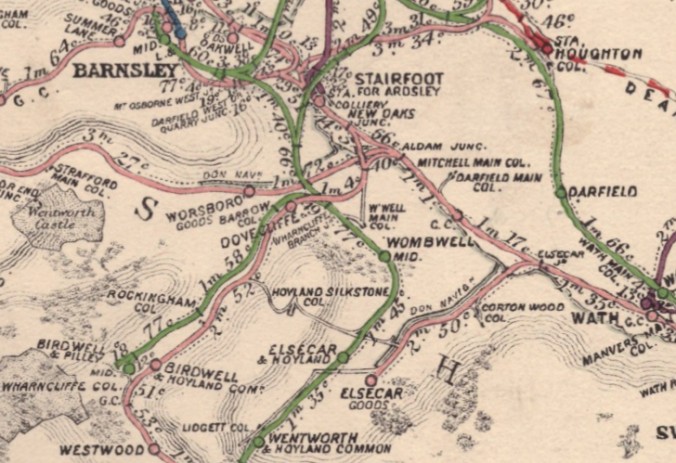
Hoyland Silkstone Colliery stood at Platts Common, Hoyland, three and a half miles south-south-east of Barnsley. A group of earlier coal pits at Platts Common, joined with a pit at Jump by a tramroad incline that ran down to the Dearne and Dove Canal north of Elsecar, was developed into the colliery in the second half of the nineteenth century. The first was opened in late 1840 by William Vizard, a wealthy London solicitor and the chief landowner there, as the Hoyland and Elsecar Coal Company, at first in partnership with the Earl of Lauderdale and Sir Anthony Maitland; the pit was long known as Vizard's. Its two shafts, 130 and 132 yards deep, worked the Barnsley seam, and in 1851 its hard steam coal was going down to the canal at Elsecar and on to Hull for shipment along the east coast. John Woodhouse Day of Pelaw House, Durham, later took the colliery on and went bankrupt in 1864.
The mines were then sub-let to Charles Wells, a Hull shipowner, who was joined by William Singleton Birch and John Ryde, mineral merchants of Manchester. They persuaded him to sink deeper to prove the Silkstone seam, then almost untouched in the district. New leases were agreed with the Vizards in 1873 and the vicar of Hoyland cut the first sod of the new shaft that August. In July 1874 the partners, by then joined by the mining engineers Jacob and John Higson, formed Wells, Birch, Ryde and Company Limited with a capital of £100,000. Sinking ran from 1874 to 1876, the contractor Valentine Joyner taking the downcast shaft to 510 yards and a Silkstone seam up to 5 feet 8 inches thick. In May 1875 the Inspector of Mines, Frank Wardell, described a shaft 'of the enormous diameter of 20 feet' going down to the Silkstone seam, with sinking engines so powerful that a single stroke moved the trunk twenty yards. A sinker, William Stanley, was killed when the engineman lowered an empty trunk onto him.
A branch railway to the Manchester, Sheffield and Lincolnshire line, finished in November 1877 at a cost of some £20,000, ended the pit's dependence on the incline. The company, renamed the Hoyland Silkstone Colliery Company after 1880, employed about 1,000 men and boys in four seams but went into voluntary liquidation in December 1883, soon after Ryde was declared bankrupt. Its secretary, Christopher William Fincken, carried the business on as liquidator while new leases were argued over, and in 1886 a Sheffield paper feared that Hoyland would 'become a second Dronfield'. In November 1888 a new company headed by Lancashire capitalists, the Hoyland Silkstone Coal and Coke Co., Ltd., was formed with a capital of £70,000 and Fincken as its agent.
The colliery passed to the Hoyland Silkstone Coal and Coke Co., Ltd., and was returned as several mines, one to each seam. In 1894 the Silkstone employed 871 people, the Thorncliffe 397 and the Flockton 265, 1,533 in all under the manager, J. Finch. The Parkgate was added by 1896, the Fenton by 1905 and a New Silkstone mine by 1910, when 1,612 were employed. The coal was sold for gas, household use and coking. A loading point on the Elsecar branch railway served the colliery, and after the Midland Railway opened through Hoyland in 1895 a connection was laid to meet the incline.
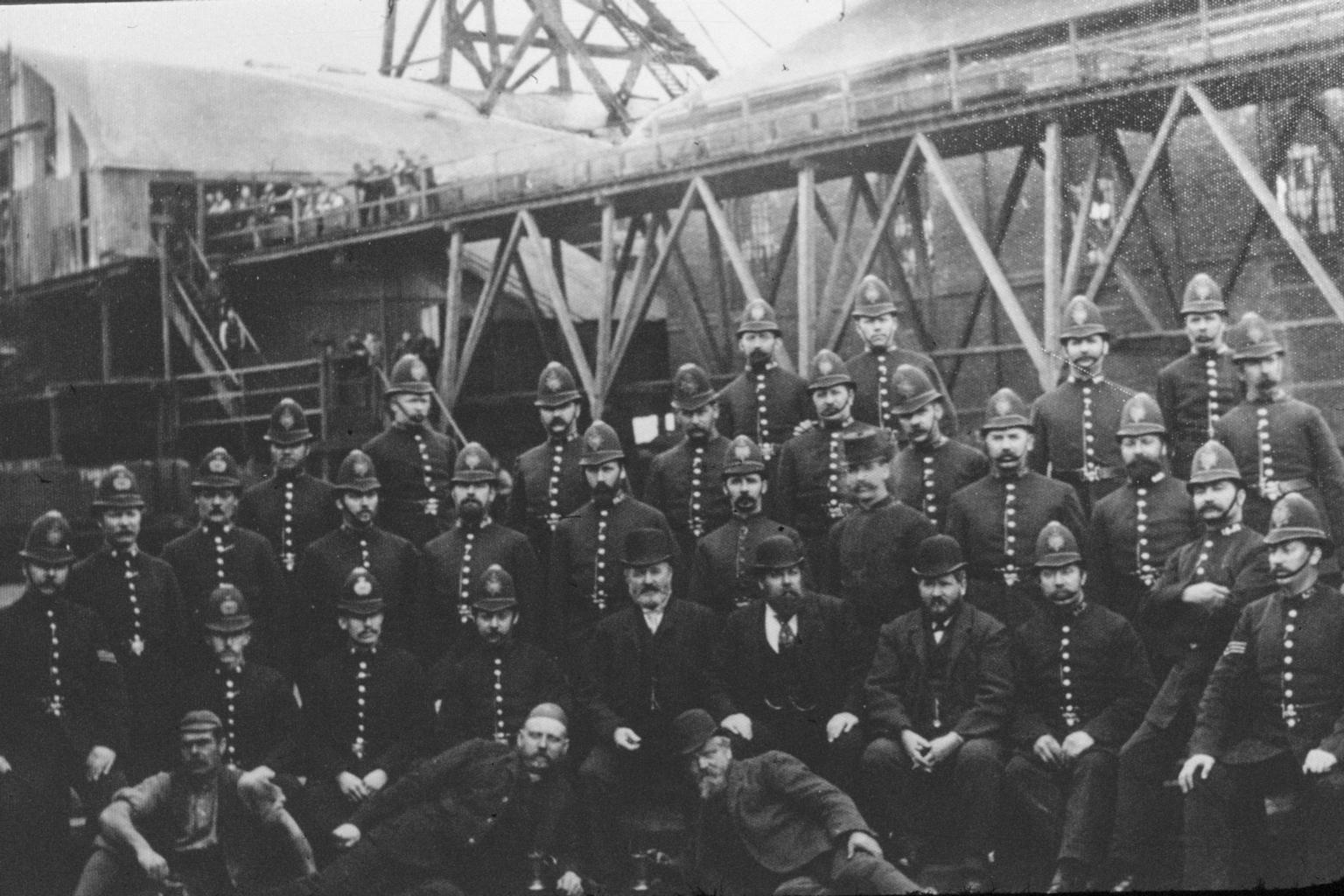
On 1 September 1893 police from the Metropolitan and West Riding forces were photographed with the colliery's officials beneath the headgear, in a picture catalogued under the word 'riot'; in the colliery riots of that month Fincken was physically assaulted. He died in 1895 and was followed as agent by William John Lazenby. Eighty-two deaths are recorded at the colliery. Two men were killed by a fall of roof in May 1890, and four died after a girder gave way in an underground boiler house on 23 November 1907 (see Disasters, below). In November 1909 the manager, Ben Albert Rhodes, fell 24 feet to his death from a cross beam while helping to lower a derrick pole.
The Silkstone workings were abandoned in December 1921 and the colliery was temporarily abandoned in 1922, though the Colliery Year Book for 1923 still shows 2,011 people employed and an output of 360,000 tons a year. It was discontinued in 1926 and again in May 1928, and became part of Rockingham Colliery. In November 1929 the company and Newton, Chambers and Co. applied to the Railway and Canal Commission for a scheme of total amalgamation under the Mining Industry Act 1926, by which the whole undertaking would pass to Newton Chambers and the Hoyland Silkstone company be wound up. Three miners were killed in an explosion at Hoyland Silkstone in July 1935, and its 508-yard shaft was still Rockingham's service shaft in 1967. Other accounts have the colliery closing about 1950 or in the 1950s.
Geology
South Yorkshire Coal Measures. The first pits worked the Barnsley seam at 130 and 132 yards, where it was 7 feet 6 inches to 8 feet thick and dipped north-east at 1 in 14 under a thick 'strong blue bind'. The Silkstone seam, reached at about 510 yards, was up to 5 feet 8 inches thick, and the Parkgate lay at 400 yards. The main shaft reached the old Silkstone seam level at 509 yards and passed the Fenton seam at 383 yards. The colliery worked the Flockton, Thorncliffe and Silkstone seams in 1894, the Parkgate from 1896 and the Fenton from 1905; the Haigh Moor was worked with the Flockton in 1915, and plans also record workings in the Lidgett, Swallow Wood and Thorncliffe Thin.
Geological setting: Sedimentary Beds and Seams (well documented example)
Workings
The Barnsley seam pits of the 1840s were worked in banks 30 yards wide to the rise, with 30-yard pillars left to be worked back. The deepening of 1873–76 gave three shafts: the new 20-foot downcast to the Silkstone seam, a second of 14 feet sunk to the Parkgate at 400 yards and then on to the Silkstone, and an old Barnsley seam shaft of 8 feet 6 inches deepened to the Flockton. The main shaft was 20 feet in diameter, with cages carrying eight tubs on two decks. The winding drums were of different diameters, so that one cage ran to the old Silkstone seam level at 509 yards while the other stopped at the Fenton seam mouthing, 383 yards from the surface, where baulks were laid across half the shaft for it to rest on. There was a boiler house underground. Coal travelled on engine planes and an endless-rope haulage road, and a coal-cutting machine was at work on one face by 1903. At the surface there were screens, locomotives and an incline; the old tramroad to the canal gave way to a loading point on the Elsecar branch railway and, after 1895, a connection to the Midland Railway. A branch to the Manchester, Sheffield and Lincolnshire Railway, with cuttings and embankments 40 feet deep and high, was completed in November 1877.
Closure
The Lidgett workings were abandoned in October 1914, the Silkstone on 15 December 1921 and the Haigh Moor on 30 April 1928. The colliery was temporarily abandoned in 1922, discontinued in 1926 and again in May 1928, and then became part of Rockingham Colliery. Plans of its spoil tips are catalogued as abandoned in 1944. The lower part of the tramroad incline had been dismantled by 1930 and the upper part by 1956.
What remains
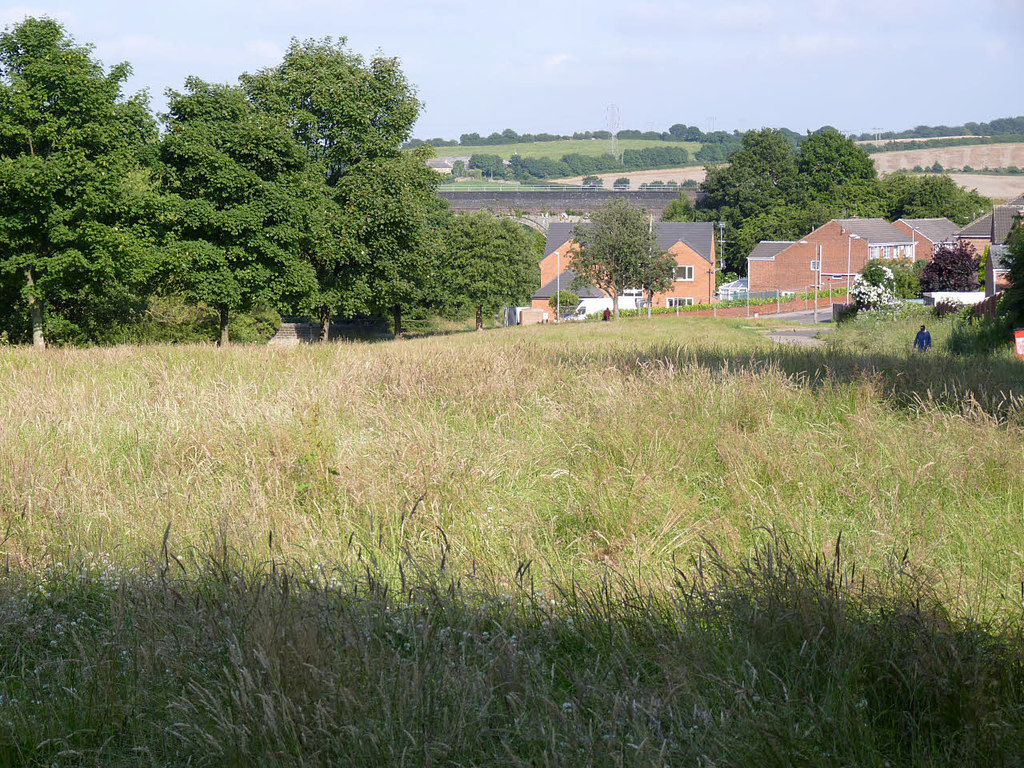
The colliery site is occupied by the Platts Common Industrial Estate. Between the site and Greenside Lane the line of the tramroad incline has been built over with housing; lower down, public footpaths follow much of it, though landscaping has removed the earthworks (2013).
The line of the tramroad incline through Jump Valley, much of it followed by footpaths (2013).
Redevelopment
Platts Common Industrial Estate.
Related mines
- Rockingham Colliery — Hoyland Silkstone became part of Rockingham Colliery when it was discontinued in 1928, and its 508-yard shaft served Rockingham as a service shaft.
Nearby mines
- Rockingham Colliery — 1.1 miles (1.8 km) W
- Wombwell Main Colliery — 1.3 miles (2.1 km) NE
- Elsecar Colliery — 1.4 miles (2.3 km) SE
- Hemingfield Colliery — 1.5 miles (2.4 km) E
- Lundhill Colliery — 1.8 miles (2.9 km) E
Straight-line distance, within 9 miles (15 km). Show on the map.
Disasters & major incidents
-
Hoyland Silkstone Colliery boiler house accident, 1907
23 November 1907 · Collapse / Roof Fall · 4 fatalities
On 23 November 1907 six men were taking down an old wall in an underground boiler house at Hoyland Silkstone Colliery, near Barnsley, when a girder collapsed and the roof came in. The fall broke open the boiler and scalded them all. Four died. The deputy in charge, Francis Chandler, whose son was among the dead, was awarded the Edward Medal of the first class for going back three times through the steam.
What's uncertain
Points where sources disagree or the record could not be settled; both accounts are kept. All open questions in the archive.
Recorded claims
Individual factual claims, each attached to the source(s) that support it below. Where sources disagree, both are kept.
- Sinking ran from 1874 to 1876. 1
- In May 1875 a shaft 20 feet in diameter was being sunk to the Silkstone seam for Wells, Birch, Ryde and Co., and a sinker was killed by a descending trunk. 2
- The 20-foot shaft had cages carrying eight tubs on two decks; one ran to the old Silkstone seam level at 509 yards and the other to the Fenton seam mouthing at 383 yards. 3
- The colliery was owned by the Hoyland Silkstone Co. and then the Hoyland Silkstone Coal and Coke Co., Ltd. 3,4
- The company's mines at the colliery employed 1,533 people in 1894, 1,657 in 1896, 1,612 in 1910 and 2,011 in 1923. 4
- In 1923 the company's annual output was 360,000 tons of coking, gas and household coal. 4
- A series of coal mines at Platts Common was developed as Hoyland Silkstone Colliery in the second half of the nineteenth century. 5,6
- An incline joined the pits at Platts Common and Jump to the Dearne and Dove Canal; a loading point on the Elsecar branch railway followed, and a connection to the Midland Railway after 1895. 5
- Metropolitan and West Riding police were photographed with colliery officials at Hoyland Silkstone on 1 September 1893. 7
- Temporarily abandoned in 1922, discontinued in 1926 and in May 1928, and became part of Rockingham. 1
- The Silkstone seam workings were abandoned on 15 December 1921 and the Haigh Moor on 30 April 1928; spoil tip plans are dated 1944. 8,9,10
- In November 1929 Newton Chambers & Co. Ltd. and the Hoyland Silkstone Coal & Coke Co. Ltd. applied for a scheme of total amalgamation, vesting the Hoyland Silkstone undertaking in Newton Chambers and winding the company up. 11
- In 1967 a 508-yard shaft at Hoyland Silkstone was the service shaft of Rockingham Colliery. 12
- The colliery closed about 1950, or in the 1950s. (disputed) 5,6
- The colliery site is now the Platts Common Industrial Estate. 5
- The colliery was first established at Platts Common in late 1840 by William Vizard as the Hoyland and Elsecar Coal Company, a partnership with the Earl of Lauderdale and Sir Anthony Maitland that ended at the close of 1842. 13
- In 1851 the two pits were 130 and 132 yards deep, in a Barnsley seam 7 feet 6 inches to 8 feet thick dipping 1 in 14 north-east, and the coal was shipped at Elsecar for Hull. 13
- After John Woodhouse Day's bankruptcy in 1864 the mines were sub-let to Charles Wells of Hull, joined by William Singleton Birch and John Ryde; Wells, Birch, Ryde and Company Limited was incorporated in July 1874 with a capital of £100,000. 13
- The first sod of the new shaft was cut in August 1873; the 20-foot downcast was sunk by Valentine Joyner to 510 yards, a 14-foot shaft went to the Parkgate at 400 yards and then the Silkstone, and an old 8 foot 6 inch Barnsley seam shaft was deepened to the Flockton. 13
- A branch to the Manchester, Sheffield and Lincolnshire Railway was completed in November 1877 at a cost of about £20,000. 13
- The company, renamed the Hoyland Silkstone Colliery Company Limited after 1880 and employing around 1,000, went into voluntary liquidation in December 1883 while working the Silkstone, Thorncliffe, Lidgett and Parkgate seams. 13
- The Hoyland Silkstone Coal and Coke Co., Ltd. was established in November 1888 with an authorised capital of £70,000. 13
- The company's agent, C. W. Fincken, was physically assaulted in the colliery riots of September 1893. 13
- Coal was worked under land leased from the Vizard family, the Earls Fitzwilliam and the Vernon-Wentworths of Wentworth Castle, with several smaller owners. 13
Photographs & further reading
A 2013 photograph with a history of the incline from Platts Common to the canal and what survives of it.
View sourceEmployment and output for each of the colliery's seams from 1894 to 1923, and the names of 82 people killed there, many with the inspector's account of the accident.
View sourceThe company's mines, managers and workforce year by year, with its directors and output in 1923.
View sourceThe Inspector of Mines' report on the death of a sinker in the 20-foot shaft, with his remarks on the sinking engines and the signalling rules.
View sourceThe fullest account of the colliery's owners and companies from William Vizard in 1840 to the 1912 board, with the sinking of the deep shafts, maps and photographs.
View sourceSources
- (secondary) Coal Mines in Yorkshire 1854 onwards (H) - Northern Mine Research Society — Northern Mine Research Society
- (primary) Hoyland Silkstone Colliery shaft accident, May 1875 (Inspector of Mines' report) — Durham Mining Museum
- (primary) Hoyland Silkstone Colliery — Durham Mining Museum
- (primary) Hoyland Silkstone Coal and Coke Co., Ltd. — Durham Mining Museum
- (observational) Line of former Hoyland Silkstone Colliery tramroad incline (photograph and description, 2013) — Geograph (Alan Murray-Rust)
- (secondary) Hoyland and Elsecar — Dearne Valley Landscape Partnership
- (secondary) Colliery Officials: police at Hoyland Silkstone Collieries, 1 September 1893 (catalogue record) — University of Colorado Boulder Libraries, via Wikimedia Commons
- (primary) Mine plan: HOYLAND SILKSTONE, Silkstone seam, abandoned 15 December 1921 (feature 21904853) — British Geological Survey / Mining Remediation Authority mine plans catalogue
- (primary) Mine plan: HOYLAND SILKSTONE, Haigh Moor seam, abandoned 30 April 1928 (feature 21905287) — British Geological Survey / Mining Remediation Authority mine plans catalogue
- (primary) Mine plan: HOYLAND SILKSTONE COLLIERY, spoil tips, abandoned 1944 (feature 21929140) — British Geological Survey / Mining Remediation Authority mine plans catalogue
- (primary) Official notice, London Gazette, 8 November 1929: Newton Chambers & Co. Ltd. and Hoyland Silkstone Coal & Coke Co. Ltd. — Durham Mining Museum
- (primary) Rockingham Colliery — Durham Mining Museum
- (secondary) Pits: Hoyland Silkstone Colliery — Friends of Hemingfield Colliery
- (secondary) Hoyland Silkstone Colliery accident, 23rd November 1907 — Healey Hero

Record created: 2 October 2026 · Last researched: 2 October 2026