 MineArchive
Seghill Colliery
| Location | Seghill, between Cramlington and the coast, Northumberland — 55.0650, -1.5350 (approximate) |
|---|---|
| Commodities | Coal, Fireclay |
| Type | Coal |
| Worked | 1824–28 September 1962 |
| Maximum depth | Unknown. |
| Operators | Carr and Co. (1830–1858), Joseph Laycock and Co. (1858–1922), Seghill Colliery Ltd (1922–1947), National Coal Board (1947–1962) |
Overview
A Northumberland colliery established in 1824 and worked through a group of shafts — the Engine, John, Kitty, Success and Major pits — for very nearly one hundred and forty years. Charles Carr was viewer and part-owner of Seghill, Burradon and Cowpen together in the mid-nineteenth century, and Seghill was connected underground to Burradon until the two were sold to different owners in 1858. When Burradon exploded in 1860, Seghill’s manager opened the door between them so that bodies could be recovered from that side. Seghill closed on 28 September 1962.
History
Seghill Colliery was established in 1824. In the mid-nineteenth century it belonged to Carr and Co.: Charles Carr was viewer and part-owner of Seghill, Burradon and Cowpen collieries alike, and Seghill and Burradon were physically connected underground, the air passing down the Burradon shaft and through to the Seghill mine. In 1858 the two were sold to different owners — Seghill to Joseph Laycock and Co. — and had to be separated. Coking ovens stood south-west of the colliery.
When Burradon exploded on 2 March 1860, killing seventy-six, Seghill’s manager John Fryer opened the door between the two collieries to help recover bodies in that district. Charles Carr, by then the manager at Burradon, was the man the inquest jury heard had misled them.
By 1922 the colliery was owned by Seghill Colliery Ltd. In 1940 it produced 450,000 tons of household, manufacturing and steam coal, together with fireclay, and in 1950 it employed 1,139 people, 856 of them below ground. It closed on 28 September 1962.
Geology
The Northumberland coalfield inland from the coast, worked for household, manufacturing and steam coals with fireclay alongside.
Workings
A group of shafts rather than a single pit — the Engine, John, Kitty, Success and Major pits — with coking ovens established south-west of the colliery. The workings were connected to Burradon Colliery, with a door between the two, until the collieries were separated in 1858; the door was opened again in 1860 for the recovery of the Burradon dead.
Closure
The colliery closed on 28 September 1962.
What remains
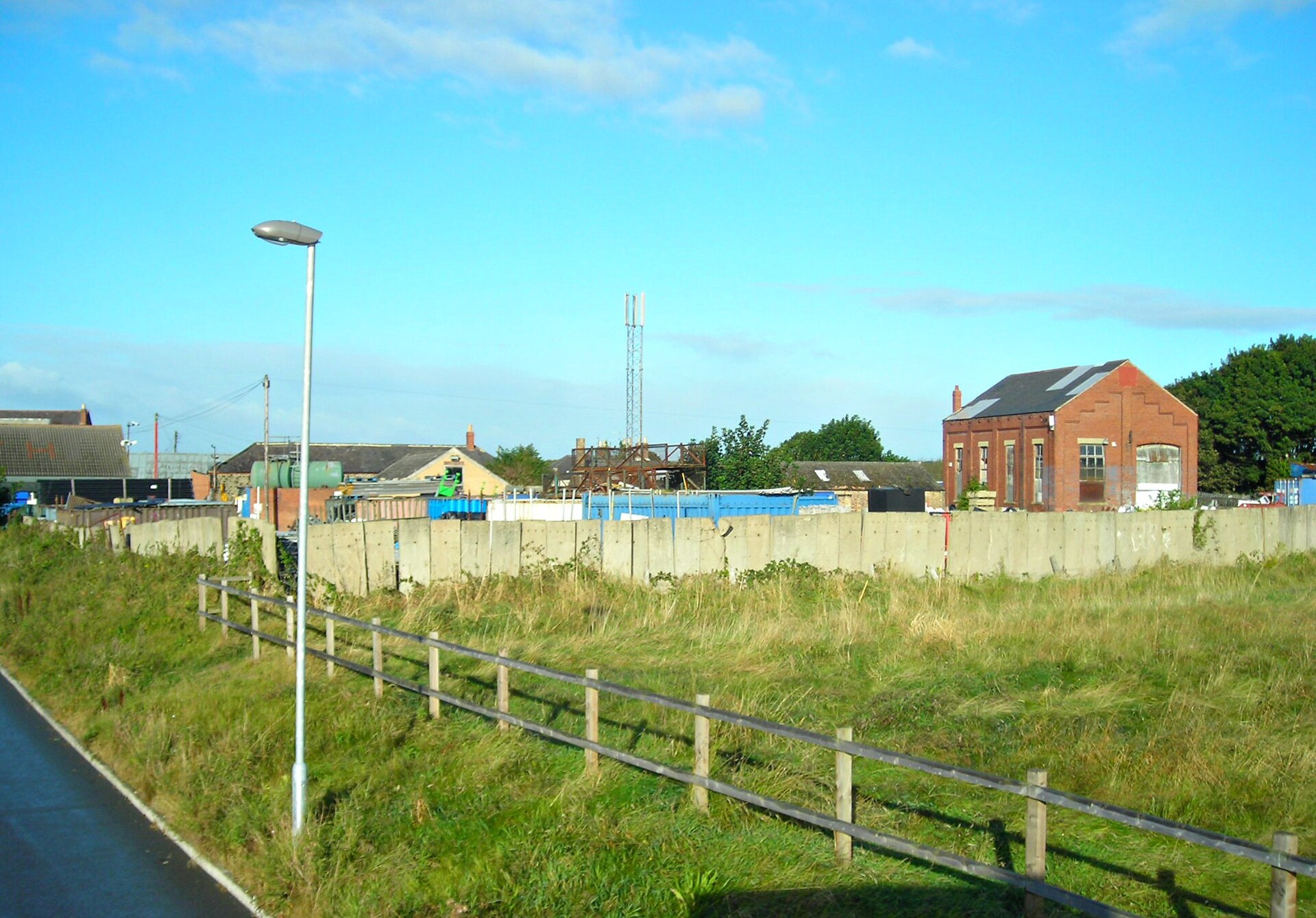
Some of the original pit buildings remain on the site, alongside an assortment of more recent ones.
Some of the original colliery buildings survive at the former pit yard.
Related mines
- Burradon Colliery — Connected underground and owned together: Charles Carr was viewer and part-owner of both, and the air passed down the Burradon shaft into the Seghill mine until the two were sold to different owners in 1858 and had to be separated. In 1860, after the Burradon explosion, Seghill’s manager John Fryer opened the door between them so that bodies could be recovered from that side.
- East Cramlington Colliery — Shared plan: the BGS plans of the Beaumont seam join East Cramlington's workings with Seghill's.
- West Cramlington Colliery — Shared plan: BGS plans of Seghill's workings in the Yard, Busty, Beaumont and Low Main seams also cover West Cramlington.
Nearby mines
- West Holywell Colliery — 0.5 miles (0.8 km) S, Tyne and Wear
- Seaton Delaval Colliery — 0.7 miles (1.1 km) NE
- East Holywell Colliery — 1.4 miles (2.2 km) SE, Tyne and Wear
- Cramlington Colliery — 1.7 miles (2.7 km) NW
- Backworth Colliery — 1.7 miles (2.8 km) S, Tyne and Wear
Straight-line distance, within 9 miles (15 km). Show on the map.
Disasters & major incidents
-
Seghill Colliery explosion, 1864
1864 · Explosion · 7 fatalities
Late on the night of 8 September 1864 gas exploded in the Low Main seam of Joseph Laycock's Seghill Colliery, Northumberland, killing seven, among them a putter of sixteen and a timber leader of seventy. The jury blamed an injured lamp; the inspector could not say where the explosion began.
Recorded claims
Individual factual claims, each attached to the source(s) that support it below. Where sources disagree, both are kept.
- Several pits were established as part of the colliery: the Engine, John, Kitty, Success and Major pits. 1
- In the mid-nineteenth century the colliery was owned by Carr & Co. Charles Carr was viewer and part-owner of the Seghill, Burradon and Cowpen collieries. 1
- In 1858 Seghill Colliery was sold to Joseph Laycock & Co.; the same sale separated Seghill from Burradon, which had shared its ventilation. In 1922 it was owned by Seghill Colliery Ltd. 1
- When Burradon exploded on 2 March 1860, John Fryer, the manager of Seghill Colliery, opened the door between the Burradon and Seghill collieries to aid the recovery of bodies in that district. 2
- In 1940 the colliery produced 450,000 tons of coal — household, manufacturing and steam — together with fireclay. In 1950 it employed 1,139 people, 856 below ground and 283 on the surface. 1
- The colliery closed on 28 September 1962, and some of the original pit buildings remain. 1
Photographs & further reading
Newcastle University’s community heritage page for the colliery, giving the named pits, the succession of owners from Carr & Co. through Joseph Laycock to Seghill Colliery Ltd, and the output and employment figures.
View sourceSources
- (secondary) Seghill Colliery (1824-1962) — Co-Curate, Newcastle University
- (secondary) Burradon Pit Disaster 1860 — Burradon History
Record created: 8 September 2026 · Last researched: 8 September 2026