 MineArchive
West Cramlington Colliery
| Location | West Cramlington, Cramlington, Northumberland — 55.0773, -1.5857 (approximate) |
|---|---|
| Commodities | Coal, Fireclay |
| Type | Coal |
| Worked | 16 May 1838–30 August 1938 |
| Maximum depth | About 408 feet (124 m) at the Engine Pit, with the Plessey seam proved by boring at about 431 feet (131 m). |
| Operators | Hartley Main Collieries Ltd (1929–1938), Waldie and Company, Lamb, Maud, Taylor and Company, J. C. Lamb and Company |
Overview
A colliery east of Cramlington worked for exactly a century, from the sinking of its Engine Pit in May 1838 to its abandonment in August 1938, with its own waggonway to the Backworth line and some 300 men in the 1890s; its village Institute saw the call that led to the derailment of the Flying Scotsman in 1926.
History
West Cramlington Colliery lay just east of the main line at Cramlington, about seven and a half miles north of Newcastle, with a village of houses grouped around it. The sinking of its Engine Pit began on 16 May 1838, from about 200 feet above sea level, through clay and the High Main seam at 53 feet, then the Grey and Bensham seams to the Low Main at 387 feet. The West Cramlington Waggonway opened the same year and joined the Backworth waggonway; it closed in 1849, when the colliery was linked to the Newcastle and Berwick Railway. Christopher Gregory, who came to West Cramlington in 1838, opened his house for Primitive Methodist worship, and a chapel followed in 1850.
Waldie and Company held the colliery in the 1850s, Lamb, Maud, Taylor and Company in the 1860s and J. C. Lamb and Company in the 1880s; in the 1890s it was in the hands of the owners of Backworth and West Cramlington Collieries. A boring from the Low Main in October 1859 proved the Plessey seam, whose workings were abandoned on 22 January 1869. On 15 November 1859 a boiler exploded, killing Henry Tate, a blacksmith, and fatally injuring William Curtis, a fireman. The newspapers reported a threatened strike at the colliery in June 1861 and a strike in May 1866. R. F. Spence managed it from 1882 to 1896, when it employed more than 300 people, 345 in 1894, raising steam coal and fireclay.
Hartley Main Collieries Ltd took it over in May 1929. It then worked the Main and Yard seams with 246 people in 1930 and the Low Main, Main and Yard with 153 in 1935. The Main, Yard, Five Quarter and Low Main seams were abandoned on 30 August 1938, a hundred years after the sinking. On 10 May 1926, during the General Strike, William Golightly of the Northumberland Miners' Association told a meeting at the West Cramlington Institute to stop the trains between stations; that afternoon miners took up a rail on the main line and derailed the Flying Scotsman, and eight men were later sent to prison.
Geology
The Engine Pit passed through clay to the High Main seam at 53 feet and on through post with whin layers and water to the Grey, Bensham and Low Main seams, the Low Main at 387 feet. A boring of 1859 from the Low Main proved the Plessey seam, three feet thick, at about 431 feet. Later workings were in the Main, Yard, Five Quarter and Low Main seams.
Workings
The Engine Pit, sunk from 1838, and a waggonway to the Backworth line, replaced in 1849 by a link to the Newcastle and Berwick Railway.
Closure
The Plessey seam was abandoned on 22 January 1869; the Main, Yard, Five Quarter and Low Main seams were abandoned on 30 August 1938.
What remains
The site has been reclaimed; a pit heap remained in 2022.
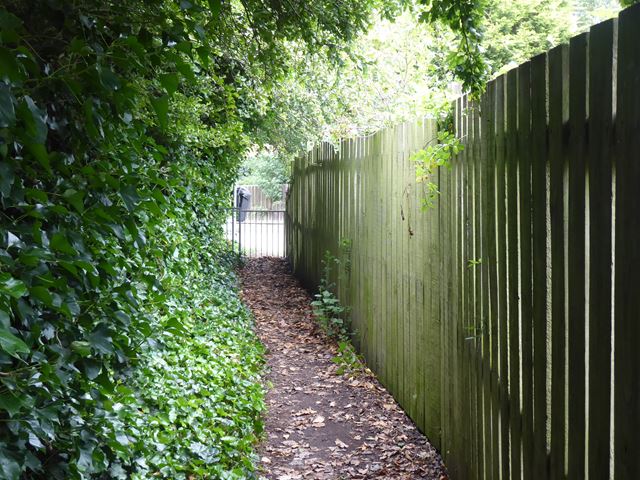
A pit heap; the course of the West Cramlington Waggonway towards Seghill survives as a footpath.
Related mines
- Backworth Colliery — In the 1890s both were held by the owners of Backworth and West Cramlington Collieries, and the West Cramlington Waggonway joined the Backworth waggonway.
- Cramlington Colliery — Shared plan: BGS plans of the Cramlington, Ann, Betsey, Engine, Lamb and Richard pits include West Cramlington's workings in the Low Main, Lower Busty and Yard seams; Hartley Main Collieries Ltd owned both from 1929.
- East Cramlington Colliery — Shared plan: the BGS plans of the Beaumont seam take in both East and West Cramlington with Seghill.
- Seghill Colliery — Shared plan: BGS plans of Seghill's workings in the Yard, Busty, Beaumont and Low Main seams also cover West Cramlington.
Nearby mines
- East Cramlington Colliery — 0.4 miles (0.6 km) SE
- Cramlington Colliery — 0.9 miles (1.4 km) NE
- Nelson Colliery — 1.2 miles (2.0 km) N
- Dudley Colliery — 1.4 miles (2.2 km) S, Tyne and Wear
- Shankhouse Colliery — 1.5 miles (2.5 km) NE
Straight-line distance, within 9 miles (15 km). Show on the map.
Recorded claims
Individual factual claims, each attached to the source(s) that support it below. Where sources disagree, both are kept.
- The sinking of West Cramlington's Engine Pit began on 16 May 1838. 1,2,3
- The West Cramlington Waggonway opened in 1838 and closed in 1849, when the colliery was linked to the Newcastle and Berwick Railway. 4
- West Cramlington Colliery employed 345 people in 1894, 284 of them below ground. 1
- Hartley Main Collieries Ltd took over West Cramlington Colliery in May 1929. 1,3
- The Main, Yard, Five Quarter and Low Main seams at West Cramlington were abandoned on 30 August 1938. 1,5
- On 10 May 1926 William Golightly addressed miners at the West Cramlington Institute, and that afternoon the Flying Scotsman was derailed on the main line nearby. 6
Photographs & further reading
Coals Archive record of the colliery's century of working, its owners and its surviving pit heap.
View sourceQuentin Outram's account for the Society for the Study of Labour History of the 1926 derailment and the West Cramlington miners.
View sourceSources
- (primary) West Cramlington Colliery — Durham Mining Museum
- (primary) West Cramlington Colliery: strata sunk through in the Engine Pit, 1838 — Durham Mining Museum
- (secondary) West Cramlington Colliery — North East Heritage Library (Coals Archive)
- (secondary) Backworth Colliery Railway (West Cramlington Branch), Tyne and Wear HER 1058 — Tyne and Wear Sitelines
- (primary) West Cramlington Colliery: catalogue of plans of abandoned mines — Durham Mining Museum
- (secondary) Cramlington: a place in labour history (Quentin Outram, 19 December 2025) — Society for the Study of Labour History
Record created: 23 October 2026 · Last researched: 23 October 2026