 MineArchive
Seaton Delaval Colliery
| Location | Seaton Delaval, Northumberland — 55.0729, -1.5252 (exact) |
|---|---|
| Commodities | Coal, Fireclay |
| Type | Coal |
| Worked | 1838–1960 |
| Maximum depth | Unknown. |
| Operators | Joseph Lamb & Co. (1838–1880), Seaton Delaval Coal Company (1880–1929), Hartley Main Collieries Ltd (1929–1943), Bedlington Mains Coal Company (1943–1947), National Coal Board (1947–1960) |
Overview
A Northumberland colliery on the Delaval family's estate, sunk from 1838 and worked through a dozen shafts until 1960. It was held by a succession of Lamb partnerships and then the Seaton Delaval Coal Company, and from 1929 formed part of the Hartley Main Collieries group. The village it worked from is named in the folk song 'Blackleg Miner'.
History
Sinking at the Engine Pit began on 10 May 1838, and the colliery grew into a group of shafts — A to F, Engine, Richard, and later Forster, sunk from May 1859, Hastings from 1875 and Relief from 1884. The E and F pits were given up in 1932.
The colliery was held by Joseph Lamb & Co. in the 1830s and then by successive Lamb partnerships — Lamb, Scott, Barnes, Burdon & Co. in the 1850s and Lamb, Burdon & Co. in the 1860s — before passing to the Seaton Delaval Coal Company in the 1880s. In May 1929 it was absorbed into Hartley Main Collieries Ltd., which worked a group of pits in this corner of south-east Northumberland linked by their own railways; a 1932 plan in the Colliery Engineer shows the disposition of the group and the lines between them. The Bedlington Mains Coal Company held it from 1943, and the National Coal Board from nationalisation in 1947. Fireclay was raised alongside the coal from the 1880s. The colliery closed on 27 May 1960.
Geology
The colliery worked the Coal Measures of the Northumberland coalfield, close to the coast north of the Tyne, where the productive measures run out under the sea. Seatearth fireclay beneath the coals was raised as a saleable product alongside it, as at most of the collieries in this part of the coalfield.
Workings
A group of shafts rather than one pit: the Engine Pit from 1838, lettered pits A to F, Richard, and the later Forster (1859), Hastings (1875) and Relief (1884). Coal and fireclay were both raised. From 1929 the colliery worked as part of the Hartley Main group, whose pits were connected to each other and to the coast by their own railways.
Closure
Closed on 27 May 1960, under the National Coal Board.
What remains
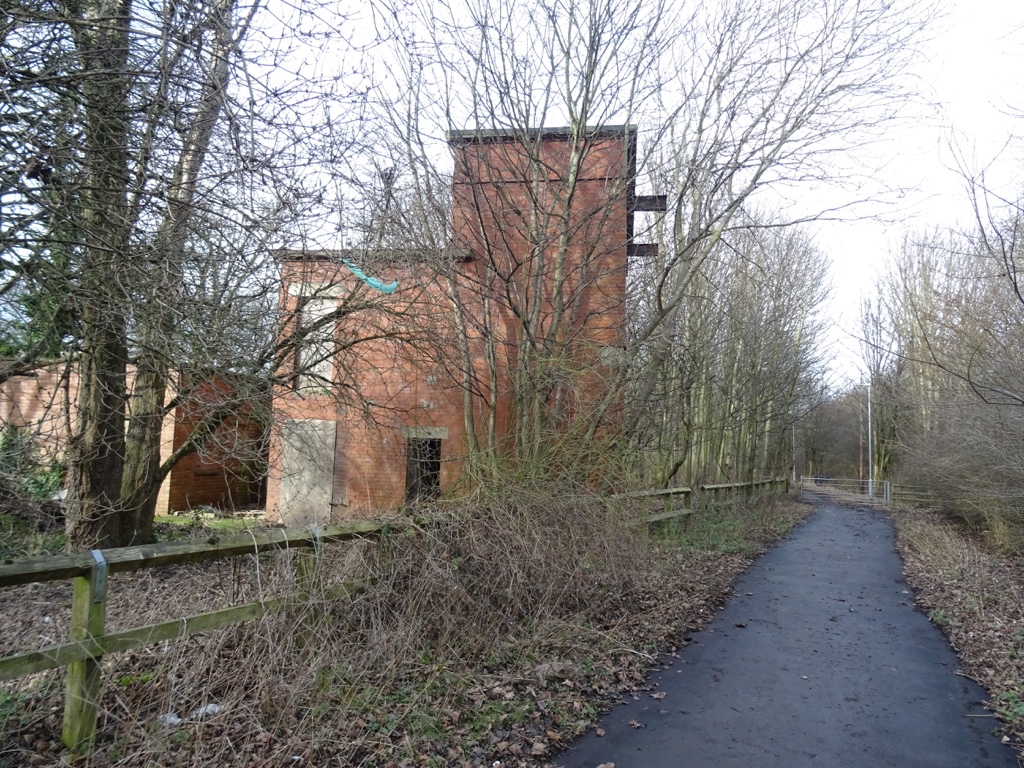
The colliery site has largely returned to woodland and open ground. Some colliery buildings survive, along with an air shaft, and the position of the headgear can still be made out.
Surviving colliery buildings and an air shaft; the site of the headgear.
Related mines
- Gloria Colliery, Hartley — Both Hartley Main Collieries Ltd pits; Gloria's coal was processed at the group's larger collieries.
- Hartford Colliery — Hartford's owner Cramlington Coal Company and the Seaton Delaval Coal Company were amalgamated as Hartley Main Collieries Ltd in May 1929.
- New Delaval Colliery — New Delaval was sunk by the Seaton Delaval Coal Company and reached by its waggonway; the Seaton Delaval record counts its Forster and Relief shafts among the group's pits.
Nearby mines
- Seghill Colliery — 0.7 miles (1.1 km) SW
- West Holywell Colliery — 1.1 miles (1.8 km) S, Tyne and Wear
- Gloria Colliery, Hartley — 1.4 miles (2.2 km) N
- East Holywell Colliery — 1.6 miles (2.6 km) S, Tyne and Wear
- Cramlington Colliery — 1.7 miles (2.8 km) NW
Straight-line distance, within 9 miles (15 km). Show on the map.
Disasters & major incidents
-
Seaton Delaval Colliery roof fall, 1889
26 January 1889 · Collapse / Roof Fall · 2 fatalities
A fall of roof at Seaton Delaval Colliery, Northumberland, killed two stowers, John Lynn and George Perry, on 26 January 1889. -
Seaton Delaval Colliery shot accident, 1897
1 February 1897 · Explosion · 2 fatalities
Two stonemen were killed by a gelignite shot in the Hastings pit at Seaton Delaval Colliery, Northumberland, on 1 February 1897. -
Seaton Delaval Colliery shaft accident, 1924
19 September 1924 · Winding / Shaft Accident · 3 fatalities
A clutch on the crab-engine drum broke as a walling scaffold was being raised in the Melton sinking at the Seaton Delaval Coal Company's Hastings Colliery on 19 September 1924, dropping three sinkers into the flooded sump.
Culture
- Blackleg Miner (Music)
The song names the village directly — 'Oh, Delaval is a terrible place' — alongside the neighbouring Seghill pit. Seaton Delaval Colliery was the pit at Delaval, worked from 1838 to 1960. The song's own documentary history is uncertain (see the record above); the link records the place it names, not a documented event at this colliery.
What's uncertain
Points where sources disagree or the record could not be settled; both accounts are kept. All open questions in the archive.
- The folk song 'Blackleg Miner' names the village directly — 'Oh, Delaval is a terrible place' — alongside the neighbouring Seghill pit. (uncertain) 2
Recorded claims
Individual factual claims, each attached to the source(s) that support it below. Where sources disagree, both are kept.
- Sinking at the Engine Pit began on 10 May 1838. 1
- The Forster Pit was sunk from 11 May 1859, the Hastings Pit opened in 1875 and the Relief Pit in 1884; the E and F pits closed in 1932. 1
- The colliery passed to Hartley Main Collieries Ltd in May 1929, and a 1932 plan in the Colliery Engineer shows the disposition of the group's pits and the railways between them. 1
- The colliery closed on 27 May 1960. 1
- The folk song 'Blackleg Miner' names the village directly — 'Oh, Delaval is a terrible place' — alongside the neighbouring Seghill pit. (uncertain) 2
- Located at about 55.073 N, 1.525 W. 2
Photographs & further reading
The colliery's twelve shafts with their sinking and closing dates, the succession of owners from Joseph Lamb & Co. to the National Coal Board, and the contemporary colliery maps.
View sourceSources
- (primary) Durham Mining Museum: Seaton Delaval Colliery — Durham Mining Museum
- (secondary) Seaton Delaval — Wikipedia
Record created: 3 September 2026 · Last researched: 3 September 2026