 MineArchive
Leadhills
| Location | Leadhills, South Lanarkshire — 55.4171, -3.7620 (exact) |
|---|---|
| Commodities | Lead, Gold, Silver |
| Type | Metal |
| Worked | 1239–1938 |
| Maximum depth | workings recorded to at least the 80-fathom level (roughly 147 m) |
| Operators | Scots Mining Company (1734–?) |
Overview
Leadhills is a former lead- and gold-mining village high in the Lowther Hills of South Lanarkshire, worked on and off for around 700 years. Together with neighbouring Wanlockhead it formed one of Scotland's most important metal-mining districts, and gave its name to several minerals first identified here, including leadhillite.
History
The earliest documented mining is a 1239 charter granting the monks of Newbattle Abbey the right to work a mine on what was then known as Crawford Muir. The area became notable for gold in the 16th century, with intensive royal extraction under James IV and James V — gold from Leadhills reportedly went into the Scottish Crown Jewels made between 1538 and 1542 — though commercial gold working had ceased by around 1620, after which lead became the district's main commercial product, with substantial silver recovered from the lead ore.
In 1638 the mineral rights passed to the Hope family (later Earls of Hopetoun), who renamed the area Hopetoun and controlled the mines for centuries afterward, leasing operations to mining companies in exchange for a share of production. The Scots Mining Company, formed to work the Hopetoun leases, appointed the mathematician James Stirling as managing agent in 1734; Stirling cut miners' underground shifts from twelve hours to six, introduced a company surgeon and a health insurance scheme, and encouraged miners to garden for their health. In 1741 a group of Leadhills miners founded the Leadhills Miners' Reading Society, generally considered the oldest subscription library in Britain.
Geology
The district sits in the Lowther Hills of the Southern Uplands. Nine minerals were first identified at Leadhills, including leadhillite, lanarkite and caledonite, reflecting the site's international significance to mineralogy as well as its mining history.
Geological setting: Veins and Lodes (well documented example)
Workings
Ore was worked from a series of levels on the hillsides around the village; documented working levels include the 25-fathom and 80-fathom levels (roughly 46 m and 147 m). Mine operators paid the Hopetoun estate one bar of lead in every six raised as rent, with an average of around 18,000 bars produced annually during the district's most productive periods.
Closure
Sources disagree on when mining finally stopped at Leadhills — one account gives 1938, when "the last shaft closed"; another states mining continued, on a reduced basis, into the 1950s across the wider Leadhills–Wanlockhead district. This may reflect the difference between the closure of the main Leadhills operation and smaller-scale working continuing nearby.
What remains
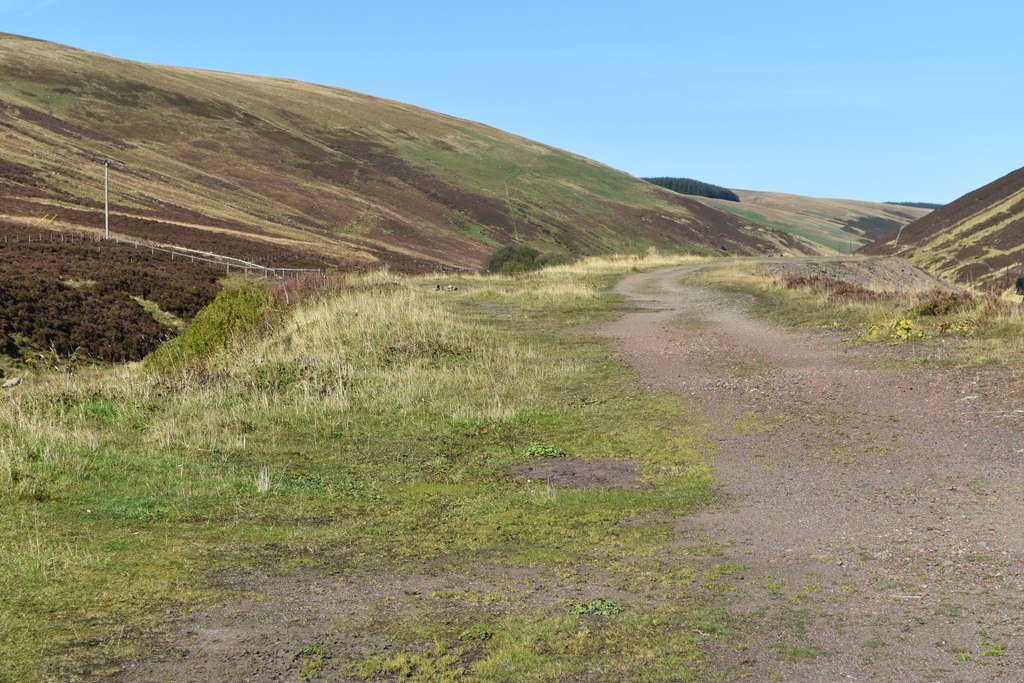
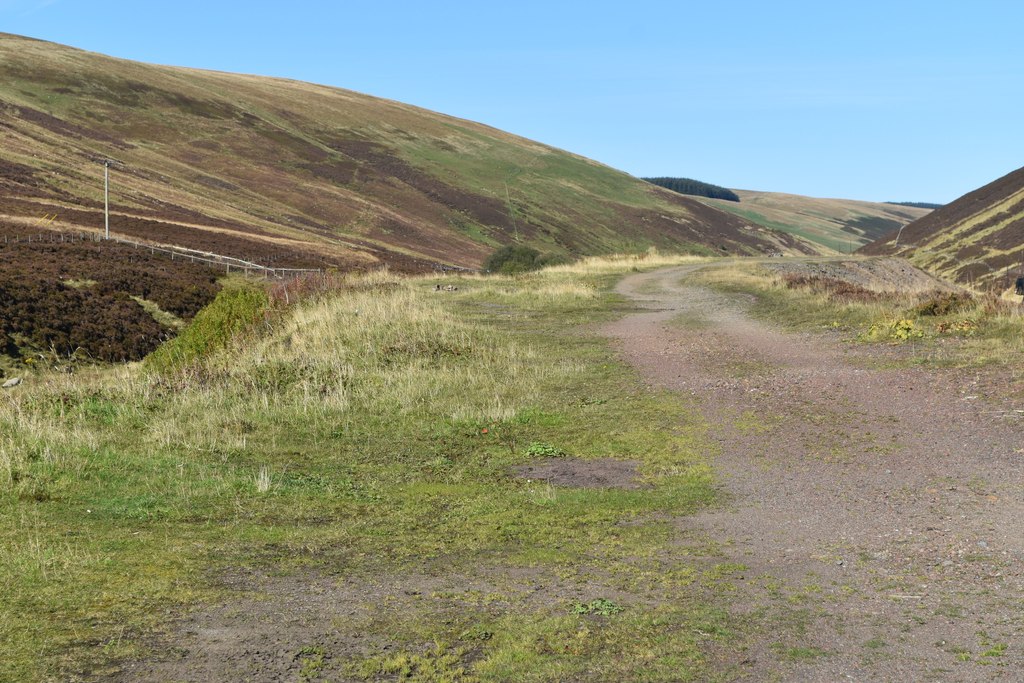
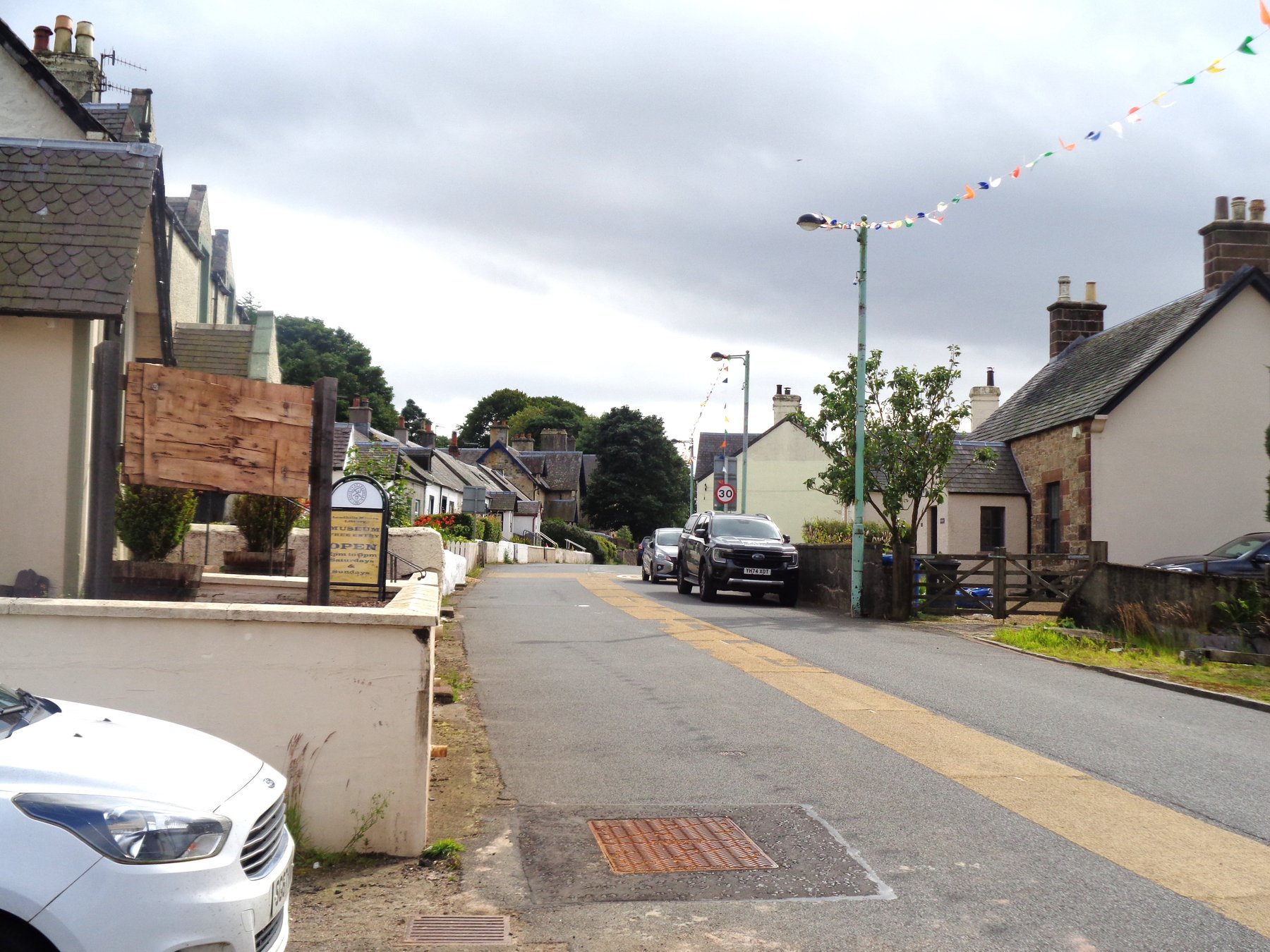
Leadhills remains an inhabited village — its population has fallen from 835 in 1901 to around 315 today — rather than an abandoned site. Former mine workings are visible on the hillsides immediately north of the village, and recreational gold panning still takes place in the local streams.
Notable survivals include the Scots Mining Company House (built around 1736 for the mines' manager, attributed to the architect William Adam, now a Category A listed building), the Leadhills Miners' Library building (erected 1791, one of the oldest public library buildings in Scotland), the 1770 Curfew Bell, and the graves of the mathematician James Stirling and of John Taylor — reputed, on his gravestone, to have lived to 137.
Redevelopment
The narrow-gauge Leadhills and Wanlockhead Railway, reportedly Britain's highest adhesion railway, now runs as a heritage line between the two former mining villages; the Miners' Library continues to operate as a working library and small museum.
Related mines
- Glengonnar — Glengonnar lies in the valley immediately above Leadhills, and the Leadhills Company itself sank Glengonnar's shaft.
- Susanna Mine — The Susanna Mine worked the richest vein in the Leadhills lead field.
- Wanlockhead — Together the two formed one of Scotland's most important metal-mining districts, sharing the Leadhills and Wanlockhead Railway.
Nearby mines
- Susanna Mine — 0.2 miles (0.4 km) W
- Glengonnar — 0.3 miles (0.5 km) SW
- Cove Vein Mine — 1.4 miles (2.2 km) SW, Dumfries and Galloway
- Wanlockhead — 1.5 miles (2.4 km) SW, Dumfries and Galloway
- New Glencrieff Mine — 1.6 miles (2.6 km) SW, Dumfries and Galloway
Straight-line distance, within 9 miles (15 km). Show on the map.
Disasters & major incidents
-
Leadhills (Minehill) suffocation, 1817
1 March 1817 · Gas / Asphyxiation · 7 fatalities
Seven men died in the Leadhills Company's mines on 1 March 1817, poisoned by smoke from an underground engine that had filled the workings with sulphurous gas — four who had gone down early to get their shift over sooner, and three more at the 80 fathom level, two of whom died going to help the others.
Culture
- Leadhills Miners' Library (Learning)
The library was founded, funded and governed by the Leadhills lead miners themselves, and its 46-volume run of bargain books records the contracts they worked under between 1737 and 1854. Its mine manager, James Stirling of Garden, is credited with encouraging its foundation, and its membership rose and fell with the mine.
What's uncertain
Points where sources disagree or the record could not be settled; both accounts are kept. All open questions in the archive.
- One account states the last shaft at Leadhills closed in 1938; another describes mining across the wider Leadhills–Wanlockhead district continuing, on a reduced basis, into the 1950s. (disputed) 1,2
- A mining disaster in 1817 killed seven miners from noxious fumes; some accounts note ambiguity over whether the rescue attempt itself contributed to the death toll. (uncertain) 1
- Gold mined at Leadhills between 1538 and 1542 was reportedly used to make crowns presented to James V and his queen, valued at the time at around £100,000. (uncertain) 1
Recorded claims
Individual factual claims, each attached to the source(s) that support it below. Where sources disagree, both are kept.
- One account states the last shaft at Leadhills closed in 1938; another describes mining across the wider Leadhills–Wanlockhead district continuing, on a reduced basis, into the 1950s. (disputed) 1,2
- A mining disaster in 1817 killed seven miners from noxious fumes; some accounts note ambiguity over whether the rescue attempt itself contributed to the death toll. (uncertain) 1
- Nine minerals were first identified at Leadhills, including leadhillite, lanarkite and caledonite. 3
- Gold mined at Leadhills between 1538 and 1542 was reportedly used to make crowns presented to James V and his queen, valued at the time at around £100,000. (uncertain) 1
- The BGS holds 92 catalogued Leadhills plan records, most with publicly viewable scans. They include a plan of the lead mines on the Earl of Hopetoun's estate, Leadhills Company plans of the Hopeful, Jeffrey's, Meadowhead, Raik, Brown's and Portoto veins, workings at Lady Hopetoun Shaft and Reed's Shaft, and a plan of part of the mining district made in May 1851 for a court Process of Suspension. 4
- Around 1576 the Edinburgh goldsmith Thomas Foulis brought in the Yorkshire mining expert Bevis Bulmer to work the lead mines; Bulmer turned to gold prospecting and continued until 1592, when Foulis bought the land outright. 5
Photographs & further reading
The library's own account of the district's mining history, from the institution most closely tied to the miners themselves.
View sourceFurther freely-licensed photographs of the village and surrounding former mine workings.
View sourceSources
- (secondary) Leadhills — Wikipedia
- (secondary) The history of Leadhills — Clydesdale's Heritage
- (secondary) A short history of the mineral leadhillite — National Museums Scotland
- (primary) Leadhills mine plans (BGS catalogue) — British Geological Survey
- (secondary) History of Leadhills — Leadhills Estate
Record created: 19 August 2026 · Last researched: 31 August 2026