 MineArchive
New Glencrieff Mine
| Location | Wanlockhead, Dumfries and Galloway — 55.3961, -3.7783 (approximate) |
|---|---|
| Commodities | Lead, Zinc |
| Type | Metal |
| Worked | 1718–1958 |
| Operators | Alexander Telfer (1734–1755), Duke of Buccleuch (1842–1905), Wanlockhead Lead-Mining Company Ltd (1906–1931), Lowland Lead Mines Ltd (1950–1960) |
Overview
New Glencrieff, worked along its own named vein at Wanlockhead from 1718 almost continuously into the late 1950s, was one of the richest lead mines in Britain and, fittingly, the very last mine to close in a village that had lived off lead for over two centuries.
History
The New Glencrieff Vein was worked discontinuously from 1718 by a succession of seven different mining companies over more than two centuries. In 1734 the companies then working the ground resigned their leases, and Alexander Telfer took over as lessee for the following 21 years, working the mine vigorously and making a richly rewarding discovery of a substantial 'knot' of lead ore; Alexander and William Telfer between them went on to find further good ore in the vein's west branch. The mine was reopened again by a Mr J. Stewart between 1842 and 1850, striking a shoot of ore at the south end of the vein that proved to be one of the richest in Scotland; in 1842 the Duke of Buccleuch, proprietor of the wider Wanlockhead mining ground, took the mines into his own direct management, running them with varying success until 1905, by which time some 85,000 tons of lead concentrate had been produced from the operation. In 1906 the mines passed to the Wanlockhead Lead-Mining Company Ltd, which modernised operations at New Glencrieff specifically. Later 20th-century working, latterly under Lowland Lead Mines Ltd, continued the vein's exploitation on both its east and west branches, with sphalerite (zinc ore) becoming an increasingly important product alongside galena from the later 19th century onward. New Glencrieff closed in 1931, reopened in the 1950s, and finally closed for good later that decade — the last working mine in Wanlockhead — though limited reprocessing of old material continued into the early 1960s before ultimately failing under high costs and low lead prices.
Geology
The mine worked the New Glencrieff Vein, a lead- and zinc-bearing structure within the Leadhills-Wanlockhead orefield of the Southern Uplands, the same broad mineralised belt worked at Glengonnar and the wider Leadhills district to the east.
Geological setting: Hydrothermal Deposits (well documented example), Veins and Lodes (well documented example)
Workings
The vein was worked on both its east and west branches over the mine's long life, reaching considerable depth and extent under successive companies' investment; an overall lifetime output of around 105,000 tonnes of smelted lead has been estimated for the mine.
Closure
New Glencrieff closed in 1931, reopened in the 1950s as the last working mine in Wanlockhead, and closed for good later that decade; a final period of reprocessing old material continued into the early 1960s before high costs and low lead prices ended operations altogether.
What remains
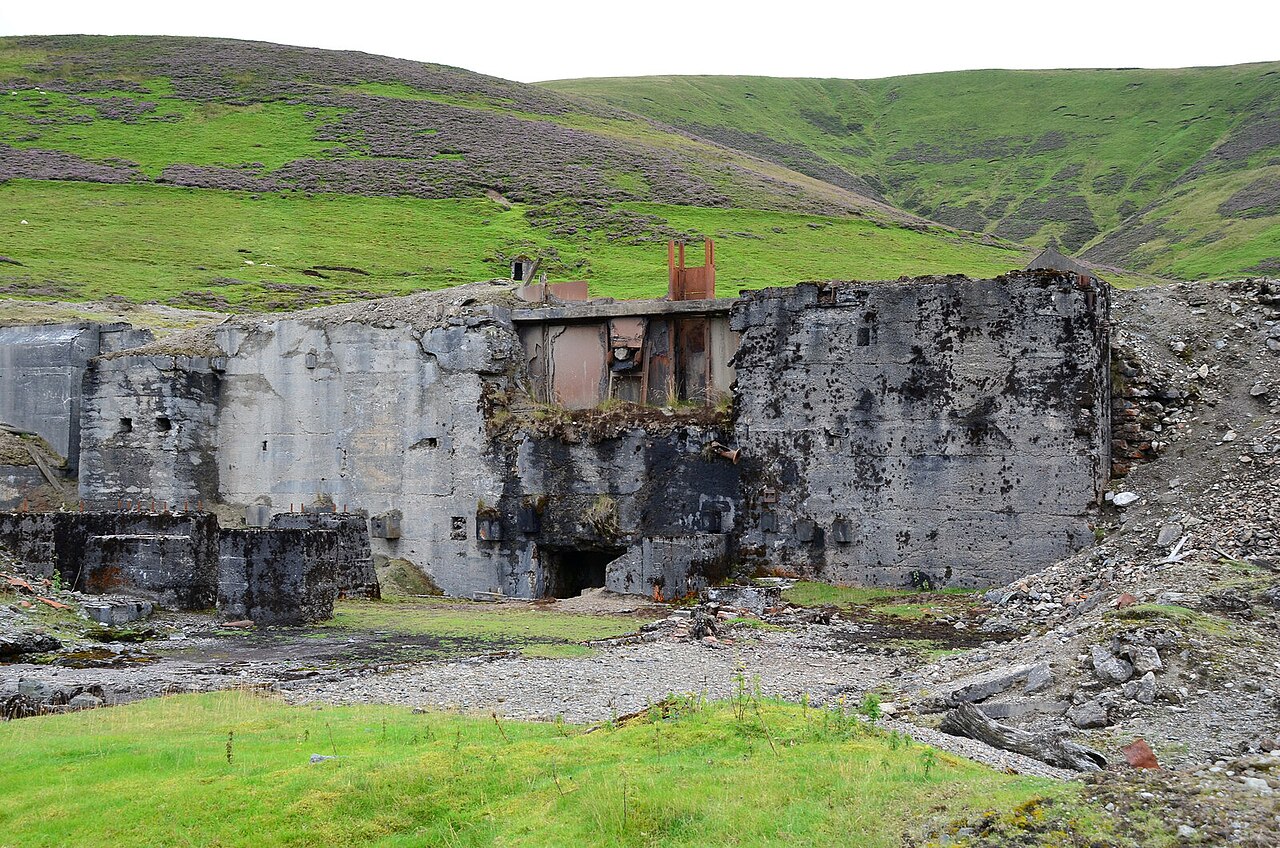
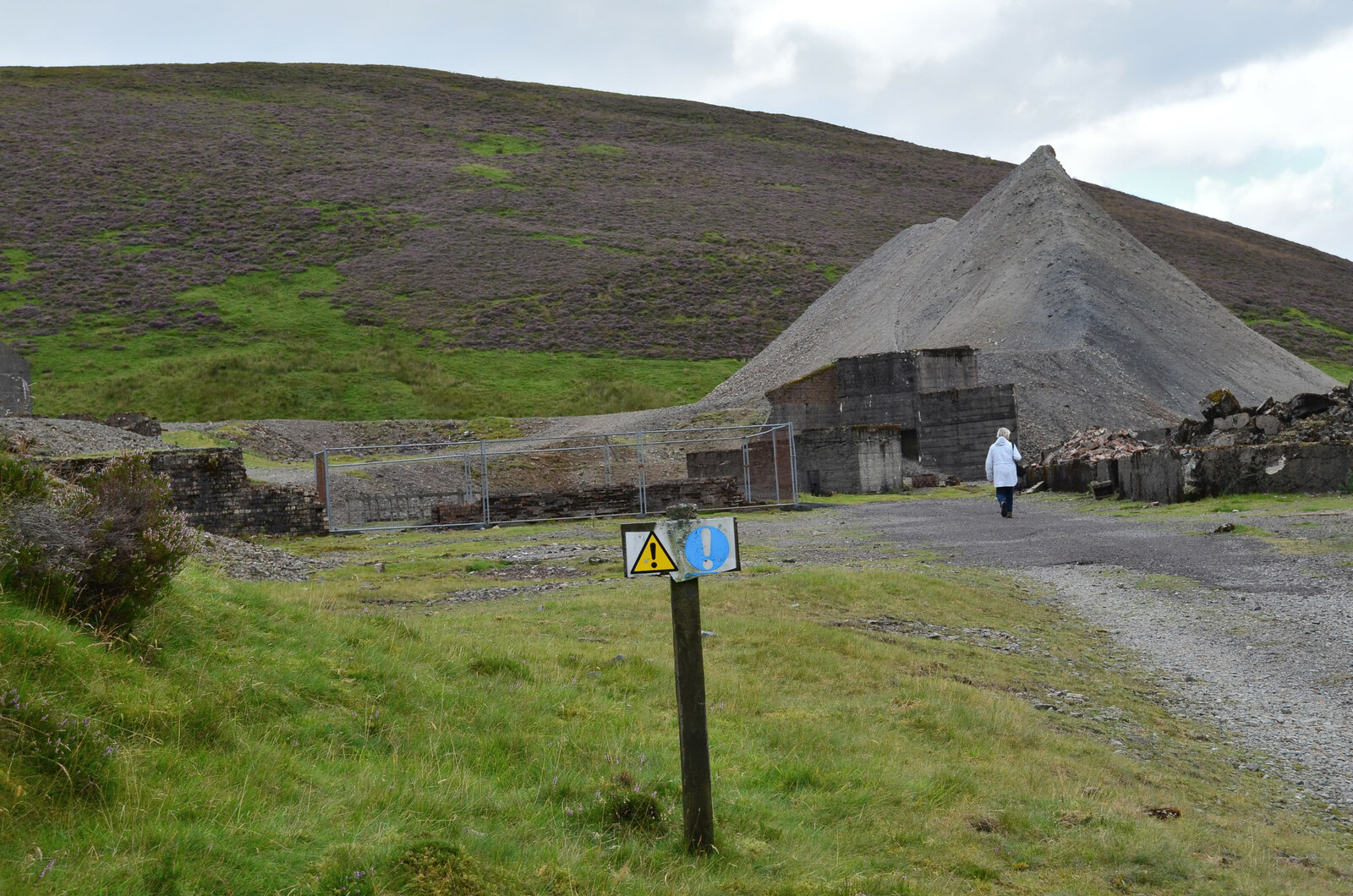
A substantial concrete mine structure survives at the New Glencrieff site, a visible reminder of the mine's later 20th-century working phase.
Related mines
- Cove Vein Mine — Both worked veins of the Wanlockhead district from Whytes Cleuch and the Wanlockhead Lead Mining Company; the Geological Survey memoir treats the Cove, New Cove and Glencrieff veins together.
- Wanlockhead — New Glencrieff was worked along its own named vein at Wanlockhead and was, in its final years, the last working mine in the village.
Nearby mines
- Wanlockhead — 0.1 miles (0.1 km) NE
- Cove Vein Mine — 0.2 miles (0.3 km) N
- Glengonnar — 1.3 miles (2.1 km) N, South Lanarkshire
- Susanna Mine — 1.5 miles (2.4 km) N, South Lanarkshire
- Leadhills — 1.6 miles (2.6 km) NE, South Lanarkshire
Straight-line distance, within 9 miles (15 km). Show on the map.
Recorded claims
Individual factual claims, each attached to the source(s) that support it below. Where sources disagree, both are kept.
- An estimated 105,000 tonnes of lead were smelted from ore extracted from the mine over its working life; under Duke of Buccleuch's direct management from 1842 to 1905 alone, the mine produced around 85,000 tons of lead concentrate. 1
- The abandonment plan of the west branch of the New Glencrieff vein (AP11450.3, at 1:720, endorsed by William Mitchell on 21 March 1935 and deposited by the Wanlockhead Lead Mining Co.) shows the High Adit, the adit level, Meadowfoot Adit, the 20- to 280-fathom levels, the winding shaft, Lorimer's Shaft and Jerry Shaft with the stopes outlined, and can be viewed online; John Mitchell's 1908 sections of the east and west branches, annotated by G. A. Goodlet in 1944, are held as SP2. 2,3
- Seven companies worked the vein between 1718 and the late 1950s, with reprocessing in the early 1960s; hauling and pumping engines survive underground on the Glenglass Level towards the south end of the vein, and sphalerite was worked alongside galena from the later nineteenth century. 4
Photographs & further reading
The scanned abandonment plan and sections, viewable online.
View sourceSources
- (secondary) New Glencrieff Mine (Wanlockhead Mine; East and West branch of New Glencrieff Vein) — Mindat
- (primary) West Branch of New Glencrieff Vein Mine Plan (BGS Mine Plans Catalogue) — British Geological Survey / Wanlockhead Lead Mining Co. Ltd.
- (primary) Wanlockhead Lead Mines, New Glencrieff Vein: sections surveyed by John Mitchell, 1908 (BGS, SP2) — British Geological Survey
- (secondary) New Glencrieff Mine — The Mine Explorer Society
Record created: 22 August 2026 · Last researched: 24 September 2026