 MineArchive
Highhouse Colliery
| Location | Auchinleck, East Ayrshire — 55.4667, -4.2958 (exact) |
|---|---|
| Commodity | Coal |
| Type | Coal |
| Worked | 1894–1983 |
| Maximum depth | 177 metres (No. 1 shaft) |
| Operators | William Baird & Company (1894–1947), Bairds & Dalmellington Ltd (1931–1947), National Coal Board (1947–1983) |
Overview
An Auchinleck colliery developed by William Baird & Co. that worked for nearly ninety years, its 1790-built haulage engine still in service until 1956, and whose workforce struck in 1972 and 1974 specifically to save the pit from closure.
History
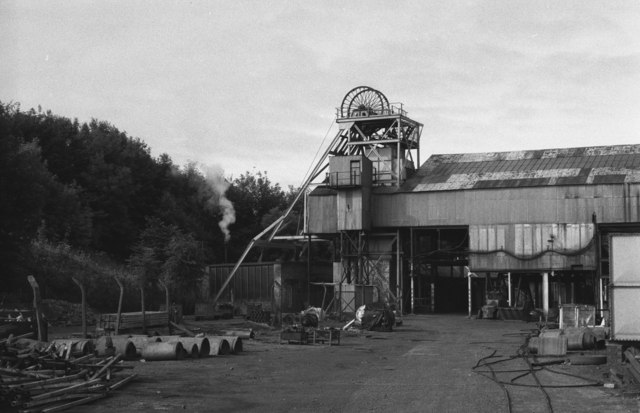
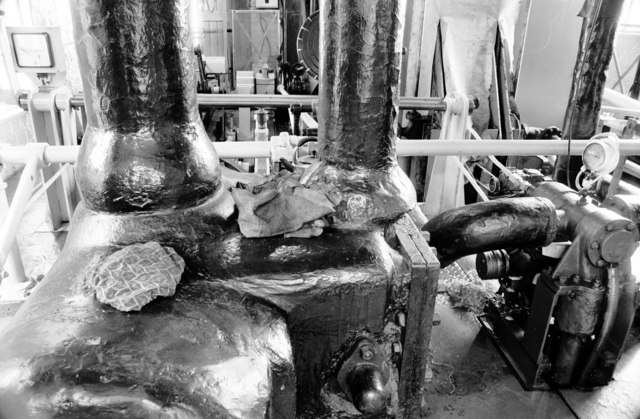
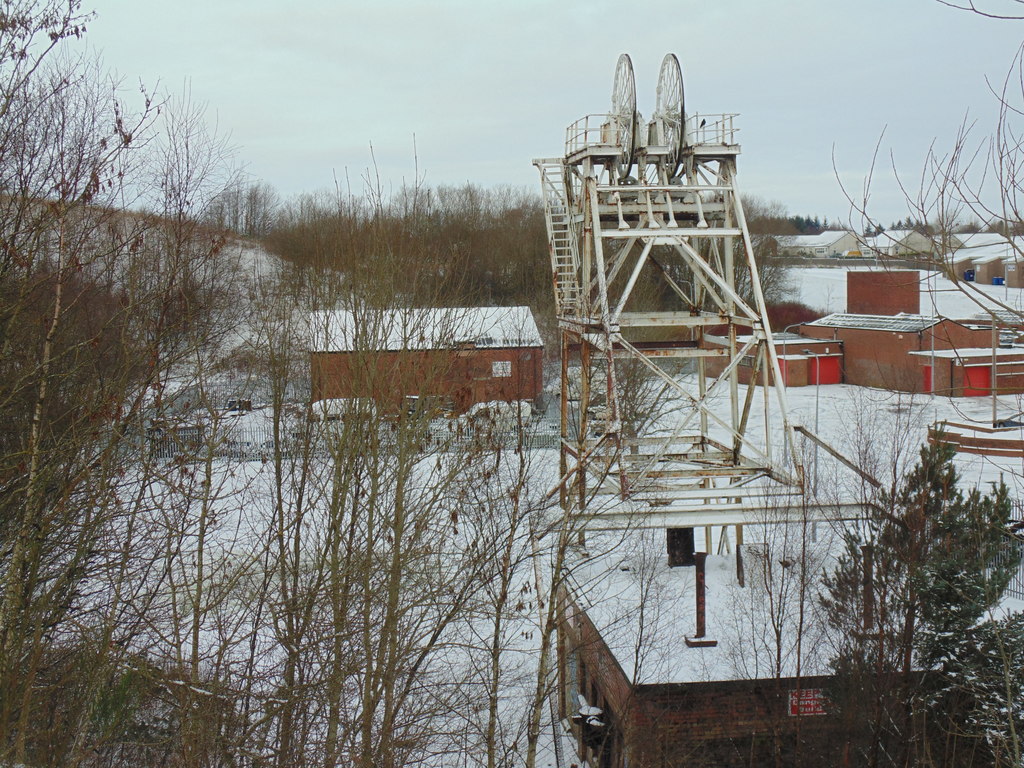
Highhouse Colliery was developed by William Baird & Co. at Merlinhill Farm, just south of Auchinleck station, opening in 1894 as a two-shaft pit with steel-framed, corrugated-iron-clad surface buildings, sunk to supply the company's Lugar Iron Works and served by its own short branch railway. Its steam winding engine, built around 1896 by Grant, Ritchie and Co Ltd of Kilmarnock, had two horizontal cylinders 20 inches in diameter with a four-foot stroke and a ten-foot drum. A second-hand beam engine used for haulage had an even longer history: built in Bridgeton in 1790 by Walkinshaw and originally used in the Blair collieries, it was relocated to Craigston Pit in 1875 before coming to Highhouse around 1894 (around 1890 in Canmore's account), and remained in service there until its removal in 1956, when it went to Heriot-Watt College. In July 1908 fire destroyed the engine house and pithead frame while 84 men were below; all were brought out by the air shaft, and the pit was rebuilt with new steel headgear. Employment peaked at 594 in 1910, the colliery passed to Bairds & Dalmellington in 1931 and to the National Coal Board in 1947, and it was latterly linked underground with Barony, where its coal was washed. The colliery's workforce, alongside that of the neighbouring Barony Colliery, struck in both 1972 and 1974 specifically to save the pits from closure, a fight the local community actively supported. Highhouse closed for the final time in 1983, six years before Barony followed it in 1989. The demolished site is now home to the Highhouse Industrial Estate, where the winding engine, its engine house and a 1960s steel headframe survive as a listed group.
Geology
The pit worked the Ell and Main seams of the Ayrshire coalfield, and by 1954 the Maid (Hurlford Main), Main (Tourha) and Major (Thirty Inch) seams.
Geological setting: Sedimentary Beds and Seams (well documented example)
Workings
Two shafts sunk from 1894, with a steam winding engine installed around 1896. The shafts were 177 and 174 metres deep (Canmore); the pit worked the Ell and Main seams and, by 1954, the Maid or Hurlford Main, Main or Tourha and Major or Thirty Inch, by longwall and stoop-and-room methods, and was latterly linked underground to Barony.
Closure
Closed for the final time in 1983; the winding engine was stopped that year.
What remains
The demolished colliery site is now home to the Highhouse Industrial Estate, which reuses several adapted colliery buildings; the No. 2 headframe and winding-engine house still stood in 2016.
The c.1896 steam winding engine in its brick engine house and the riveted steel No. 2 headframe of c.1968, listed Category B in 1992, with several adapted colliery buildings and the remains of the miners' rows.
Related mines
- Barony Colliery — Their workforces struck together in both 1972 and 1974 specifically to save the pits from closure.
- Bartonholm Colliery — Two of William Baird and Company's Ayrshire collieries, worked under the same management after Baird absorbed the Eglinton Iron Company's pits.
- Knockterra Colliery — Neighbouring Bairds pits in the Cumnock and Auchinleck district.
Nearby mines
- Ballochmyle Colliery — 0.1 miles (0.2 km) S
- Gilmilnscroft Colliery — 1.3 miles (2.0 km) NE
- Barony Colliery — 1.4 miles (2.2 km) W
- Knockterra Colliery — 1.6 miles (2.6 km) S
- Lugar Mine — 2.5 miles (4.0 km) E
Straight-line distance, within 9 miles (15 km). Show on the map.
Disasters & major incidents
-
Highhouse Colliery roof fall, 1906
22 June 1906 · Collapse / Roof Fall · 2 fatalities
On 22 June 1906 two roadsmen were killed by a fall of roof at Highhouse Colliery, near Auchinleck in Ayrshire. -
Highhouse Colliery pit-head fire, 1908
July 1908 · Fire · 0 fatalities
On a night in July 1908 a fire broke out in the engine house at Highhouse Colliery, near Auchinleck in Ayrshire, and spread to the pithead frame while eighty-four men were underground; all were brought out safely. -
Highhouse Colliery gas escape, 1935
8 August 1935 · Gas / Asphyxiation · 2 fatalities
On 8 August 1935 two miners were killed by an escape of gas at Highhouse Colliery, near Auchinleck in Ayrshire.
Recorded claims
Individual factual claims, each attached to the source(s) that support it below. Where sources disagree, both are kept.
- Highhouse Colliery was developed by William Baird & Co. at Merlinhill Farm, just south of Auchinleck station, opening in 1894 as a two-shaft pit. 1
- A second-hand beam haulage engine, built in Bridgeton in 1790 and previously used at the Blair collieries and Craigston Pit, was relocated to Highhouse around 1894 and remained in service until its removal in 1956. 1,2
- Highhouse's workforce, alongside that of the neighbouring Barony Colliery, struck in both 1972 and 1974 specifically to save the pits from closure. 2
- Highhouse closed for the final time in 1983; the demolished site is now the Highhouse Industrial Estate. 1
- The two shafts were 177 and 174 metres deep according to Canmore (564 and 571 feet in a 2023 account), and the colliery was latterly linked underground with Barony, where its coal was washed. 1,3
- Employment peaked at 594 in 1910; in 1948 the colliery raised 420 tons a day, about 185,000 tons a year, by longwall and stoop-and-room working with 473 employees. 1,4
- In July 1908 fire broke out in the engine house and spread to the pithead frame while 84 men were underground on the night shift; they were brought out by the air shaft, and some two hundred men were thrown idle while the pit was rebuilt with new headgear. 5,6
- The colliery was opened by William Baird & Co. to supply the Lugar Iron Works, passed to Bairds & Dalmellington Ltd in 1931 and to the National Coal Board in 1947. 4,5
- The c.1896 Grant, Ritchie winding engine in its engine house and the riveted steel headframe of c.1968 were listed Category B in 1992; apart from Lady Victoria Colliery at Newtongrange, the engine is the only steam winding engine in Scotland still in situ, and the headframe probably the last traditional one built in Scotland. 1,2
- In 2016 the No. 2 headframe, engine house and other pit-head buildings still stood among the industrial estate; the winding engine, stopped in 1983, survives in its house but is not open to the public. 7,8
Photographs & further reading
Historic Environment Scotland's record, with the winding engine's specification, shaft depths, 1948 figures and 29 archive images.
View sourceOwners, employment and seams worked by year, and the names of men known to have died at the pit.
View sourceThe colliery's railway connection, its beam engine's travels and the 1908 fire.
View sourceSources
- (secondary) Highhouse Colliery — Canmore (Historic Environment Scotland)
- (secondary) Highhouse Colliery, Auchinleck — British Listed Buildings
- (observational) Deep Mine Headstocks, Part 3, Scotland, Various Locations, 2023 — 28DaysLater
- (primary) Durham Mining Museum - Highhouse Colliery — Durham Mining Museum
- (secondary) RAILSCOT | Highhouse Colliery — RailScot
- (secondary) Accidents 1901-1914 (Ayrshire) — Scottish Mining Website
- (observational) Highhouse Colliery - steam winding engine (Geograph photo 3382443, Chris Allen, 1982) — Geograph Britain and Ireland
- (observational) Auchinleck Highhouse horralls and engine-house (Geograph photo 4809833, Rab McMurdo, 2016) — Geograph Britain and Ireland
- (primary) Highhouse Nos 1 & 2 (BGS mine plans catalogue, item 21853522) — British Geological Survey
Record created: 27 August 2026 · Last researched: 18 September 2026