 MineArchive
Haig Colliery
| Location | Kells, Whitehaven, Cumbria — 54.5430, -3.5978 (exact) |
|---|---|
| Commodity | Coal |
| Type | Coal |
| Worked | 1914-18 (sinking)–1986 |
| Maximum depth | 1,200 feet (shaft) |
| Operators | Whitehaven Colliery Company (1914–?) |
Overview
Cumbria's last deep coal mine, whose workings ran nearly five miles out under the Irish Sea, and whose working life was marked by three separate major explosions that together killed 79 men.
History
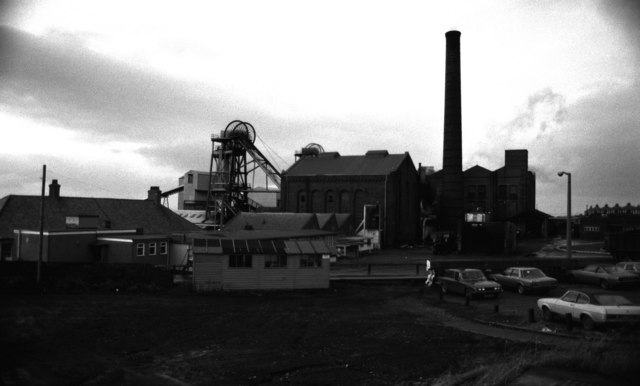
Haig Pit, on the cliffs above Whitehaven, was sunk by the Whitehaven Colliery Company Ltd between 1914 and 1918, with coal production beginning in 1916. Its shafts reached 1,200 feet deep, and the workings eventually extended some four and a half miles out beneath the Irish Sea — remarkably, despite this, the mine remained dry. It produced high-volatile, strongly-caking general-purpose coal used in the local iron industry, gas manufacture and domestic fires, averaging around 300,000 tonnes a year. The colliery's working life was marked by three major firedamp explosions: on 5 September 1922, 39 men were killed; on 12 February 1928, 13 men died; and on 29 January 1931, at around 8.15pm, an explosion in the Main Band seam over two miles underground killed 27 miners and injured 13 more. Across all three disasters, 79 men lost their lives at Haig. The colliery finally closed in 1986, the last deep coal mine in Cumbria, and part of the surface site — including its winding engine house, scheduled as a monument in 1998 — was preserved as the Haig Colliery Mining Museum, which closed due to insolvency in January 2016 after a major 2015 refurbishment.
Geology
Haig worked coal seams of the Cumberland Coalfield extending far out beneath the floor of the Irish Sea.
Geological setting: Coal Formation and Rank (historical documentary reference)
Workings
Coal was raised via shafts 1,200 feet deep, with workings eventually extending around four and a half miles out under the sea bed — dry workings, despite their location, throughout the mine's life.
Closure
Haig Colliery closed in 1986, the last deep coal mine in Cumbria.
What remains
Part of the surface site, including the scheduled winding engine house, was preserved as the Haig Colliery Mining Museum, which closed due to insolvency in January 2016 following a major refurbishment the previous year.
The preserved winding engine house, a scheduled monument since 1998, survives on the clifftop site above Whitehaven.
Related mines
- Ladysmith Pit — The Whitehaven Colliery Company sank Haig Pit from 1914 to work the coal between Ladysmith and Wellington Pits, and coal from Haig was later washed at the Ladysmith washery.
Nearby mines
- Wellington Pit — 0.2 miles (0.3 km) NE
- Saltom Colliery — 0.2 miles (0.4 km) SW
- Duke Pit — 0.3 miles (0.5 km) NE
- Kells Pit, Whitehaven — 0.6 miles (1.0 km) S
- William Pit — 0.8 miles (1.2 km) N
Straight-line distance, within 9 miles (15 km). Show on the map.
Disasters & major incidents
-
Haig Colliery explosion, 1922
5 September 1922 · Explosion · 39 fatalities
A firedamp explosion at Haig Colliery on 5 September 1922 killed 39 men, the worst of three major explosions to strike the mine over its working life. -
Haig Colliery explosion, 1931
29 January 1931 · Explosion · 27 fatalities
A firedamp explosion in the Main Band seam, over two miles underground at Haig Colliery, killed 27 miners and injured 13 more on the evening of 29 January 1931.
Culture
- Whitehaven RLFC and Haig Pit (Sports)
Whitehaven RLFC's two leading officials at its 1948 admission to the league worked at this pit.
What's uncertain
Points where sources disagree or the record could not be settled; both accounts are kept. All open questions in the archive.
- A further explosion on 12 February 1928 killed 13 men at Haig Colliery. (uncertain) 1
Recorded claims
Individual factual claims, each attached to the source(s) that support it below. Where sources disagree, both are kept.
- Haig Pit was sunk by the Whitehaven Colliery Company between 1914 and 1918, with coal production beginning in 1916; its workings eventually extended some four and a half miles out beneath the Irish Sea while remaining dry. 1
- An explosion at Haig Colliery on 5 September 1922 killed 39 men. 2
- A further explosion on 12 February 1928 killed 13 men at Haig Colliery. (uncertain) 1
- A third explosion, on 29 January 1931 in the Main Band seam over two miles underground, killed 27 men and injured 13 more. 3,4
- Haig Colliery closed in 1986 as Cumbria's last deep coal mine; part of the site was later preserved as the Haig Colliery Mining Museum, which closed due to insolvency in 2016. 1,5
- Located at about 54.543 N, 3.598 W. 1
Sources
- (secondary) Haig Colliery — Wikipedia
- (secondary) Haig Colliery Explosion - Whitehaven - 1922 — Northern Mine Research Society
- (secondary) Haig Colliery Explosion - Whitehaven - 1931 — Northern Mine Research Society
- (secondary) Haig Colliery Disaster, 1931 — Newcastle University Co-Curate
- (secondary) Haig Colliery Mining Museum — Wikipedia
Record created: 21 August 2026 · Last researched: 21 August 2026