 MineArchive
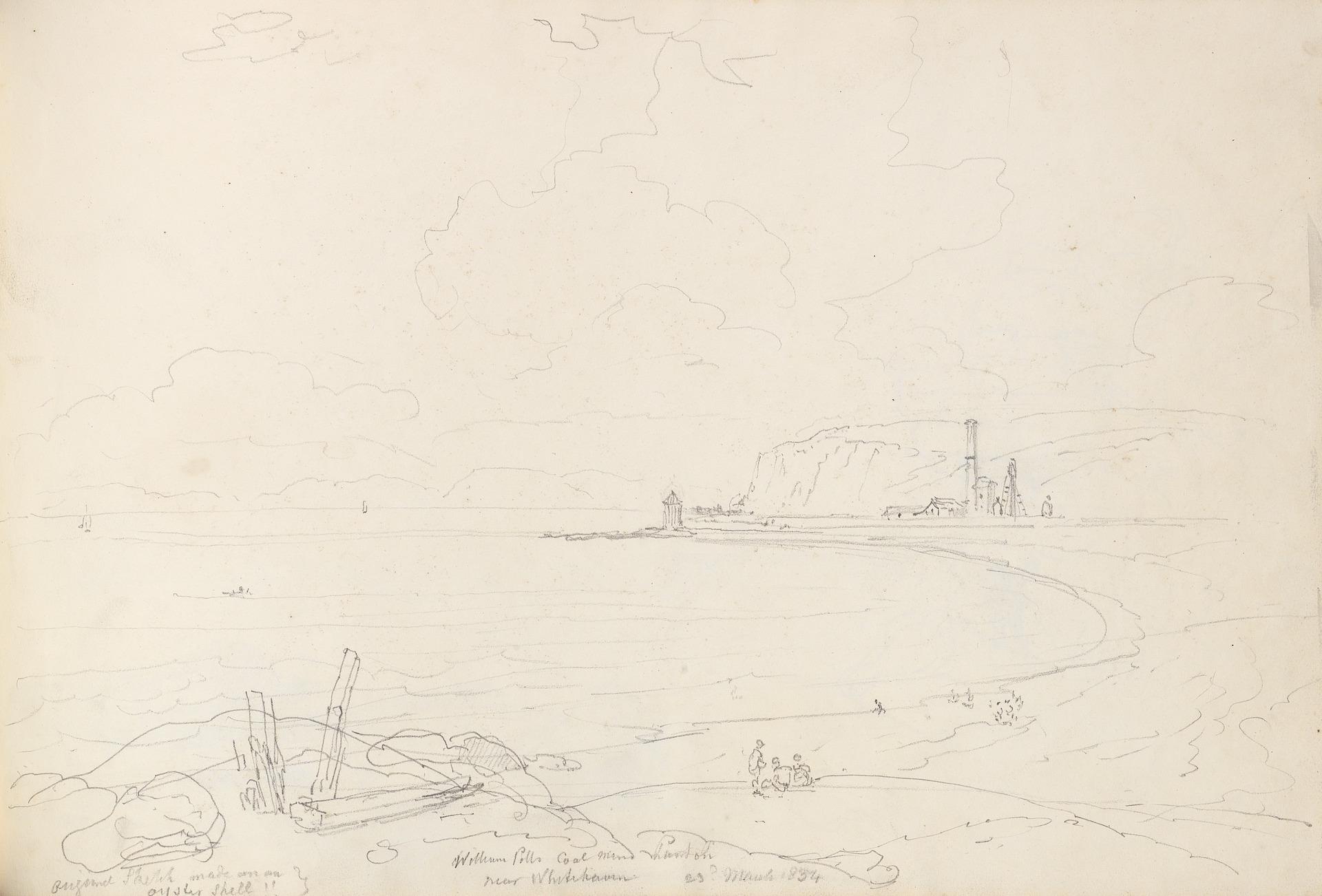
William Pit
| Also known as | William Colliery, Whitehaven William Pit |
|---|---|
| Location | Whitehaven North Shore, Cumberland, Cumbria — 54.5539, -3.5941 (approximate) |
| Commodity | Coal |
| Type | Coal |
| Worked | From May 1804 (sinking)–31 December 1954 |
| Maximum depth | Shafts sunk to the Six Quarters Seam at 891 ft; winding later from an inset 30 ft below the Main Band Seam at 624 ft |
| Operators | Whitehaven Colliery Company (1890–1933), Priestman Whitehaven Collieries Ltd (1933–1936), Cumberland Coal Company (Whitehaven) Ltd (1936–1947), National Coal Board (1947–1954) |
Overview
A pit on a ledge between the cliff and the sea at Whitehaven, forty-nine feet above the tide, whose workings ran out under the Irish Sea for miles — and which killed men in seven separate disasters across a hundred and fifty years, the last of them in 1947 the worst British mining accident since the war.
History
Sinking began on Whitehaven's North Shore in May 1804 and the first coal came up in 1805. William was one of a group of pits driven near the coastline to reach the rich undersea coal at the southern end of the Cumberland Coalfield, and it worked for a century and a half under a succession of owners — the Whitehaven Colliery Company through the 1890s, Priestman Whitehaven Collieries in the 1930s, the Cumberland Coal Company from 1936, and the National Coal Board from nationalisation in 1947. Employment peaked at over 1,100 men in 1902 and ran at a few hundred for most of the twentieth century. The Main Band and Six Quarters seams carried it longest; coking, household, gas and steam coals were all raised at different points in its life. Its safety record was among the worst in Britain. Seven separate accidents killed five or more men: explosions in 1821 (12 dead), 1823 (32), 1839 (23), 1907 (5) and 1941 (12), an underground fire in 1826 that killed nine, and the explosion of 15 August 1947 that killed a hundred and four (see Disasters, below). The pit ceased production on the last day of 1954.
Geology
William worked the Cumberland Coalfield where it runs out beneath the Irish Sea — the productive Coal Measures dipping westward under the water, so that the workings extended seaward for miles from a shaft standing almost on the beach. The Main Band and Six Quarters were the principal seams, with the Bannock Band, Little Main and Yard Band also worked at various dates. The undersea setting is central to the pit's history: gas made freely in the advancing faces, ventilation had to be pushed a very long way from the shaft, and by 1947 the working districts lay about two and a half miles out from the shaft bottom.
Geological setting: Sedimentary Beds and Seams (well documented example)
Workings
Two circular shafts, both sunk around 1806 to the Six Quarters Seam at 891 feet. The downcast was 12 feet in diameter and wound men, coal and materials; the upcast, 14 feet across, served as a second means of egress and wound no coal. The lower length of both shafts was abandoned in later years and winding was carried on from an inset thirty feet below the Main Band Seam, which the shafts cut at 624 feet. A third way out existed underground: a roadway connecting William's workings with the neighbouring Haig Pit by way of the Wellington Pit. The pit stood on a ledge between the cliffs and the sea, 49 feet above sea level and about 400 yards north of Whitehaven railway station.
Closure
William ceased production on 31 December 1954, having employed 312 men in its final year. It closed just seven years after the 1947 explosion and a century and a half after the first coal was drawn.
What remains
The pit is gone. Whitehaven's mining landscape is now interpreted mainly at the neighbouring Haig Pit, and the 1947 dead are commemorated in the town; the 75th anniversary of the disaster was marked by a memorial service in 2022.
Nothing substantial identified on the William Pit site itself; the surviving colliery buildings on this stretch of the Whitehaven coast belong to the neighbouring Haig Pit.
Redevelopment
The North Shore site has been cleared and landscaped as part of Whitehaven's harbourside regeneration.
Related mines
- Wellington Pit — The two Whitehaven pits were connected underground, with a roadway linking William's own workings via Wellington Pit.
Nearby mines
- Duke Pit — 0.5 miles (0.7 km) S
- Wellington Pit — 0.6 miles (1.0 km) S
- Haig Colliery — 0.8 miles (1.2 km) S
- Saltom Colliery — 0.9 miles (1.5 km) S
- Kells Pit, Whitehaven — 1.4 miles (2.2 km) S
Straight-line distance, within 9 miles (15 km). Show on the map.
Disasters & major incidents
-
William Pit explosion, 1821
13 April 1821 · Explosion · 12 fatalities
On 13 April 1821 a sudden great outburst of firedamp in the Main Band workings of William Pit, Whitehaven, reached an open light and exploded, killing twelve: five haggers and seven boys and girls. Each hagger had been issued with a Davy safety lamp, but working with the top off was common. It was the first of the pit's great explosions; two years later a worse one killed thirty-two. -
William Pit Explosion, 1823
18 October 1823 · Explosion · 32 fatalities
A firedamp explosion in William Pit's Main Band workings at Whitehaven killed 32 people, including 15 boys and 2 girls, and seventeen pit ponies — one of at least fourteen serious explosions recorded at the pit over its working life. -
William Pit underground fire, 1826
3 Jan 1826 · Fire · 9 fatalities
On 3 January 1826 fire broke out in an underground engine room at William Pit, Whitehaven, and its smoke spread through the workings, suffocating nine. The dead ranged from a boy of thirteen to a man of seventy-eight, and three were in their sixties. It was the third disaster at the pit in five years. -
William Pit Explosion, 1839
18 February 1839 · Explosion · 23 fatalities
Firedamp that had gone undetected since the previous Saturday exploded when a boy carrying a naked candle followed the overman into workings a mile and a half from the shaft — killing between 21 and 23 men and boys, most from one small stretch of New Houses. -
William Pit No. 6 Drift explosion, 1907
1907 · Explosion · 5 fatalities
At about 1.50 p.m. on 26 November 1907 an explosion in No. 6 or 'Taffy's' Drift, a stone drift being driven under the sea at the Whitehaven Colliery Company's William Pit, killed five men and injured seven. -
William Pit Explosion, 1941
3 June 1941 · Explosion · 12 fatalities
A genuinely unusual disaster: water gas, produced when water was poured onto glowing coal in a sealed-off fire area at William Pit, accumulated in a confined space and exploded, killing twelve. -
William Pit Explosion
15 August 1947 · Explosion · 104 fatalities
A shot fired in the No. 2 Dip face of the undersea workings at Whitehaven ignited firedamp and coal dust, two and a half miles out from the shaft. Fourteen men were killed by the blast. Ninety more survived it and then died of the carbon monoxide it left behind, before rescuers working through more than twenty hours could reach them.
Recorded claims
Individual factual claims, each attached to the source(s) that support it below. Where sources disagree, both are kept.
- Work to sink William Pit on Whitehaven's North Shore began in May 1804, with the first coal drawn in 1805. 1
- Two circular shafts — a 12 ft downcast and a 14 ft upcast — were sunk about 1806 to the Six Quarters Seam at 891 ft; winding was later carried on from an inset 30 ft below the Main Band Seam at 624 ft. 2
- A third means of egress existed underground, by a roadway connecting William's workings to the adjoining Haig Pit through the Wellington Pit. 2
- Employment peaked at 1,116 men in 1902 and stood at 312 in the pit's final year. 2
- Seven separate accidents at the pit killed five or more men each: explosions in 1821 (12 dead), 1823 (32), 1839 (23), 1907 (5), 1941 (12) and 1947 (104), and an underground fire in 1826 that killed nine. 2
- Counting smaller accidents, at least fourteen explosions occurred at William Pit over its working life, killing more than two hundred adults and children. 1
- The pit ceased production on 31 December 1954. 2
Photographs & further reading
The Mines Inspector's account of the 1947 disaster.
View sourceSources
- (primary) William Pit, Whitehaven — Cumbria County Council — Cumbria County Council
- (primary) William Colliery, Whitehaven — Durham Mining Museum — Durham Mining Museum
Record created: 25 August 2026 · Last researched: 25 August 2026