 MineArchive
Cwm Elan Mine
| Location | Elan Valley, near Rhayader, Powys — 52.2735, -3.6128 (exact) |
|---|---|
| Commodities | Lead, Zinc |
| Type | Metal |
| Worked | 1796 (discovery)–September 1877 |
| Maximum depth | 40 fathoms (240 feet) |
| Operators | Thomas Grove (1796–1871), Cwm Elan Mining Company (1871–1877), New Cwm Elan Mining Company (1875–1877) |
Overview
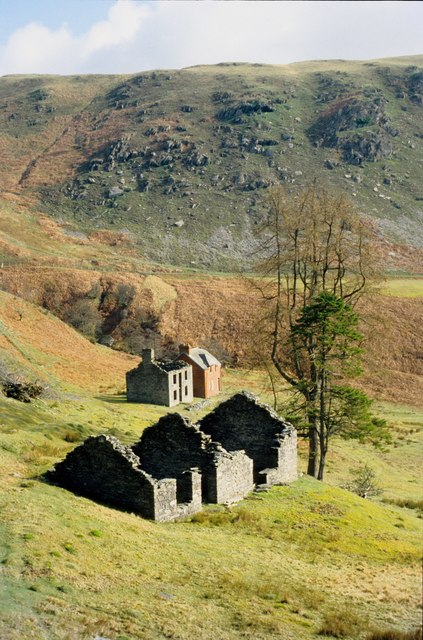
Cwm Elan, deep in the Elan Valley above Rhayader, began by accident in 1796 when a farm worker digging a drainage leat for landowner Thomas Grove struck a lead vein — and today survives in exceptionally complete condition, its 1870s processing mill, smithy and office still standing much as the Cwm Elan Mining Company left them.
History
A lead vein at Cwm Elan was discovered in 1796 by a farm worker cutting a drainage leat for Thomas Grove of Cwm Elan House, who went on to work the find himself for a reported £500 profit. The mine's main working phase began in 1871, when the Cwm Elan Mining Company was formed with £30,000 of capital and erected new machinery and buildings, including a mill completed in 1873 fitted with a Blake's stonebreaker, crushing rolls and round buddles (buddle pits that separated crushed ore by density in flowing water), together with a battery of Collom's patent jiggers — jigger tables that separated crushed ore by size through rhythmic sieving in water. The company's Engine Shaft reached a depth of 40 fathoms (240 feet) before work ceased in September 1877. Between 1871 and 1877 the mine produced around 175 tons of lead and 160 tons of zinc concentrate.
Geology
The mine worked a lead- and zinc-bearing vein within the Central Wales orefield, the same broad hydrothermal, non-magmatic mineralised belt worked at other Ceredigion and Powys lead mines such as Llywernog and Cwmystwyth.
Geological setting: Hydrothermal Deposits (well documented example), Veins and Lodes (well documented example)
Workings
The Cwm Elan Mining Company's Engine Shaft reached 40 fathoms (240 feet) below surface by the time work ceased in 1877; the 1873 mill was equipped with a Blake's stonebreaker, crushing rolls, round buddles and Collom's patent jiggers.
Closure
Work ceased in September 1877 after the company had produced around 175 tons of lead and 160 tons of zinc concentrate over six years; the site was not reopened.
What remains
The site survives in exceptionally complete condition for a mid-Wales lead mine, with water wheel pits, the crusher house, a smithy and the mine office all still standing.
A 28DaysLater exploration report from January 2024 confirms the mill ruins, smithy and office remain substantially intact and accessible on the surface.
Nearby mines
- Nant-y-Garw Lead Mine — 3.3 miles (5.3 km) SW
- Cwmystwyth Mines — 8.5 miles (13.6 km) NW, Ceredigion
Straight-line distance, within 9 miles (15 km). Show on the map.
Recorded claims
Individual factual claims, each attached to the source(s) that support it below. Where sources disagree, both are kept.
- Between 1871 and 1877 the Cwm Elan Mining Company produced around 175 tons of lead and 160 tons of zinc concentrate from a mine whose Engine Shaft reached 40 fathoms (240 feet). 1
- A January 2024 exploration report describes the mill ruins, smithy and office as still substantially intact and accessible on the surface. 2
- After Thomas Grove's own working the mine was leased to Sir Thomas Bonsall, who drove an adit to drain it; a Cornish company took over on his death in 1808, and Cwmellan Lead Mines worked it in 1840, issuing a £1 promissory note now in Llanidloes Museum. 1
- The Cwm Elan Mining Company of 1871, chaired from November 1872 by Charles Ely, was wound up in November 1874 and its property sold at auction; the New Cwm Elan Mining Company bought it in 1875 for £1,148 10s 8d and worked it until September 1877. 1
Photographs & further reading
A site-by-site account of the mine with photographs of the Engine Shaft, the balance box, the adits and the mill.
View sourceSources
- (secondary) Cwm Elan Mine, Elan Valley — Elan Valley Past and Present
- (observational) Mines 38 - Cwm Elan Lead Mine (Wales, Jan 2024) — 28DaysLater Urban Exploring Forums
Record created: 22 August 2026 · Last researched: 24 September 2026