 MineArchive
Fluorspar
| Also known as | Fluorite (The mineralogical name; fluorspar is the industrial one. Added 2026-09-29 after 49 records were found using it.) |
|---|---|
| Category | Commodities |
| Commodity page | Fluorspar → |
The mineral fluorite (calcium fluoride, CaF₂) worked as an ore, historically most often as a by-product of lead mining, and today the raw material for most of the world's fluorine chemistry.
Historical usage
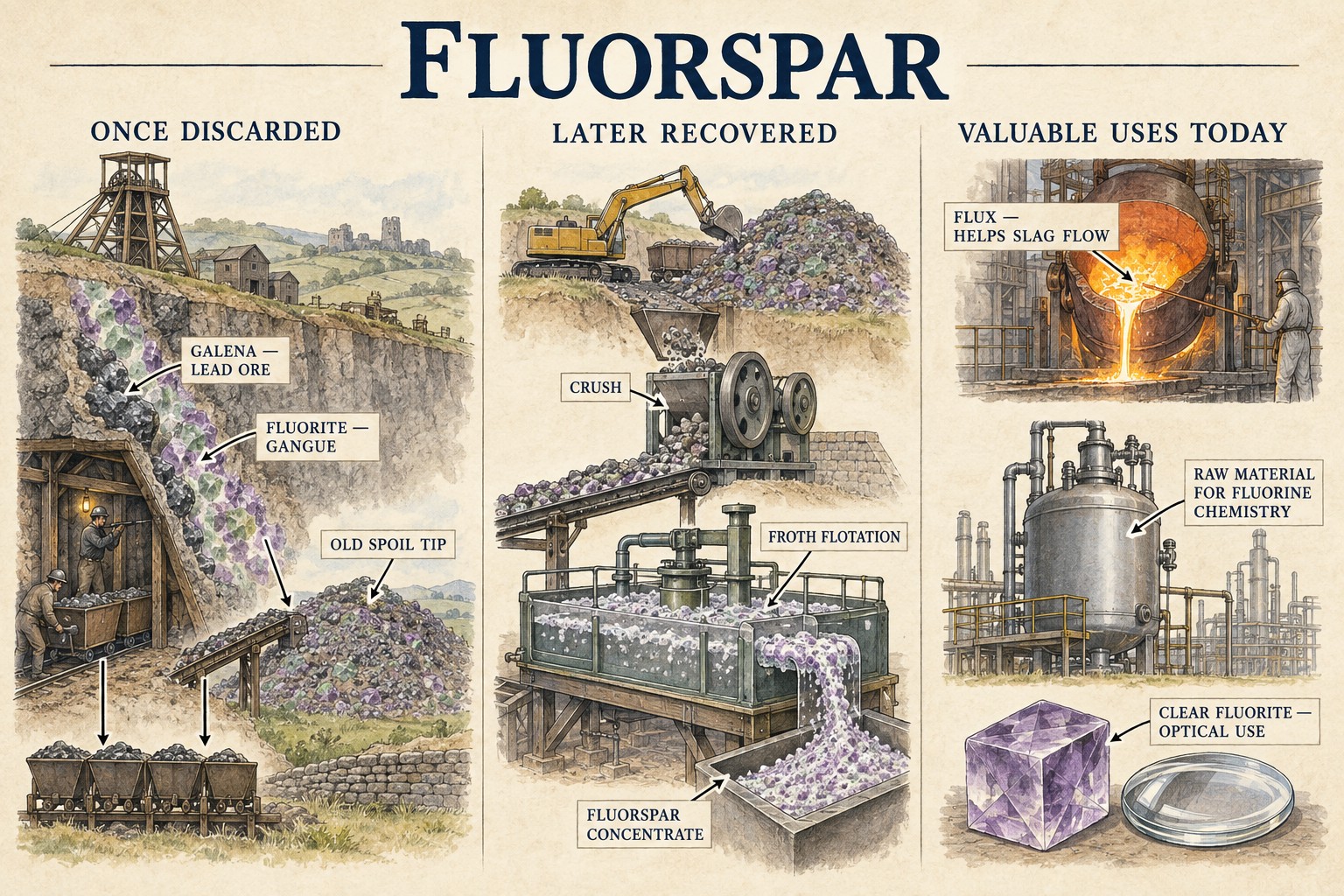
Fluorspar's name comes from the Latin fluere, "to flow", after its earliest recorded use as a smelting flux, described by Basilius Valentinus in the late 15th century and Georgius Agricola in 1529. In Britain's North Pennines, fluorspar was for centuries simply the gangue mineral thrown aside while mining lead — until collapsing lead prices in the 1870s-80s forced a reversal: the Weardale Lead Company began actively mining fluorspar itself from 1882, and by the 20th century the North Pennine fluorspar field, centred on Weardale, supported mines working fluorspar as the primary product with lead now the incidental by-product — the exact reverse of a century before.
How it worked
Fluorspar ore is crushed and concentrated by gravity separation or froth flotation to produce a marketable concentrate, historically often recovered directly from old lead-mine dumps and waste tips once it became worth separating out.
Why it was used
Fluorspar became indispensable to iron and steelmaking once the basic open-hearth process spread in the late 19th century, since fluorspar flux (60-70% of a typical steel flux mix) lowers the melting point of slag and helps remove impurities; more recently its calcium fluoride content has made it the essential raw material for producing hydrofluoric acid, used across aluminium refining, uranium fuel production and fluorochemical manufacture, while the clearest, most optically pure fluorite is separately valued for lenses and prisms.
Value over time
Fluorspar's value in Britain rose in direct proportion to lead's collapse: as lead prices fell through the 1870s and 1880s, faster-growing demand for flux in modern steelmaking made fluorspar the more valuable product from the very same North Pennine veins, driving a genuine reversal in what mines like Rookhope's Boltsburn were actually working for. Today's biggest markets remain fluorochemical production, aluminium refining and steelmaking, essentially the same industrial demand that first made fluorspar worth mining in its own right.
Hazards & challenges
Fluorspar working shares the generic hard-rock hazard of fine silica dust in poorly ventilated underground workings, causing silicosis in the same way as many other British metal and stone mines. Fluorspar dust specifically also carries its own risk in heavy, prolonged exposure: fluoride dust inhaled or ingested over years can cause skeletal fluorosis, a hardening and thickening of bone. Because fluorspar was so often a lead-mine by-product rather than a mine's primary purpose, it was frequently worked from waste tips and old, already poorly ventilated ground rather than dedicated, purpose-built workings.
Risks & limitations
As long as fluorspar was only a by-product, it was often simply discarded on spoil tips along with other waste — meaning older lead-mine dumps across the North Pennines have themselves sometimes been reworked later purely for their fluorspar content, once demand made that worthwhile.
Regional variation
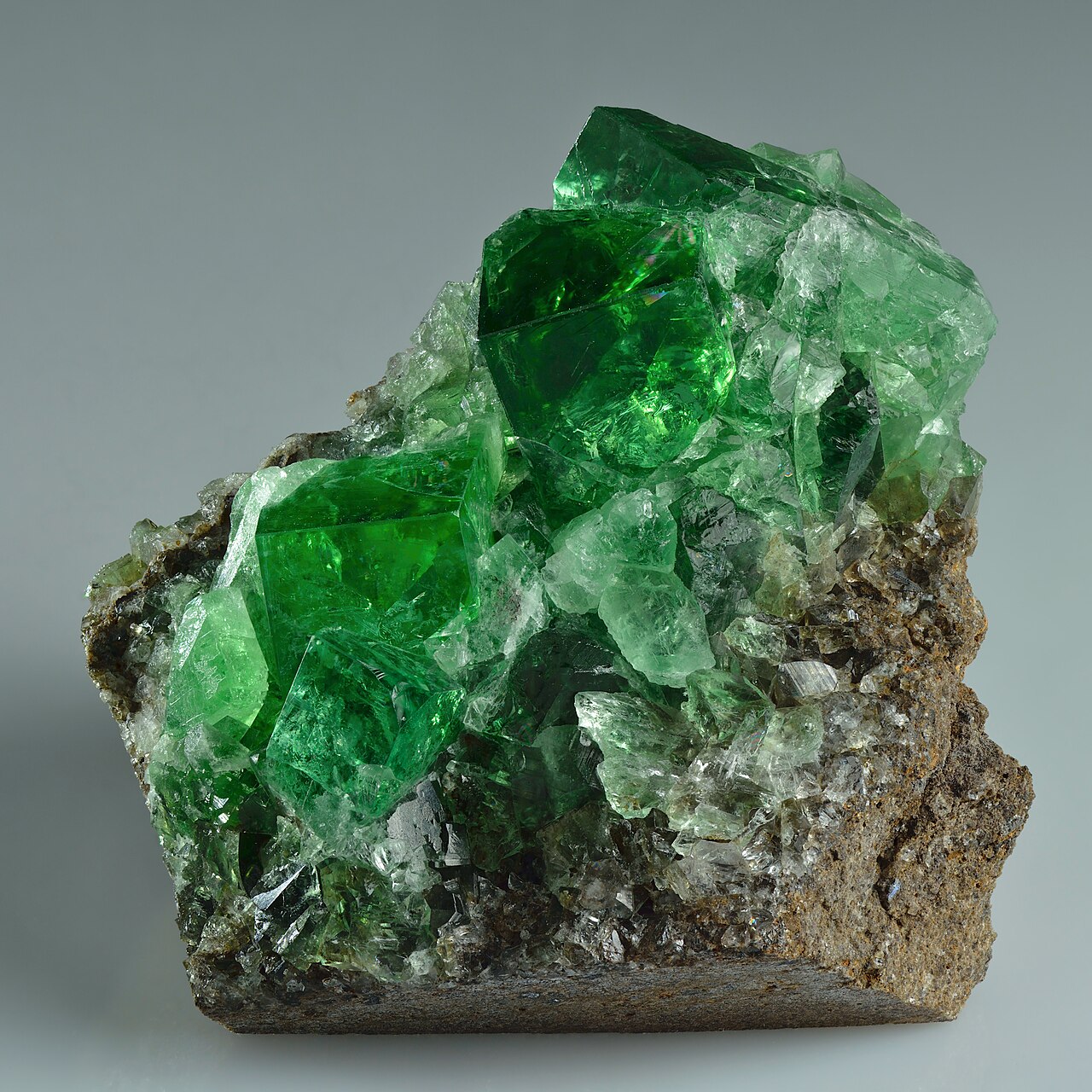
The North Pennine orefield, centred on Weardale, is by far Britain's most important fluorspar-producing district, and specifically famous among mineral collectors for exceptionally fine, often vividly fluorescent green fluorite specimens, notably from the Rogerley area.
Related terminology
Mines associated with this term
5 examples chosen from 51 linked records — the term page is not an index.
- Hurst Mines — North Yorkshire (well documented example)
Named twice in this record, first in the geology: “Lead, with baryte and fluorspar in the same ground, on the Copperthwaite, Jingle Pot, Hurst and Hind…” - Rodderup Fell Mine — Cumbria (well documented example)
Named 8 times in this record, first in the summary: “…is the only mine on Alston Moor to have been worked commercially for fluorspar.” - Allenheads Mines — Northumberland (well documented example)
A North Pennines lead mine where fluorspar became a significant secondary product. - Beldon Lead Mine — County Durham (well documented example)
Named 4 times in this record, first in the summary: “…and closed by 1820 before a second working in the 1860s and 1870s. Fluorspar trials were made on the dumps in 1924 but came to nothing.” - Blackdene Mine — County Durham (well documented example)
Named 5 times in this record, first in the summary: “A lead and fluorspar mine at Ireshopeburn in Weardale, County Durham, worked on the…”
See every mine that worked fluorspar →
Sources
- (secondary) British Mining No. 119 - SAMUK's Fluorspar Operations in Weardale 1981 — Northern Mine Research Society
- (secondary) DUST TO DUST: Silicosis cases expose government complacency on deadly engineered stone — Hazards magazine
- (secondary) Fluorite and Fluorspar: Mineral uses and properties — geology.com
- (secondary) Mineral Resource of the Month: Fluorspar — EARTH Magazine
- (secondary) Weardale — Steetley Minerals / rock-site.co.uk
Record created: 20 August 2026 · Last researched: 20 August 2026