 MineArchive
Rodderup Fell Mine
| Also known as | Rotherhope Fell Mine, Rotherhopefell Mine |
|---|---|
| Location | Rotherhope Fell above Black Burn, Alston Moor, Cumbria — 54.7733, -2.4726 (exact) |
| Commodities | Lead, Fluorspar |
| Type | Metal |
| Worked | From about 1800–1948 |
| Maximum depth | Unknown. The mine was worked from a series of levels driven into the fell. |
| Operators | Wilson family (1827–?), Vieille Montagne Zinc Company (1900–1948) |
Overview
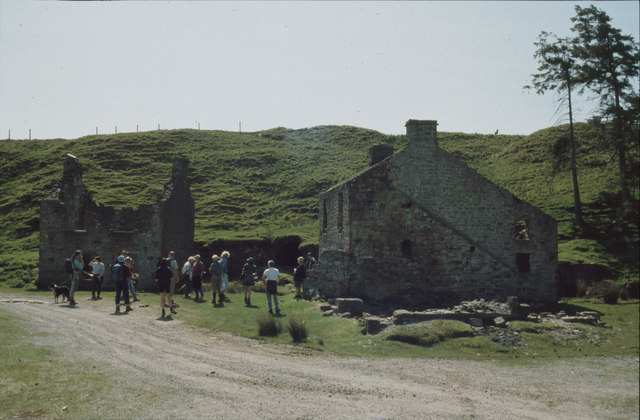
Rodderup Fell, more usually Rotherhope Fell, lies on the north-east side of the fell above Black Burn on Alston Moor. Greenwich Hospital held the mineral rights and in 1764 appointed the engineer John Smeaton as surveyor; in the late 1770s he laid out a series of long levels designed to reach the veins at greater depth. Three generations of lessees drove those levels through the nineteenth century, and from 1900 the Belgian Vieille Montagne company worked the mine and built the ore-processing plant whose ruins are now a scheduled monument. It is the only mine on Alston Moor to have been worked commercially for fluorspar.
History
The mineral rights to Rotherhope Fell were owned by Greenwich Hospital, which in 1764 appointed the engineer John Smeaton to act as a surveyor and fix the boundaries of the various takes. In the late 1770s Smeaton laid out a number of long levels designed to exploit the veins at greater depth, among them the Black Burn Level — later the Rotherhope Fell Low Level — driven south-eastwards from just above the Black Burn stream.
The first workings, though, were by way of Charlton's Level, which became the Rotherhope Fell High Level. A partnership was formed about 1800 by Mr Charlton and Graham Clark, who drove that level and found some veins, mostly unproductive. They gave up the lease in 1818 and it was taken up by the Wilsons in 1827. The Wilsons carried the level on and retried some of Charlton's trials with some success, mainly in the Four Fathom Limestone, producing about 55 tonnes of lead ore. The level was driven 700 metres in all, crossing the Rotherhope Fell, New Rotherhope Fell and Greencastle Tarn veins.
To try the Rotherhope Fell Vein at a lower horizon the Wilsons drove the Middle Level in the Five Yard Limestone. At 350 metres it cut the Victoria Vein, another 350 metres brought it to the Rotherhope Fell Vein, and a further 335 metres reached the Rotherhope Fell New Vein, which proved to be of no value. By 1829 the mine had produced 425 tonnes of lead ore, and output peaked in 1836 at 1,220 tonnes. The Middle Level was eventually put to a different use: taking off the water from hydraulic machinery installed in the Blackburn Level.
In 1900 the Vieille Montagne Lead and Zinc Company bought the lease and began working the mine; in 1907 it passed to the Vieille Montagne Company, which rebuilt the Low Level ore-processing plant in 1912. Between 1913 and 1947 the company produced 19,499 tonnes of lead ore. Fluorspar was the mine's other and more unusual product: 908 tonnes were produced between 1906 and 1914, and 14,326 tonnes over the mine's life. The 1930 List of Mines enters Rodderup Fell at Alston under the Vieille Montagne Zinc Co. with A. Treloar as agent and 38 men underground.
Underground working for lead ceased in 1948, but the mine was not finished with: much of the dump material has since been carted away to be processed for fluorspar, which is why the waste beside the burn is so much depleted.
Geology
Alston Moor is the mineralised Carboniferous block of the North Pennine orefield, where ore is carried in near-vertical veins cutting a sequence of limestones, sandstones and shales and is richest where a vein crosses a competent bed. The named beds recur through this mine's own history: Charlton's trials paid best in the Four Fathom Limestone, and the Wilsons drove the Middle Level in the Five Yard Limestone specifically to reach the Rotherhope Fell Vein lower down. The mine worked the west end of the Rotherhope Fell Vein and part of the east end, where it changes to the Rotherhope Cleugh Vein, and crossed the Victoria, New Rotherhope Fell and Greencastle Tarn veins on the way.
What sets the site apart is the fluorspar. Fluorite is common enough as a gangue mineral in these veins — the stuff the lead miners threw out — but Rotherhope Fell is the only mine on Alston Moor to have been worked commercially for it, and the reprocessing of its dumps for fluorspar after the lead stopped is the clearest possible statement of how the value of a mineral can change while the ground stays the same.
Geological setting: Veins and Lodes (well documented example)
Workings
A mine of levels rather than shafts, driven into the fellside at three horizons. The High Level, originally Charlton's Level, runs 700 metres across the veins. The Middle Level was driven in the Five Yard Limestone to reach the Rotherhope Fell Vein lower down and eventually served to take off water from hydraulic machinery in the Blackburn Level below it. The Black Burn Level, laid out by Smeaton in the late 1770s and known later as the Low Level, became the main access. Above ground were the ore-processing plant rebuilt by the Vieille Montagne Company in 1912, a pre-1850s ore works at the Middle Level, a reservoir, scattered air shafts and an extensive water management system across the fellside.
Closure
Underground working for lead ceased in 1948, a year before Vieille Montagne left England altogether. The mine's afterlife was extractive rather than idle: much dump material was carted away afterwards to be processed for fluorspar, and the scheduling notes that the context of the Black Burn Level and the ore-processing waste beside the burn has been lost through the demolition of structures and the removal of waste for reprocessing and for use as hardcore.
What remains
Scheduled, in two areas, since 24 October 1997. The protected remains are the ruined structures of the lead ore and fluorspar processing plant built by the Vieille Montagne Company in the early twentieth century, together with the earthwork and buried remains of a pre-1850s ore works and associated lead mining remains at Rotherhope Middle Level, and all the deposits of mining and ore-processing waste within those areas. Deliberately excluded are the Black Burn Level's standing and earthwork remains and the ore-processing waste beside the burn, whose context has been lost, together with the High Level, the scattered air shafts and the water management system across the fellside. The stone-arched portal of the Blackburn Level and the buildings on either side of it survive and have been photographed, as have the High and Middle Levels and the reservoir.
The ruined lead ore and fluorspar processing plant of the early twentieth century; the earthworks and buried remains of a pre-1850s ore works at the Middle Level; the stone-arched portal of the Blackburn Level with buildings to either side; the High and Middle Level entrances; a reservoir on the fell; scattered air shafts; and an extensive water management system across the fellside.
Related mines
- Carshield Mine — Two of the Vieille Montagne company's North Pennine mines, taken up within a few years of its arrival in 1896 — Carrshield reopened for zinc in 1899, Rotherhope Fell's lease bought in 1900 — and worked by it until the company left England in 1949.
- Nentsbury Mine — Both were worked by Vieille Montagne on Alston Moor, and both appear in the 1930 Cumberland return under the company's Nenthead office with A. Treloar as agent — 38 men underground here against 108 at Nentsbury.
Nearby mines
- Dowpot Syke and Guttergill Mine — 2.8 miles (4.5 km) NE
- Holyfield Mine — 2.8 miles (4.6 km) NE
- Nent Force Level — 3.2 miles (5.2 km) NE
- Hartside Mine — 3.4 miles (5.4 km) W
- Bentyfield Mine — 3.6 miles (5.8 km) E
Straight-line distance, within 9 miles (15 km). Show on the map.
Recorded claims
Individual factual claims, each attached to the source(s) that support it below. Where sources disagree, both are kept.
- The mineral rights to Rotherhope Fell were owned by Greenwich Hospital, which in 1764 appointed the engineer John Smeaton to act as a surveyor; in the late 1770s he laid out a number of long levels designed to exploit the veins at greater depth, including the Black Burn Level, later known as the Rotherhope Fell Low Level. 1,2
- A partnership formed about 1800 by Mr Charlton and Graham Clark drove what is now the High Level, gave up the lease in 1818, and it was taken up by the Wilsons in 1827, who worked mainly in the Four Fathom Limestone and produced some 55 tonnes of lead ore; the level was driven 700 m in all. 2
- The Wilsons drove the Middle Level in the Five Yard Limestone to try the Rotherhope Fell Vein at a lower horizon; it cut the Victoria Vein at 350 m, the Rotherhope Fell Vein 350 m further on, and the Rotherhope Fell New Vein 335 m beyond that, which proved of no value. 2
- By 1829 the mine had produced 425 tonnes of lead ore, peaking in 1836 at 1,220 tonnes. 2
- In 1900 the Vieille Montagne Lead and Zinc Company purchased the lease and started working the mine; in 1907 it was taken over by the Vieille Montagne Company, which rebuilt the Low Level ore processing plant in 1912, and 19,499 tonnes of lead ore were produced between 1913 and 1947. 2
- Rotherhope Fell is the only mine in Alston Moor to have been worked commercially for fluorspar; 908 tonnes were produced between 1906 and 1914 and 14,326 tonnes over the mine's life. 2
- The 1930 List of Mines records Rodderup Fell at Alston under the Vieille Montagne Zinc Co. of Nenthead, with A. Treloar as agent and 38 men employed underground. 3
- The monument, in two areas on the north-east side of Rotherhope Fell above Black Burn, was scheduled on 24 October 1997 and includes the ruined structures of the Vieille Montagne ore-processing plant and the earthwork and buried remains of a pre-1850s ore works at Rotherhope Middle Level; the Black Burn Level, the High Level, the air shafts and the water management system are excluded. 1
- Underground working for lead ceased in 1948, but much dump material has since been carted away to be processed for fluorspar. 2
Photographs & further reading
A level-by-level account of how the mine was driven — Charlton's Level, the Middle Level in the Five Yard Limestone, the veins each one cut, and the tonnages the lessees got out of them.
View sourceThe scheduling text, which sets out exactly what survives and — unusually informative in itself — exactly what has been destroyed by the removal of the waste heaps for reprocessing and hardcore.
View sourceSources
- (primary) Rotherhopefell lead and fluorspar mines and ore works, Alston Moor (scheduled monument 1015827) — Historic England, via Ancient Monuments UK
- (secondary) Rotherhope Fell Mine — The Mine Explorer Society
- (primary) 1930 List of Mines under the Metalliferous Mines Act: Cumberland — Durham Mining Museum
Record created: 5 September 2026 · Last researched: 5 September 2026