 MineArchive
Wheal Prosper
| Location | Rinsey, near Porthleven, Cornwall — 50.0944, -5.3657 (exact) |
|---|---|
| Commodities | Copper, Tin |
| Type | Metal |
| Worked | c. 1860–1866 |
| Operators | National Trust (1969–?) |
Overview
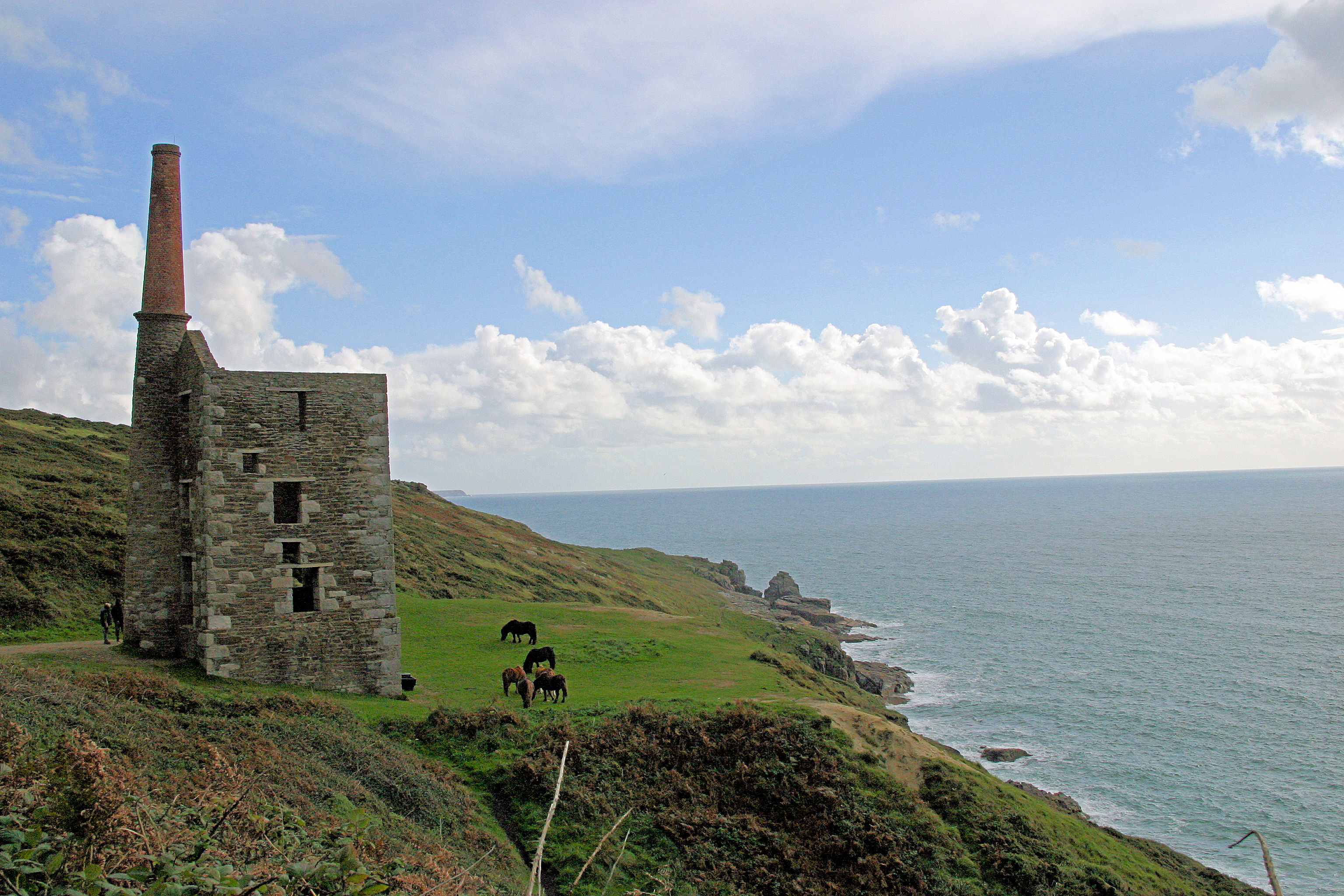
Wheal Prosper, on the cliffs near Rinsey west of Porthleven, was a short-lived and financially disappointing venture whose one substantial legacy is the engine house that still stands over Mount's Bay, preserved by the National Trust since 1969 as one of Cornwall's most photographed pieces of mining heritage.
History
Wheal Prosper opened around 1860 to work the Porthcew lode for copper and tin, a short distance from the earlier and larger Wheal Trewavas. Despite its hopeful name, the mine never lived up to it: after only six years of working it closed in 1866, having failed to return a profit. Its single engine house, built to a standard Cornish design with three storeys of killas rubble and dressed granite quoins, housed a 30-inch cylinder Cornish engine used to keep the workings clear of water. The site passed into the care of the National Trust in 1969 and has been preserved since.
Geology
The mine worked the Porthcew lode, part of the same Cornubian orefield of hydrothermal, granite-related mineral veins as the neighbouring Wheal Trewavas.
Geological setting: Hydrothermal Deposits (well documented example), Veins and Lodes (well documented example)
Workings
A single engine shaft was pumped by a 30-inch cylinder engine housed in the surviving clifftop engine house; no detailed depth figure is recorded for the mine's workings.
Closure
The mine closed in 1866 after only six years, having failed to return a profit on the Porthcew lode.
What remains
The engine house is a Grade II listed building standing within a Scheduled Monument; the site has been in National Trust care since 1969.
The single three-storey engine house of killas rubble with dressed granite quoins stands on the cliff at Rinsey Head; it is Grade II listed and within a scheduled monument.
Related mines
- Goonvean Pit — Both were worked together by the Goonvean China Clay Co. Ltd, alongside Rostowrack and Trelavour.
- Wheal Trewavas — The earlier and larger neighbour along the cliffs at Rinsey.
Nearby mines
- Wheal Trewavas — 0.4 miles (0.7 km) SE
- Wheal Grey Mine — 1.3 miles (2.0 km) N
- Tregonning Hill China Clay Pits — 1.9 miles (3.0 km) N
- Great Work Mine — 2.3 miles (3.7 km) N
- Wheal Vor — 2.4 miles (3.8 km) NE
Straight-line distance, within 9 miles (15 km). Show on the map.
Recorded claims
Individual factual claims, each attached to the source(s) that support it below. Where sources disagree, both are kept.
- The mine closed in 1866, only six years after opening around 1860, having failed to return a profit on the Porthcew lode. 1
- The surviving engine house housed a 30-inch cylinder pumping engine; it is built of killas rubble with dressed granite quoins and stands three storeys high. 1,2
- The Wheal Prosper pumping engine house 210 m south of Eastcliff Farm was scheduled on 18 July 1979 (list entry 1021165) and listed Grade II as Wheal Prosper Engine House on 26 August 1987 (1142234); it stands at SW 594 270 (50.094389, -5.365722), overlooking Mount's Bay near Rinsey Head, about 2.5 miles west of Porthleven, and was acquired by the National Trust in 1969. 1
Sources
- (secondary) Wheal Prosper, Rinsey — Wikipedia
- (secondary) Wheal Prosper Mine — Cornwall Guide
Record created: 22 August 2026 · Last researched: 24 September 2026