 MineArchive
Goonvean Pit
| Location | Goonamarris, St Stephen-in-Brannel, Cornwall — 50.3617, -4.8841 (approximate) |
|---|---|
| Commodity | China Clay |
| Type | Clay |
| Worked | from By 1932 |
| Maximum depth | Unknown. |
| Operators | Goonvean and Rostowrack China Clay Co. Ltd (1932–2012) |
Overview
A St Austell-district china clay pit worked by the Goonvean and Rostowrack China Clay Co. from 1932, whose Grade II* listed pumping engine house holds one of only six surviving Cornish beam engines.
History
Goonvean Pit worked china clay (kaolin) in the St Austell district, one of the world's major sources of the mineral. Its own pumping engine house, built in 1910, houses a beam engine considerably older than the building itself: cast in the 1860s by the renowned Cornish engineering firm Harveys of Hayle, the engine originally stood at Goon Innis mine near St Agnes before being moved to Goonvean in 1910. Its original beam broke and was replaced in 1928 by a new one cast by Holmans of Camborne, reputedly the last beam engine casting ever made anywhere in the world. In 1932 the Goonvean and Rostowrack China Clay Co. Ltd was formed, working Goonvean alongside the neighbouring Rostowrack, Trelavour and Wheal Prosper pits, and grew into one of the major independent companies in the Cornish china clay industry; it remained independent of the sector's dominant English China Clays combine (formed by amalgamation in 1919 and later folded into Imerys) until Imerys itself finally acquired the Goonvean and Rostowrack business in 2012, bringing the last independent Cornish china clay company under single ownership.
Geology
China clay (kaolin) of the St Austell district, one of the world's major sources of the mineral, formed by the alteration of the granite in place.
Workings
Worked china clay, drained by a pumping engine house whose 1860s Harveys of Hayle beam engine -- moved here from St Agnes in 1910 -- is one of only six surviving Cornish beam engines.
Closure
The closure date is not known; the business was absorbed into Imerys in 2012, ending its life as an independent operation.
What remains
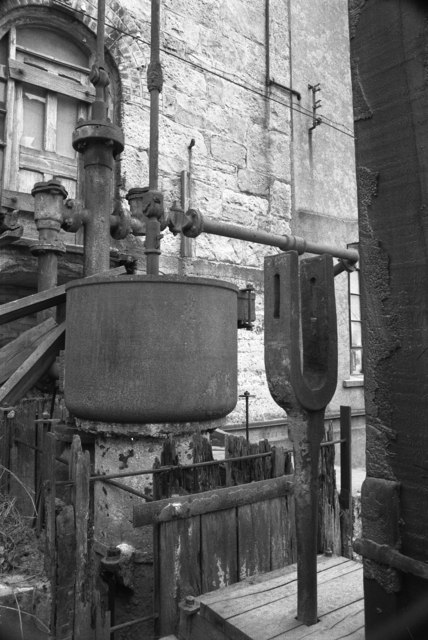
The Grade II* engine house of 1910 stands with its boiler house and chimney; the 1863 Harvey beam engine it held was dismantled in September 2008 by Century millwrights and put into store, in the hope of re-erection at Hayle.
A Grade II* listed pumping engine house, boiler house and detached chimney.
Related mines
- Wheal Prosper — Both were worked together by the Goonvean China Clay Co. Ltd, alongside Rostowrack and Trelavour.
Nearby mines
- Tregargus China Stone Quarries — 0.8 miles (1.4 km) S
- South Terras Mine — 2.0 miles (3.3 km) SW
- Wheal Remfry — 2.2 miles (3.6 km) NW
- Gaverigan Tin Streaming — 2.5 miles (4.1 km) N
- Great Dowgas Mine — 2.8 miles (4.4 km) S
Straight-line distance, within 9 miles (15 km). Show on the map.
Recorded claims
Individual factual claims, each attached to the source(s) that support it below. Where sources disagree, both are kept.
- The Goonvean and Rostowrack China Clay Co. Ltd was formed in 1932, working Goonvean alongside the neighbouring Rostowrack, Trelavour and Wheal Prosper pits, and remained one of the industry's major independent companies until Imerys finally acquired it in 2012 -- the last independent Cornish china clay business to be absorbed. 1
- The Grade II* listed pumping engine house, dated 1910, holds a beam engine cast in the 1860s by Harveys of Hayle and originally installed at Goon Innis mine, St Agnes, before being moved to Goonvean in 1910; its original beam broke and was replaced in 1928 by a new one cast by Holmans of Camborne, reputedly the last beam-engine casting ever made. Only six Cornish beam engines survive. 2
- Goonvean was established in 1931 as Goonvean and Rostowrack; by 2001 it was the only English-owned china clay producer, with four working pits — Rostowrack, Goonvean, Wheal Prosper and Greensplat — and 8 per cent of the kaolin sold from south-west England, against Imerys's 88. 1
- The 50-inch Cornish beam engine of 1863 by Harvey and Company, installed fourth-hand in 1910, was dismantled by Century millwrights in September 2008 and placed in store, in the hope of re-erection at Hayle. 3
Photographs & further reading
A survey of the industry naming Goonvean's four pits and its share of production.
View sourceSources
- (secondary) current world status of kaolin from south-west England — Ussher Society
- (primary) Goonvean China Clay Works - Engine House with Boiler-House and Detached Chimney (Historic England list entry 1136944, via British Listed Buildings) — Historic England
- (observational) Goonvean China Clayworks: Cornish beam engine (Geograph, Chris Allen) — Geograph Britain and Ireland
Record created: 31 August 2026 · Last researched: 24 September 2026