 MineArchive
Norton Hill Colliery
| Location | Midsomer Norton, Somerset — 51.2801, -2.4810 (approximate) |
|---|---|
| Commodity | Coal |
| Type | Coal |
| Worked | 1903–1966 |
| Maximum depth | Unknown. |
| Operators | Beauchamp family collieries |
Overview
A Midsomer Norton colliery at the heart of the Somerset coalfield, sunk in 1903 and worked for over sixty years, whose 1908 explosion killed ten men and boys in a disputed incident that its own owners never fully accepted the official explanation for.
History
Norton Hill Old Pit was already being worked by 1839, with its own shafts sunk in 1846; the later, larger Norton Hill Colliery was sunk in 1903 alongside the Somerset & Dorset Joint Railway just outside Midsomer Norton South station. At its peak the colliery employed over 600 people. On 9 April 1908, an explosion at the bottom of the Slyving Vein Incline killed ten men and boys, the youngest just fourteen, along with five horses (see Disasters, below). The colliery continued working for nearly six decades afterward, finally closing in 1966, one of the last two working pits in the whole North Somerset coalfield alongside Writhlington and Kilmersdon.
The former colliery site has since been redeveloped for housing, including the Impact & Willowbrook Estate, built partly over the colliery's old seams; the site of its pit heads is now occupied by industrial premises. A community memorial near Mardons Social Club, developed with the Somerset Miners Welfare Trust, includes a miner sculpture and a coal truck marked with the colliery's name, commemorating at least 20 men known to have died working there across its history. The Norton Hill pits at Westfield belonged to the Beauchamp family — Sir Frank Beauchamp, 1st Baronet (1866-1950), and his brother Louis — who held collieries, a coal distribution business, a wagon works and a gasworks across the Radstock and Midsomer Norton district. They were known locally as the Beauchamp goldmines, being the most productive on the coalfield. A railway linked the colliery to the Somerset and Dorset Joint Railway in 1900, with sidings laid in 1905 and 1907 and rebuilt in 1953. After nationalisation the National Coal Board spent £500,000 modernising the pit for an output of 315,000 tons a year, but thin seams, geological trouble and a shortage of men closed it in 1966 all the same.
Geology
The Somerset coalfield's seams are thin and faulted, which is what made the district expensive to work and limited the return on investment even where a pit was modernised. Local geological difficulty was given, with manpower shortage, as the reason Norton Hill closed in 1966 despite half a million pounds of post-war investment.
Geological setting: Sedimentary Beds and Seams (well documented example)
Workings
Worked from shafts sunk in 1903, including workings at the Slyving Vein Incline, where the colliery's fatal 1908 explosion occurred. Two shafts served the works. The Old Pit, sunk before 1839, was 4 feet 6 inches in diameter and reached 1,247 feet; the New shaft, finished in 1903, was 13 feet 6 inches in diameter and reached 1,503 feet. The 1908 explosion occurred about 1,500 feet down.
Closure
Norton Hill closed in 1966, after the National Coal Board's post-war modernisation failed to make the pit pay against thin seams, geological difficulty and a shortage of men. It was not the last Somerset colliery: five pits were still working in 1959, and the last two, Kilmersdon and Writhlington, closed in September 1973.
What remains
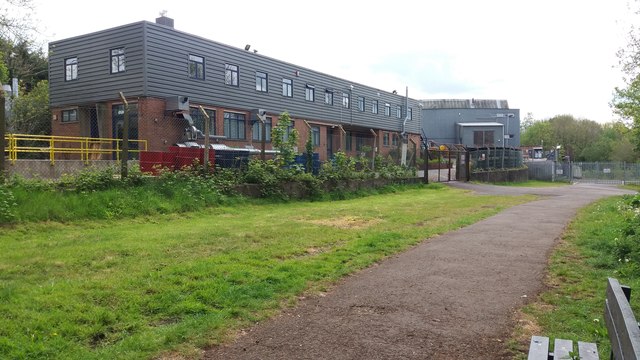
Industrial buildings now stand on or almost on the site of Norton Hill No. 1, with a tarmac path running along the line of the sidings that served the colliery, photographed in January 2018.
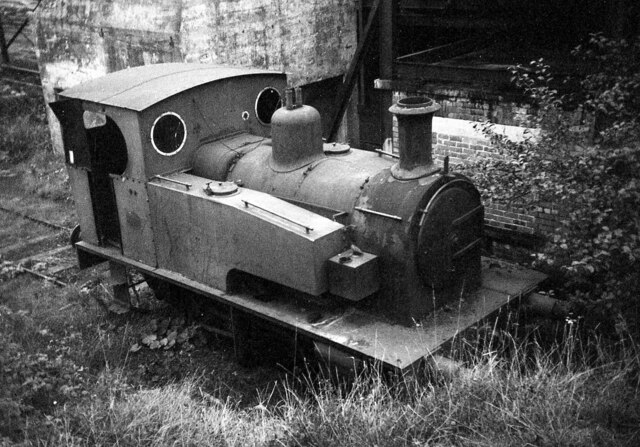
A community memorial near Mardons Social Club, developed with the Somerset Miners Welfare Trust, carries a miner figure commemorating the pit and its men. One of the colliery's locomotives also survives: Hunslet 0-4-0T 1684 of 1931 went to Kilmersdon when Norton Hill closed in 1966, was bought for preservation soon after, and is now at the Middleton Railway.
Related mines
- Kilmersdon Colliery — A neighbouring Somerset pit 0.7 km away that outlasted Norton Hill by seven years; Norton Hill's Hunslet locomotive went to Kilmersdon when this pit closed in 1966.
- Writhlington Colliery — A neighbouring Somerset pit which, with Kilmersdon, was one of the coalfield's last two, closing in September 1973.
Nearby mines
- Wellsways Colliery — 1.0 miles (1.6 km) SW
- Old Mills Colliery — 1.3 miles (2.1 km) NW
- Writhlington Colliery — 1.3 miles (2.1 km) NW
- Old Pit Radstock — 1.7 miles (2.8 km) NE
- Charmborough Colliery — 1.9 miles (3.0 km) SE
Straight-line distance, within 9 miles (15 km). Show on the map.
Disasters & major incidents
-
Norton Hill Colliery explosion, 1908
1908 · Explosion · 10 fatalities
On the night of 9 April 1908 the examiner Charles Burge fired a shot in the roof of the dusty Slyving Vein Incline at Norton Hill Colliery, Midsomer Norton, and set off a coal-dust explosion that killed him and nine others, the youngest fourteen, with five horses.
Recorded claims
Individual factual claims, each attached to the source(s) that support it below. Where sources disagree, both are kept.
- Norton Hill Old Pit was worked by 1839, with shafts sunk in 1846; the later, larger Norton Hill Colliery was sunk in 1903 next to the Somerset & Dorset Joint Railway. 1
- At its peak the colliery employed over 600 people. 1
- The colliery closed in 1966, one of the last two working pits in the North Somerset coalfield, alongside Writhlington and Kilmersdon. 1
- A community memorial near Mardons Social Club, developed with the Somerset Miners Welfare Trust, includes a miner sculpture and a coal truck marked with the colliery's name, commemorating at least 20 men known to have died working there. 2
- The Norton Hill collieries at Westfield were owned by the Beauchamp family, Sir Frank Beauchamp, 1st Baronet, and his brother Louis, who held other collieries and works across the coalfield. They were known as the Beauchamp goldmines, the most productive on the Somerset coalfield. 3,4
- The Old Pit, sunk before 1839, was 4 feet 6 inches in diameter and 1,247 feet deep; the New shaft of 1903 was 13 feet 6 inches in diameter and 1,503 feet deep. Both closed in 1966. 3
- The explosion of 9 April 1908, about 1,500 feet underground, killed ten men and boys; with no mines rescue teams then in existence, the manager and volunteers searched for survivors for ten days. The Coal Mines Act 1911 was passed partly as a result, with Winston Churchill instrumental in it. 3
- After nationalisation the National Coal Board spent £500,000 modernising the colliery for an annual output of 315,000 tons, but manpower shortages and geological problems closed it in 1966. 3
- Norton Hill was not the last colliery in Somerset. Five pits were still at work in 1959, and the coalfield's last two, Kilmersdon and Writhlington, closed in September 1973. 3
- A railway linking the colliery to the Somerset and Dorset Joint Railway was built in 1900; sidings were laid in 1905 and 1907 and reconstructed in 1953. 3
Photographs & further reading
The coalfield's own article, with the table of Norton Hill's two pits, their diameters and depths, and the 1908 explosion's part in the Coal Mines Act 1911.
View sourceSources
- (secondary) Norton Hill Colliery Explosion - Midsomer Norton - 1908 — Northern Mine Research Society
- (secondary) Somerset Miners Welfare Trust hands over Norton Hill Colliery Miner to local community — Radstock Times
- (secondary) Somerset Coalfield — Wikipedia
- (secondary) Frank Beauchamp — Wikipedia
- (observational) Industrial Buildings on site of Colliery, Midsomer Norton — Geograph Britain and Ireland
- (primary) BGS/Mining Remediation Authority mine plans — Norton Hill / Norton Hill No 2 / Old Welton / Old Pit — British Geological Survey / Mining Remediation Authority
Record created: 27 August 2026 · Last researched: 23 September 2026