 MineArchive
Writhlington Colliery
| Location | Radstock, Somerset — 51.2960, -2.4980 (approximate) |
|---|---|
| Commodity | Coal |
| Type | Coal |
| Worked | Working by 1829–September 1973 |
| Maximum depth | Unknown. |
| Operators | Writhlington Colliery Co. (1880–1947) |
Overview
A long-worked Radstock colliery whose spoil heap turned out, decades after closure, to hold the largest collection of Carboniferous insect fossils ever found in Britain — including the world's oldest known damselfly.
History
Lower Writhlington Colliery, near Radstock in the North Somerset coalfield, was already working by 1829. Ownership passed through several hands over the following century — T. Smith & Co. (1855-1870), T. Smith, Hill & Co. (from 1875), and, from 1880, the Writhlington Colliery Co., which by 1900 also owned the neighbouring Upper Writhlington and Upper and Lower Huish Foxcote pits. Company records show around 580-700 men employed across Writhlington and its associated workings through the early 20th century, working the Radstock and Farrington seams and producing between 100,000 and 140,000 tons of coal a year in the 1920s and 1930s.
Coal mining in the wider Radstock/Midsomer Norton area dated back, by local tradition, to Roman times, and the railways that grew up to serve it shaped the development of the surrounding towns from around 1750 onward. By the 1960s, only Writhlington and the neighbouring Kilmersdon Colliery remained working in the whole North Somerset coalfield; the combined operation produced its highest-ever tonnage, 280,000 tons of saleable coal, in 1967. Both pits closed together in September 1973, after the conversion of Portishead Power Station from coal to oil removed their main remaining market — bringing to an end a coal industry in the area that had run for roughly two centuries.
Geology
Coal of the North Somerset field near Radstock; the spoil heap holds the largest known collection of Carboniferous insect fossils in Britain.
Workings
Worked the Radstock and Farrington seams, alongside the neighbouring Upper Writhlington and Huish Foxcote workings under the same ownership; electrically powered underground plant (2,200 volts) was in use by the 1930s.
Closure
Closed alongside Kilmersdon Colliery in September 1973, after Portishead Power Station's conversion from coal to oil removed the pits' main remaining market — ending coal mining in the North Somerset coalfield.
What remains
The former colliery's spoil heap is now protected as the Writhlington Site of Special Scientific Interest, notified in 1992 for its exceptional Carboniferous insect fossils — over 1,400 specimens recovered, including the world's earliest known damselfly, making it the largest collection of Carboniferous insects ever found in Britain.
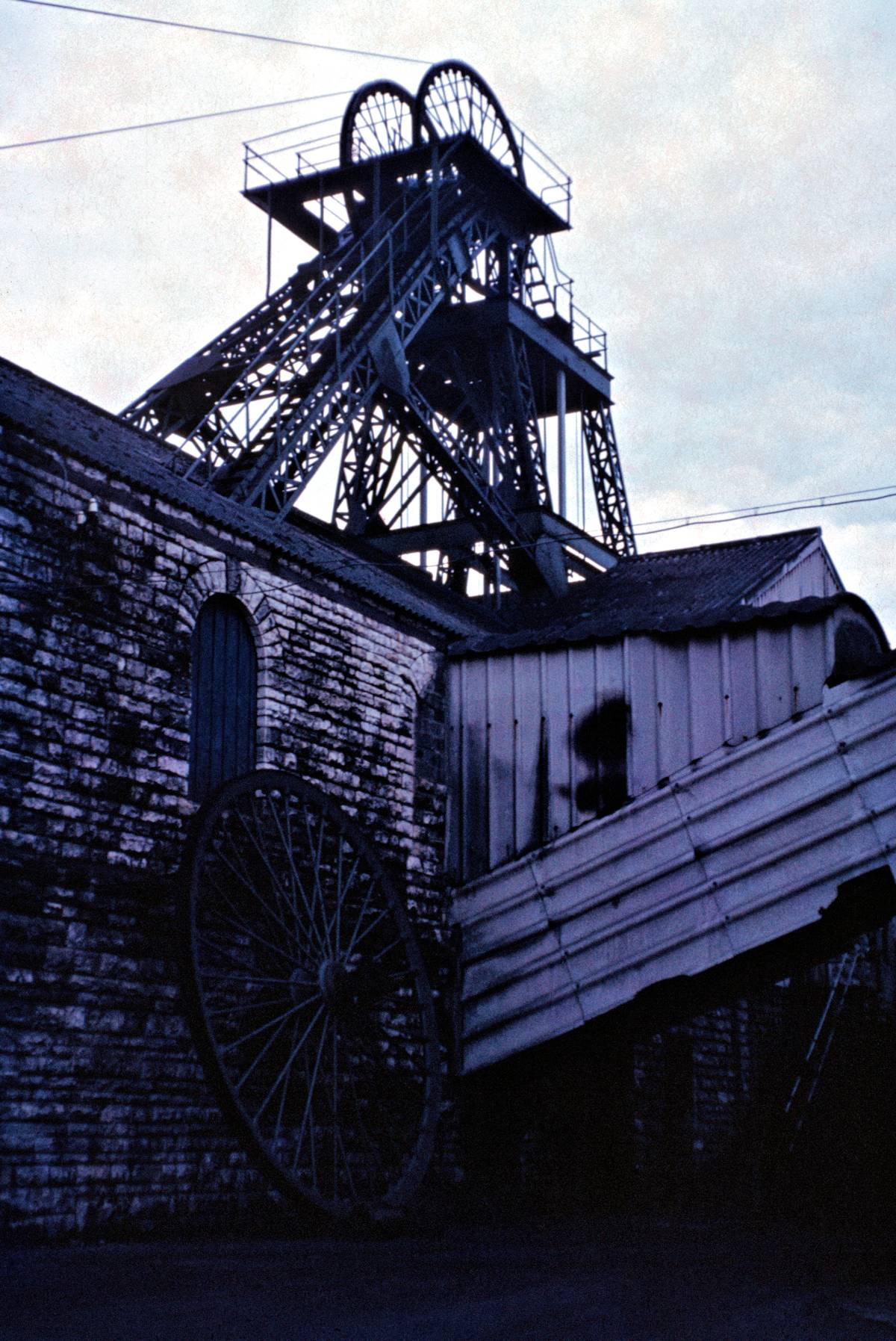
A pit headgear structure survives at the former Lower Writhlington Colliery site.
Related mines
- Kilmersdon Colliery — The last two working pits of the North Somerset coalfield, closing together in 1973.
- Norton Hill Colliery — A neighbouring Somerset pit which, with Kilmersdon, was one of the coalfield's last two, closing in September 1973.
Nearby mines
- Old Mills Colliery — 0.3 miles (0.6 km) SW
- Norton Hill Colliery — 1.3 miles (2.1 km) SE
- Clandown Colliery — 1.8 miles (2.9 km) NE
- Wellsways Colliery — 2.0 miles (3.2 km) S
- Conygre Colliery — 2.2 miles (3.5 km) NE
Straight-line distance, within 9 miles (15 km). Show on the map.
Recorded claims
Individual factual claims, each attached to the source(s) that support it below. Where sources disagree, both are kept.
- Lower Writhlington Colliery was already working by 1829. 1
- Ownership passed through several companies from the 1850s, becoming the Writhlington Colliery Co. from 1880, which by 1900 also owned the neighbouring Upper Writhlington and Upper and Lower Huish Foxcote pits. 1
- Around 580-700 men were employed across Writhlington and its associated workings through the early 20th century, working the Radstock and Farrington seams and producing 100,000-140,000 tons of coal a year in the 1920s-30s. 1
- Writhlington closed alongside the neighbouring Kilmersdon Colliery in September 1973, after Portishead Power Station's conversion from coal to oil removed their main remaining market, ending coal mining in the North Somerset coalfield. 1
- The former colliery's spoil heap is protected as the Writhlington SSSI, notified in 1992, where over 1,400 insect fossil specimens have been recovered, including the world's earliest known damselfly — the largest collection of Carboniferous insects ever found in Britain. 2
Sources
- (primary) Writhlington Collieries Co., Ltd. — Durham Mining Museum
- (secondary) Writhlington SSSI — Wikipedia
Record created: 27 August 2026 · Last researched: 27 August 2026