 MineArchive
Linby Colliery
| Also known as | Linby Colliery Company |
|---|---|
| Location | Linby, near Hucknall, Nottinghamshire — 53.0491, -1.2034 (exact) |
| Commodity | Coal |
| Type | Coal |
| Worked | 1873–31 March 1988 |
| Maximum depth | 558 yards (510 m) to the Top Hard Seam |
| Operators | Linby Colliery Company Limited (?–1947), National Coal Board (1947–1987), British Coal Corporation (1987–1988) |
Overview
Linby was sunk in the Leen Valley in the late 1860s and early 1870s to the Top Hard, the seam on which every pit in the valley was founded. Unusually for the district it went on to work eight different seams. Its reputation was made after nationalisation: fully mechanised on the High Main and Main Bright, it was named Britain’s Champion Pit in the early 1960s and described as the most efficient coal mine in Europe, peaking in 1963 when 1,113 men produced over 1.3 million tons. Between 1947 and closure it raised something like 29 million tons. It closed on 31 March 1988 after 115 years.
History
The colliery was sunk by the Linby Colliery Company, whose two shafts were put down some 60 yards apart to reach the Top Hard. Sources differ on exactly when: the Durham Mining Museum record dates the sinking to the late 1860s, the Nottinghamshire Historic Environment Record gives an opening of 1875, and the memorial plaque on the site reads 1873–1988. What is not in doubt is that the Top Hard was the whole basis of the business, as it was at Annesley, Linby’s neighbour up the valley: the mine inspectors’ returns record the Top Hard alone as the seam worked at every five-year interval from 1894 to 1910, with the High Main added by 1915.
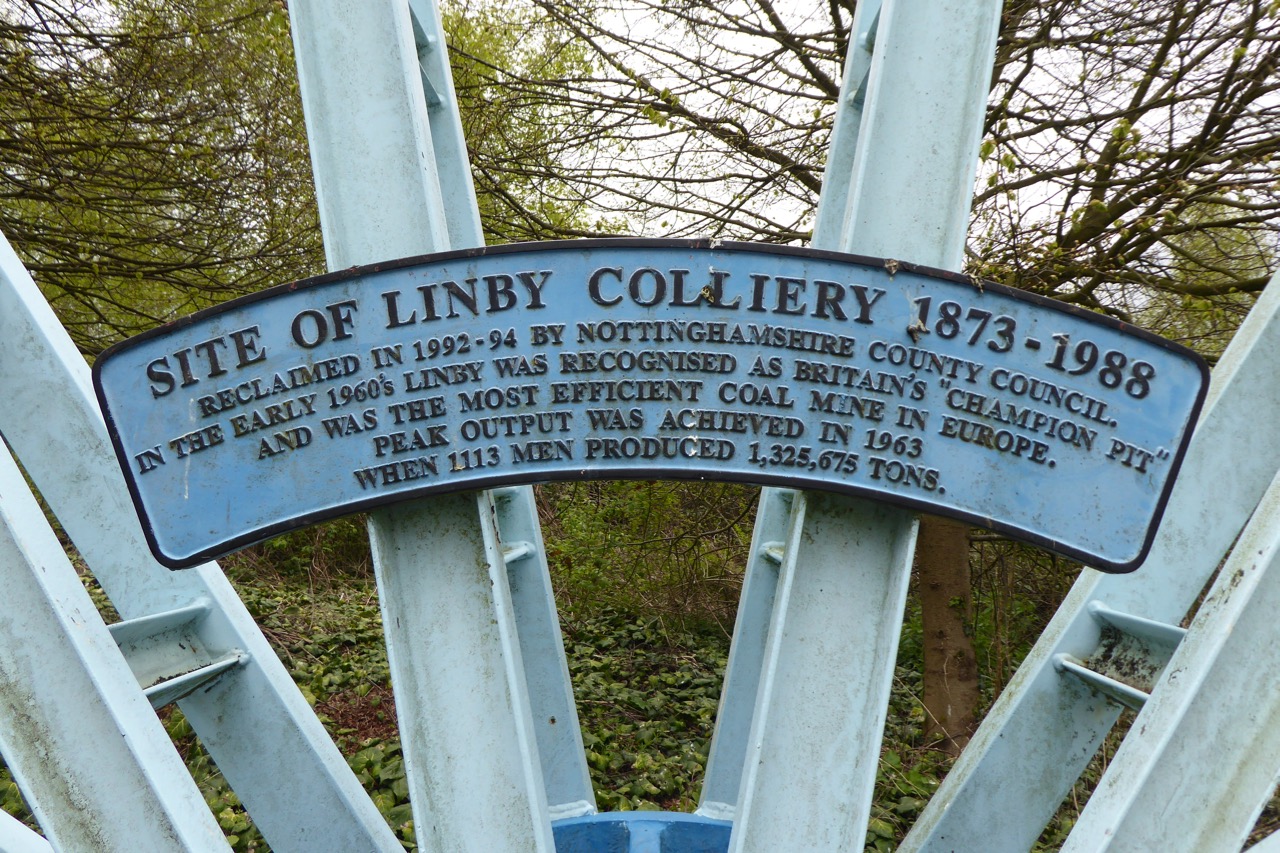
The Victorian and Edwardian colliery employed between 1,200 and 1,400 people, more than a thousand of them below ground, until a sharp fall to under 800 around 1910; numbers recovered to around 950 by nationalisation, when Linby was producing 314,000 tons a year. What followed was a transformation. Reorganised at the surface and below, winding from a 250-yard level rather than the full 558 yards of the original shafts, and fully mechanised in the High Main and Main Bright, the pit was producing a million tons a year with about 1,100 men by the mid-1960s. The plaque on the site records the peak: 1963, 1,113 men, 1,325,675 tons, and the title of Britain’s Champion Pit and the most efficient colliery in Europe. Its workings grew to match, with seven kilometres between the pit bottom and the furthest face.
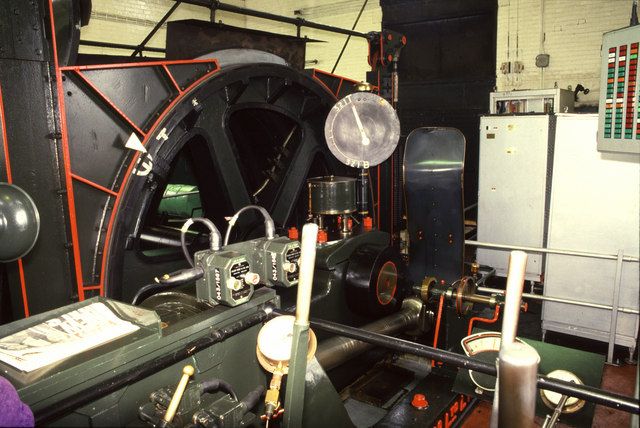
Linby coal also kept a landmark running. The Papplewick Pumping Station, a mile away, relied on a continuous supply from the colliery for its boilers. One of the two Robey winding engines of 1922 on the upcast shaft was retired in December 1982 when an electric winder replaced it; the other stayed in service as a reserve until the end. Between them they had raised more than 40 million tons. The colliery closed on 31 March 1988.
Geology
Linby stands on the Nottinghamshire coalfield where the Coal Measures dip east beneath the Permian. The Top Hard, the seam the shafts were sunk for and the one every Leen Valley pit was built on, was reached at 558 yards. Unusually for the district, Linby went on to work eight different seams over its life — a range no neighbouring pit matched — the last working face being in the High Hazels.
Geological setting: Sedimentary Beds and Seams (well documented example)
Workings
Two shafts about 60 yards apart, originally sunk 558 yards to the Top Hard and later winding from a level 250 yards down. Winding on the upcast shaft was by a pair of steam engines built by Robey and Co. of Lincoln in 1922, each of about 900 brake horsepower when winding coal; one was replaced by an electric winder in December 1982 and the other kept as a reserve to the end. By the colliery’s last decades the workings ran seven kilometres from the pit bottom to the furthest coalface, which is a measure both of how much coal had been taken and of how much of a shift was spent travelling to reach what was left.
Closure
Linby closed on 31 March 1988 after 115 years, one of the wave of Nottinghamshire closures that followed the 1984–85 strike. Its neighbour Annesley, at the other end of the valley, outlived it by twelve years and was the last Leen Valley pit to stop.
What remains
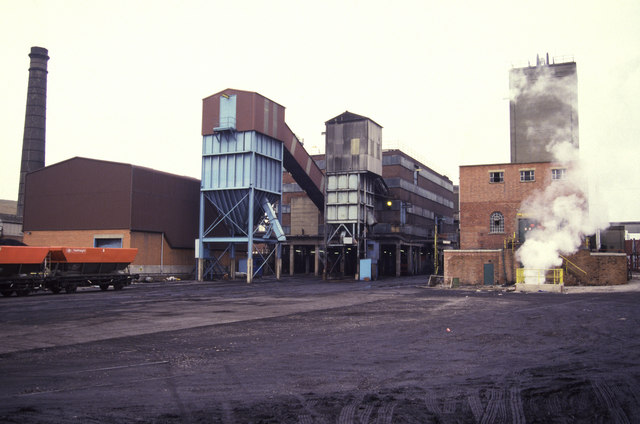
Cleared. The site was photographed in November 2012 with nothing left but the memorial and its plaque, which records the Champion Pit years and the 1963 peak output. Some colliery buildings, including the upcast shaft’s steam winder house, survived into the later 2000s.
A memorial and plaque on the colliery site at Linby. One of the two 1922 Robey winding engines was preserved and is displayed away from the site.
Related mines
- Annesley Colliery — Neighbouring Leen Valley pits founded on the same Top Hard seam and sharing its history: when Linby ceased production in March 1988 it left Annesley as the last working pit in the valley, which Annesley remained until 2000.
- Calverton Colliery — Headings from Linby were connected to Calverton's 30s district in 1963, and Calverton's early prepared coal went by lorry to Linby.
- Hucknall Colliery — Neighbouring Nottinghamshire pits whose dead are commemorated together: a single memorial to the miners lost at Hucknall and at Linby was unveiled in 2014.
Nearby mines
- Hucknall Colliery — 0.8 miles (1.3 km) S
- Newstead Colliery — 1.2 miles (2.0 km) N
- Bestwood Colliery — 2.3 miles (3.7 km) SE
- Watnall Colliery — 2.3 miles (3.7 km) SW
- Annesley Colliery — 2.5 miles (4.0 km) NW
Straight-line distance, within 9 miles (15 km). Show on the map.
Culture
- Linby Colliery F.C. (Sports)
The club carries the colliery’s name and, for a period, its welfare designation. The colliery was working from the early 1870s and closed on 31 March 1988; the club was formed in 1892 and is still playing at Church Lane in the village.
What's uncertain
Points where sources disagree or the record could not be settled; both accounts are kept. All open questions in the archive.
- Sources disagree on when Linby began work: the Durham Mining Museum gives a sinking in the late 1860s, the Nottinghamshire Historic Environment Record an opening in 1875, and the memorial plaque on the site 1873. (disputed) 1,2,3
Recorded claims
Individual factual claims, each attached to the source(s) that support it below. Where sources disagree, both are kept.
- Sources disagree on when Linby began work: the Durham Mining Museum gives a sinking in the late 1860s, the Nottinghamshire Historic Environment Record an opening in 1875, and the memorial plaque on the site 1873. (disputed) 1,2,3
- A plaque on the colliery site records that in the early 1960s Linby was recognised as Britain’s Champion Pit and the most efficient coal mine in Europe, and that peak output came in 1963 when 1,113 men produced 1,325,675 tons. 3
- An NCB leaflet of June 1967 described Linby as sunk in the late 1860s with shafts originally 558 yards deep, by then winding from a 250-yard level after a reorganisation of surface and underground, with 1,100 men producing 1,000,000 tons from the fully mechanised High Main and Main Bright. 1
- The mine inspectors’ returns record the Top Hard as the only seam worked at Linby from 1894 to 1910, with the High Main added by 1915. 1
- The upcast shaft carried a pair of Robey and Co. winding engines of 1922 producing about 900 brake horsepower when winding coal; one was replaced by an electric winder in December 1982 and the other kept as a reserve until closure, the two having raised over 40 million tons between them. 4
- Linby closed on 31 March 1988. 2,4
- Papplewick Pumping Station relied on a continuous supply of coal from Linby for its boilers. 4
- The BGS mine-plans catalogue holds a Mining Remediation Authority abandonment plan titled 'Linby' (catalogue EMST40, Spoil Tip, dated 1988). 5
Photographs & further reading
The compiled record: owners, seams and employment figures taken from the mine inspectors’ lists at five-year intervals from 1894, the 1967 NCB description of the reorganised pit, and the inspectors’ accounts of twenty-eight men killed there between 1875 and 1924.
View sourceA photographic record of one of the two 1922 Robey winders from the upcast shaft, with the shaft signal code that governed every wind — three rings for a man about to descend, one to stop when in motion.
View sourceSources
- (primary) Linby Colliery (Nottinghamshire) — Durham Mining Museum
- (primary) M2699 — Linby Colliery — Nottinghamshire Historic Environment Record
- (observational) Site of Linby Colliery 1873–1988 (photographed 11 November 2012) — Tim Heaton, Geograph Britain and Ireland
- (secondary) Winding Engine — Linby Colliery — Healey Hero, the Shane Phillips Collection
- (primary) BGS / Mining Remediation Authority mine plans: LINBY — British Geological Survey / Mining Remediation Authority
Record created: 6 September 2026 · Last researched: 6 September 2026