 MineArchive
Watnall Colliery
| Location | Watnall, between Kimberley and Eastwood, Nottinghamshire — 53.0264, -1.2448 (approximate) |
|---|---|
| Commodity | Coal |
| Type | Coal |
| Worked | 1829 (lease)–December 1950 |
| Maximum depth | Unknown. |
| Operators | Barber, Walker and Company (1829–1947), James Morley (1850–1858), National Coal Board (1947–1950) |
Overview
A Barber, Walker colliery near Eastwood and Kimberley, worked on the Watnall estate from 1829 and as a colliery from 1873, raising Top Hard steam coal until 1950.
History
Coal on the Watnall estate, between Kimberley and Eastwood, was first let in 1829, when Lancelot Rolleston of Watnall Hall agreed with Thomas Barber of Lamb Close House to sink pits, at a royalty of £200 an acre and with coal left unworked to support the mansion. The early pits by Woodpit Cottage sent their coal down horse-drawn waggonways through the Giltbrook valley to the Nottingham Canal.
In the 1850s James Morley of Nuthall, with money borrowed from his family's hosiery firm, took a lease and worked old shafts here. He failed: in 1858 his creditors recovered everything, and the colliery plant, including eight steam engines, nine boilers, 150 tram wagons and 43 railway trucks, was sold.
Barber, Walker and Co. worked Watnall and New Watnall by 1872, and the colliery is dated from 1873. It worked the Top Hard seam, employing 706 in 1894 and 834 in 1910, and later the High Hazel. It passed to the National Coal Board in 1947 with 424 men, and its last workings, in the Main Bright, were abandoned on 23 December 1950.
Geology
Nottinghamshire Coal Measures: the Top Hard, the company's most profitable seam, then the High Hazel; the Soft or Coombe and Main Bright appear on the abandonment plans.
Workings
Early pits by Woodpit Cottage in Watnall Woods, served by wooden-railed horse waggonways to the canal and an incline to a land-sale depot on Narrow Lane; later a colliery on the Barber, Walker system. The Soft or Coombe at Watnall No. 4 was abandoned in 1851 and the Main Bright on 23 December 1950.
Closure
The colliery passed to the Coal Board in 1947 and its last workings were abandoned on 23 December 1950.
What remains
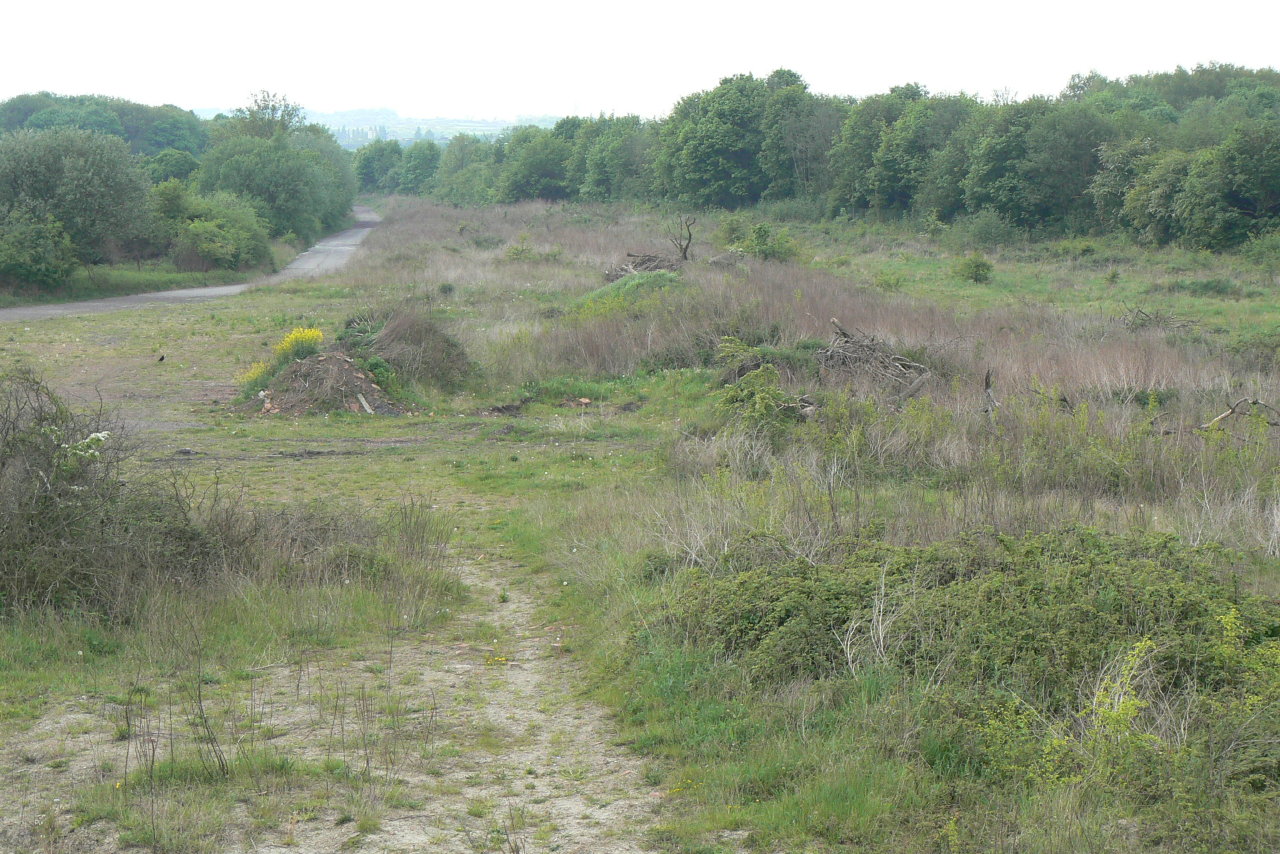
The colliery sidings site is rough open ground with scrub and a track (2010 photograph).
Overgrown embankments of the early waggonways survive in Watnall Woods.
Redevelopment
Unknown.
Nearby mines
- New London Colliery — 1.7 miles (2.7 km) SW
- Moorgreen Colliery — 1.7 miles (2.8 km) W
- Hucknall Colliery — 1.8 miles (2.9 km) NE
- Bulwell Colliery — 1.9 miles (3.1 km) SE
- Speedwell Colliery, Giltbrook — 2.2 miles (3.5 km) SW
Straight-line distance, within 9 miles (15 km). Show on the map.
Recorded claims
Individual factual claims, each attached to the source(s) that support it below. Where sources disagree, both are kept.
- In 1829 Lancelot Rolleston of Watnall Hall and Thomas Barber of Lamb Close House agreed to dig pits and mine coal on the Watnall estate at a royalty of £200 an acre, leaving coal ungot to secure the mansion. 1
- James Morley of Nuthall worked old shafts at Watnall in the 1850s; his creditors recovered his assets in 1858 and the colliery apparatus, including eight steam engines, was sold. 1
- By 1872 Barber, Walker and Co. worked Watnall and New Watnall among its collieries, and Watnall passed to the National Coal Board in 1947. 2
- Watnall Colliery, including earlier workings, is dated 1873 to 1950. 3
- Employment was 706 in 1894, 834 in 1910 and 424 in 1947, when it raised 138,000 tons. 4
- Plans of the Main Bright seam at Watnall record abandonment on 23 December 1950. 5
Photographs & further reading
A local history of the early Watnall pits, their waggonways and James Morley's failed colliery.
View sourceA list of those killed at Watnall Colliery and its earlier workings.
View sourceSources
- (secondary) Watnall Woods - The Slade and the old mining tramways - Watnall Hall — Watnall Hall history (Substack)
- (secondary) Barber, Walker and Co - Graces Guide — Grace's Guide
- (secondary) Watnall Colliery - Healey Hero (Mines Rescue) — Healey Hero
- (primary) Durham Mining Museum - Watnall Colliery (UK) — Durham Mining Museum
- (primary) BGS mine plans: Watnall (Main Bright, abandoned 23 Dec 1950) — British Geological Survey / Mining Remediation Authority
Record created: 1 October 2026 · Last researched: 1 October 2026