 MineArchive
Hucknall Colliery
| Location | Hucknall, north-west of Nottingham, Nottinghamshire — 53.0375, -1.2050 (approximate) |
|---|---|
| Commodity | Coal |
| Type | Coal |
| Worked | 1861–October 1986 |
| Maximum depth | Unknown. |
| Operators | Hucknall Colliery Co. (1861–1947), National Coal Board (1947–1986) |
Overview
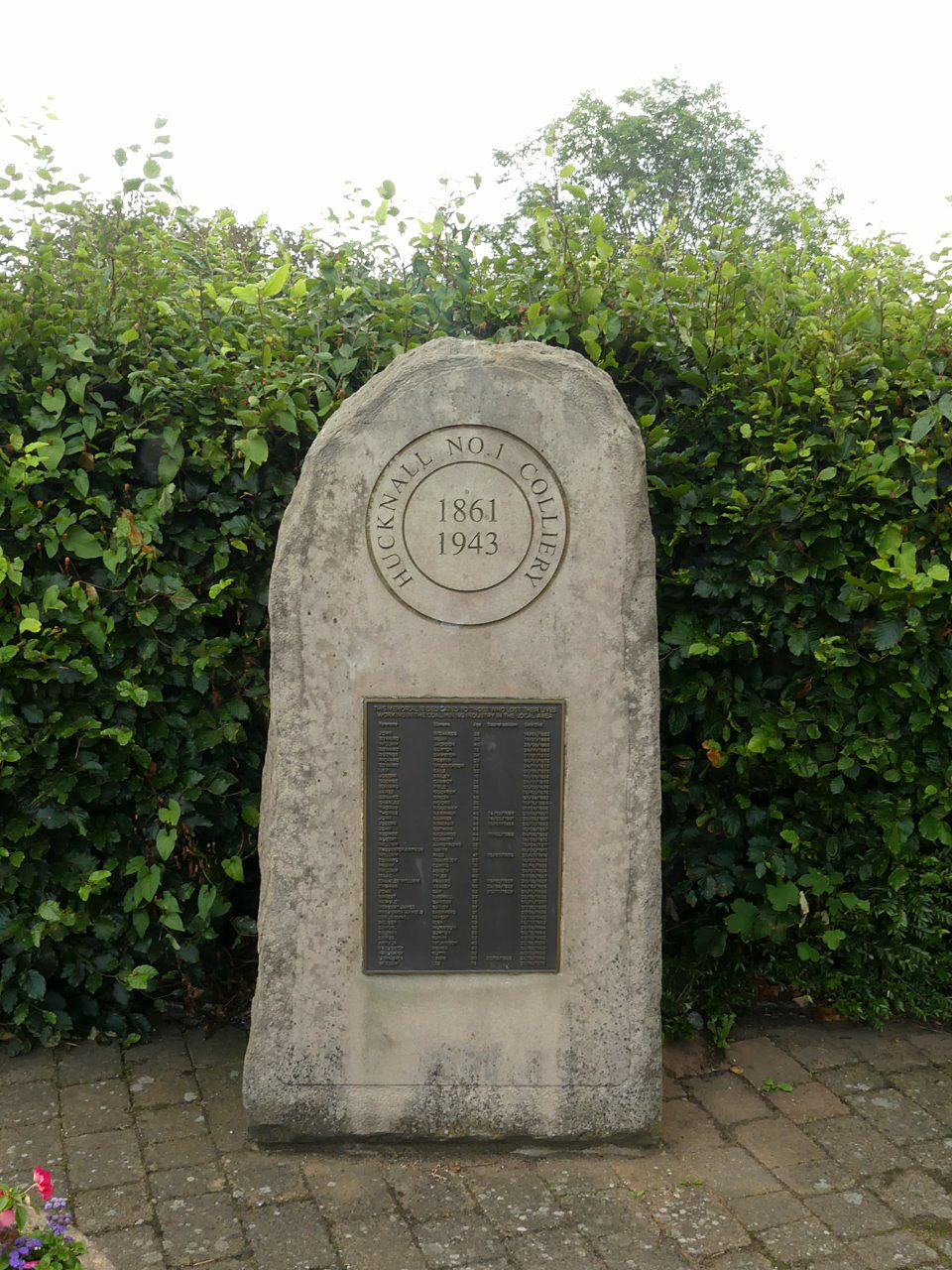
Two pits rather than one. The Hucknall Colliery Company, owned by John E. Ellis, sank No. 1 — the Top Pit — on Watnall Lane in 1861 and No. 2, the Bottom Pit, on Portland Road in 1866. Ellis had sunk a fortune into them and needed it back quickly, and his men and boys worked twelve-hour shifts, the longest in the country. The Top Pit stopped producing in 1943 but stayed open until 1960 for ventilation and services. The Bottom Pit closed in October 1986, ending 125 years of deep mining in the town.
History
Hucknall No. 1, known as the Top Pit, was sunk on Watnall Lane in 1861 by the Hucknall Colliery Company, owned by John E. Ellis; the shaft reached coal the following year. Hucknall No. 2, the Bottom Pit, followed on Portland Road in 1866. The prospect of work brought new settlers and in the twenty years after the first sinking the town’s population more than tripled, from 2,836 to about 10,000.
The Top Pit produced coal for over sixty years, stopping in 1943, but was kept open until 1960 to provide ventilation and services for the Bottom Pit. A new screening and preparation plant was completed on the surface in 1985 at a cost of around £12.2 million. The pit closed the following year all the same: it had lost £85 million over the previous five years and was said to be losing a million pounds every three weeks, on account of severe geological conditions. Hucknall closed in October 1986, and its 1,320 miners were offered redundancy or transfer.
Geology
The Nottinghamshire coalfield. Geological conditions were severe enough by the 1980s to be given as the reason the colliery could not be worked economically, whatever was spent on the surface.
Workings
Two shafts about a mile apart: No. 1, the Top Pit, on Watnall Lane, and No. 2, the Bottom Pit, on Portland Road. After the Top Pit stopped producing in 1943 it was retained as the ventilation and service shaft for the Bottom Pit until 1960. A new washery and screening plant was completed in 1985.
Closure
Closed in October 1986, a year after £12.2 million had been spent on new surface plant, having lost £85 million over five years. The closure ended 125 years of deep mining at Hucknall; the 1,320 men were offered redundancy at £8,000 for each year worked, or a transfer.
What remains
No deep mine remains at Hucknall. A memorial to the miners lost at Hucknall and nearby Linby was unveiled in 2014.
No colliery structure is known to survive.
Related mines
- Linby Colliery — Neighbouring Nottinghamshire pits whose dead are commemorated together: a single memorial to the miners lost at Hucknall and at Linby was unveiled in 2014.
Nearby mines
- Linby Colliery — 0.8 miles (1.3 km) N
- Bestwood Colliery — 1.7 miles (2.8 km) SE
- Watnall Colliery — 1.8 miles (2.9 km) SW
- Newstead Colliery — 2.0 miles (3.3 km) N
- Bulwell Colliery — 2.1 miles (3.4 km) S
Straight-line distance, within 9 miles (15 km). Show on the map.
Culture
- Hucknall Town F.C. (Sports)
The club began as Hucknall Colliery Welfare, the welfare side of the Hucknall pits, and dropped the colliery from its name in 1987, the year after Hucknall Colliery closed.
Recorded claims
Individual factual claims, each attached to the source(s) that support it below. Where sources disagree, both are kept.
- Hucknall No. 1, the Top Pit, was sunk on Watnall Lane in 1861 and reached coal the following year; Hucknall No. 2, the Bottom Pit, was sunk on Portland Road in 1866. 1
- John E. Ellis had sunk a fortune into the two pits and needed to recover it quickly; the men and boys worked twelve-hour shifts, the longest in the country. 1
- In the twenty years after the first pit was sunk, Hucknall’s population more than tripled, from 2,836 to about 10,000. 1
- No. 1 pit stopped producing coal in 1943 but stayed open until 1960, providing ventilation and services for No. 2. 1
- Hucknall closed in October 1986, a year after new screens and preparation plant costing about £12.2 million had been completed, having lost £85 million over the previous five years and losing about £1 million every three weeks because of severe geological conditions. The 1,320 miners were offered redundancy at £8,000 for each year worked, or a transfer. 2
- Ninety-six men died in Hucknall’s two mines. The first was John Richards in 1862, aged 22, killed in a gunpowder explosion; the last was Robert Griffiths in 1978, aged 26, crushed by a locomotive. The oldest was 71 and the youngest 13. 1
Photographs & further reading
A short history of both Hucknall pits with the roll of the ninety-six men killed in them, compiled by the parish church that commemorates them.
View sourceSources
- (secondary) Hucknall Collieries — St Mary Magdalene Church, Hucknall
- (secondary) Hucknall Pit Closure — The British Newspaper Archive
Record created: 8 September 2026 · Last researched: 8 September 2026