 MineArchive
Moorgreen Colliery
| Location | Moorgreen, Engine Lane, near Eastwood, Nottinghamshire — 53.0258, -1.2865 (exact) |
|---|---|
| Commodity | Coal |
| Type | Coal |
| Worked | 1865 (coal from 1871)–July 1985 |
| Maximum depth | 362 yards by 1967; the original 1865 shafts were 286 yards deep. |
| Operators | Barber, Walker and Company (1865–1947), National Coal Board (1947–1985) |
Overview
Barber, Walker and Company's largest Erewash valley pit, sunk at Moorgreen near Eastwood in 1865 and worked for a hundred and twenty years until July 1985, the last colliery in the Eastwood district to close. Two thirteen-foot shafts worked the Deep Soft and Deep Hard, output passed a million tons in 1963, and the pit was D. H. Lawrence's Minton Pit in Sons and Lovers; the site is now Colliers Wood country park and an industrial estate carrying a memorial mural.
History
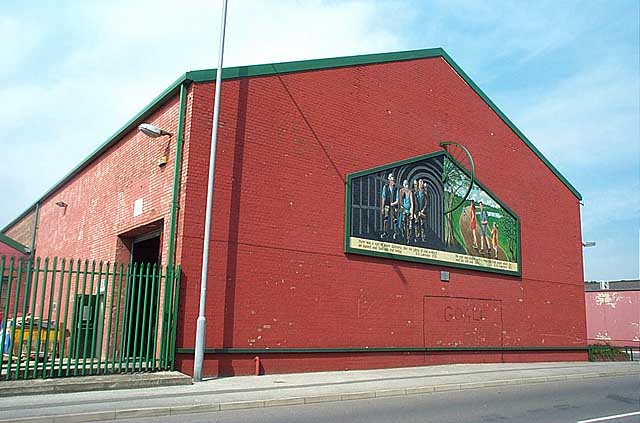
Moorgreen was one of a run of sinkings by Barber, Walker and Company, the Eastwood firm of the Barber family of Lamb Close and the Walkers of Eastwood Hall whose collieries went back to 1700: High Park in 1860, Moorgreen in 1865, Watnall in 1871, the redevelopment of Brinsley in 1872 and Selston in 1875. Sinking began in 1865 on Engine Lane close to Moorgreen reservoir; a sinker, Elijah Bradley, was killed by a fall of stone in the shaft in March 1868, and coal was first drawn in 1871 from two thirteen-foot-diameter shafts 286 yards deep, one for the bright coal of the Deep Soft and one for the hard coal of the Deep Hard. It was the company's largest venture and is said to have been the first colliery with an underground haulage system. In 1880 a fire destroyed the headstock and winding rope of the upcast shaft and halted production for a time. The pit employed 844 in 1894, 963 in 1900 and 1,150 in 1915, still on the Deep Hard and Deep Soft; in 1907 an electric plant at Moorgreen was built to power all the Eastwood collieries, and coal-cutting machinery was in use by 1913, when two men were electrocuted on a defective cutter. Three men died together under a fall of roof in 1876, and in November 1930 a man-riding train ran away down an incline, killing one man and injuring about thirty-six (see Disasters, below). Employment fell to 638 by 1933 and 633 at nationalisation in 1947, when output was 172,000 tons of household and industrial coal. The National Coal Board rebuilt the pit: by 1967 it was 362 yards deep, £1¼ million had been spent on modernisation and 1,600 men were producing over 900,000 tons a year from the Second Waterloo and Tupton seams, with a peak of a million tons in 1963. Brinsley Colliery, which stopped drawing coal in 1934, was kept open until 1970 as a second way in to Moorgreen and Pye Hill. Manpower and output then declined: in 1981 1,225 men were raising 700,000 tonnes from the Blackshale seam, still roughly what all the Barber Walker pits together had produced in the 1890s. With its seams worked out the colliery finished production in late July 1985. D. H. Lawrence, born in Eastwood in 1885 to a Brinsley collier, drew on Moorgreen as Minton Pit in Sons and Lovers and on the reservoir as Nethermere and Willey Water; a mural on one of the surviving colliery buildings at Colliers Wood carries his lines about the pits.
Geology
Worked the Middle Coal Measures seams of the Nottinghamshire side of the Erewash valley: the Deep Soft (bright coal) and Deep Hard from the two original shafts, later the Second Waterloo and Tupton under the National Coal Board and, by 1981, the Blackshale. The ground near the 1924 fatal fall was close to several small faults with the roof badly cut up by slips.
Geological setting: Sedimentary Beds and Seams (well documented example)
Workings
Two thirteen-foot shafts sunk 286 yards in 1865-71 and later deepened to 362 yards, each serving one seam; an underground haulage system from the start, horse-drawn tubs on the roadways in the 1890s, electric power from 1907, electrically driven coal-cutters on 550-volt three-phase supply by 1913, rope-hauled man-riding trains on inclines by 1930 and, in the postwar period, a colliery railway and full mechanisation. Brinsley's shafts served as a second means of access from 1934 to 1970.
Closure
Production finished in late July 1985 with the seams exhausted, the last of the Eastwood district's collieries to close. The site became the Colliers Wood country park and the Moorgreen industrial estate.
What remains
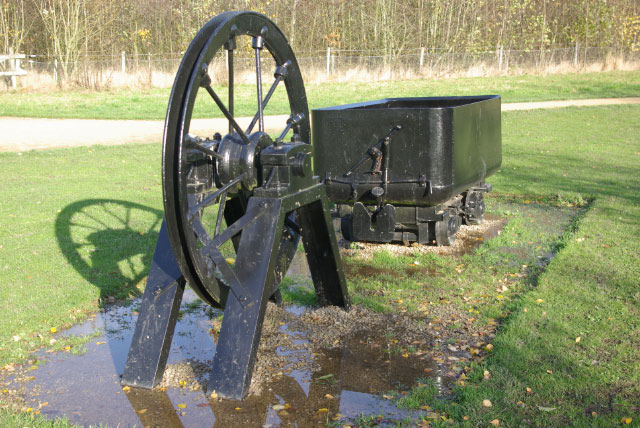
Closed and cleared. The pit site is Colliers Wood, a country park planted after closure with a Waterloo Seam memorial copse, and the Moorgreen industrial estate, where one original colliery building survives carrying a memorial mural with lines by D. H. Lawrence. A 2009 photograph notes that, a quarter of a century on, memories of the industry are fading.
One original colliery building (with the memorial mural) on the industrial estate; the rest of the site is country park.
Redevelopment
Colliers Wood country park and Moorgreen industrial estate.
Related mines
- Brinsley Colliery — Both Barber Walker pits; Brinsley stopped drawing coal in 1934 but its shafts were kept open until 1970 as a second means of access to Moorgreen and Pye Hill.
- Pye Hill Colliery — Worked together underground: output from the Selston pit, which became Pye Hill No. 1, was raised at Moorgreen until the National Coal Board drove an 800-yard surface drift at Pye Hill in the later 1960s so that it could come up at Jacksdale instead.
Nearby mines
- Brinsley Colliery — 1.1 miles (1.8 km) NW
- New London Colliery — 1.1 miles (1.8 km) SE
- Watnall Colliery — 1.7 miles (2.8 km) E
- Digby Colliery — 1.8 miles (2.9 km) S
- Underwood Colliery — 1.8 miles (2.9 km) NW
Straight-line distance, within 9 miles (15 km). Show on the map.
Disasters & major incidents
-
Moorgreen Colliery Roof Fall, 1876
26 June 1876 · Collapse / Roof Fall · 3 fatalities
A very large fall of roof over the timbering at Barber Walker's Moorgreen pit killed three men working together, a loader of nineteen, a driver of fifteen and a stallman of thirty-three. -
Moorgreen Colliery Electrocution, 1913
15 August 1913 · Machinery · 2 fatalities
Two men were electrocuted at Moorgreen while trying to make a defective electric coal-cutter work; a broken contact had put the 550-volt supply on to the frame and the earth through the cable pommel was broken. -
Moorgreen Colliery Man-riding Accident, 1930
6 November 1930 · Haulage / Transport · 1 fatality
A train of haulage trams carrying about 150 men ran away down an incline at Moorgreen, killing Thomas Bilbie and injuring about thirty-six others, six of them critically.
Culture
- D. H. Lawrence and Brinsley Colliery (Literature)
Moorgreen is 'Minton Pit' in Sons and Lovers; its owner Thomas Barber was the model for Thomas Crich in Women in Love.
Recorded claims
Individual factual claims, each attached to the source(s) that support it below. Where sources disagree, both are kept.
- Sinking began in 1865; coal production commenced in 1871 from two thirteen-foot-diameter shafts 286 yards deep, one for the Deep Soft and one for the Deep Hard. 1,2,3
- Moorgreen was one of Barber Walker's sinkings of 1860-75 (High Park 1860, Moorgreen 1865, Watnall 1871, Brinsley redeveloped 1872, Selston 1875) and was the company's largest venture. 1,3
- In 1880 a fire destroyed the headstock and winding rope of the upshaft and temporarily halted production. 3
- In 1907 an electric plant was installed at Moorgreen to supply power to all the Eastwood collieries. 3
- Employment was 844 in 1894, 963 in 1900, 1,150 in 1915, 936 in 1923, 638 in 1933 and 633 in 1947, when output was 172,000 tons. 2
- By 1967 the pit was 362 yards deep, £1¼ million had been spent on modernisation and 1,600 men produced over 900,000 tons a year from the Second Waterloo and Tupton seams; production reached 1,000,000 tons in 1963. 2,3,4
- In 1981 1,225 men produced 700,000 tonnes from the Blackshale seam, roughly the 1890s output of all the Barber Walker pits combined. 3
- The colliery closed in July 1985, its seams exhausted, the last in the Eastwood area to do so. 3,4,5
- Brinsley Colliery ceased production in 1934 but was retained as access to Moorgreen and Pye Hill until 1970. 6
- Colliers Wood, on the site of Moorgreen Colliery, was Lawrence's 'Minton Pit' in Sons and Lovers; a memorial mural on an original colliery building carries his words about the pits. 5,7
- The site is now an industrial estate and country park; the HER records the colliery at SK 47950 47849, 1865-1985. 4
- Barber, Walker and Co. was founded on collieries at Eastwood and Langley Mill worked by the Barbers from 1700, took its name about 1800, and by 1924 also owned Bentley near Doncaster and Harworth. 8
- The BGS mine-plans catalogue holds a Mining Remediation Authority abandonment plan titled 'Moorgreen' (catalogue EMST13, Spoil Tip, dated 1985). 9
Photographs & further reading
Bob Bradley's history of the pit, the 1930 Daily Mirror report of the man-riding accident and family recollections.
View sourceEvery recorded death at the pit from the 1868 sinking onwards, with inquest venues.
View sourceSources
- (secondary) Eastwood pits (healeyhero.co.uk) — healeyhero.co.uk
- (primary) Durham Mining Museum: Moorgreen Colliery — Durham Mining Museum
- (secondary) Moorgreen Colliery: pits in the East Midlands (healeyhero.co.uk) — healeyhero.co.uk
- (primary) Nottinghamshire HER monument M2372: Moorgreen Colliery, Greasley — Nottinghamshire Historic Environment Record
- (secondary) Moorgreen (Wikipedia) — Wikipedia
- (observational) Deep Mine Headstocks, Part 1: the Midlands, 2022-23 (28DaysLater) — 28DaysLater
- (observational) Mining reminders, Colliers Wood (Geograph photograph, 15 November 2009) — Geograph / Stephen McKay
- (secondary) Men of Nottingham and Nottinghamshire (1924): manufacturers, Thomas Bayley — Nottinghamshire History (Robert Mellors)
- (primary) BGS / Mining Remediation Authority mine plans: MOORGREEN — British Geological Survey / Mining Remediation Authority
- (secondary) Moorgreen Colliery fatalities, page 1 (healeyhero.co.uk) — healeyhero.co.uk
- (secondary) Moorgreen Colliery fatalities, page 2 (healeyhero.co.uk) — healeyhero.co.uk
Record created: 9 September 2026 · Last researched: 9 September 2026