 MineArchive
Digby Colliery
| Location | Giltbrook, Kimberley, near Eastwood, Nottinghamshire — 53.0009, -1.2788 (approximate) |
|---|---|
| Commodity | Coal |
| Type | Coal |
| Worked | 1866–1934–1939 |
| Maximum depth | The pumping and materials shaft was about 112 yards deep in 1878, when a banksman fell to its bottom. |
| Operators | Digby Colliery Company (1866–?), Thomas Bayley (1866–1874) |
Overview
A Nottinghamshire colliery sunk at Giltbrook, between Kimberley and Eastwood, in 1866 by the partnership that became the Digby Colliery Company. It was the company's first pit and its smallest, a few hundred men working the Deep Hard, Deep Soft and Tupton seams with an adjoining brickworks, a wharf on the Nottingham Canal and its own railway sidings, while the same company's profits went into the much larger New London pit nearby and, from 1899, into sinking Gedling Colliery east of Nottingham. Digby worked into the 1930s and had closed by the time the 1940 Colliery Year Book was compiled; the ground is now under the Giltbrook roundabout, retail park and industrial estate.
History
The Digby Colliery Company took its name from the Digby family, the historic landowners at Kimberley, and was a partnership of local men rather than a limited company at first: a partnership notice of January 1876 names Thomas Potter, William Hall, Thomas Bayley, Mary Elizabeth Hardstaff, Catherine Bayley, Charlotte Bayley and Joseph Moore as colliery owners trading at Giltbrook under that style, Hall withdrawing at that date. The principal proprietor was Thomas Bayley (died 1874), a Lenton tanner and leather dresser whose family firm also ran a tannery at Giltbrook; a Baptist lay preacher and co-founder of the Lenton Co-operative Society, Bayley was said to have two thousand people employed across his various concerns. The pit at Giltbrook was sunk in 1866, and the first recorded death there, a banksman named Meshach Chambers who fell down the shaft in October 1866 with 'no proper protection' at the pit top, belongs to the sinking. The Lists of Mines record the pit from 1869, first under Hall and Co. and from 1870 under the Digby Coal Company, the later Digby Colliery Company and, after incorporation, Digby Colliery Co. Ltd, with registered offices at 17 Derby Road, Nottingham. In 1894 the Alfreton Journal named Thomas Potter as managing partner and Granville Chambers as certificated manager, and Chambers also ran the company's New London Colliery at Newthorpe, sunk in the 1870s, which soon outgrew Digby: in 1894 Digby employed 230 men to New London's 635. Digby's workforce fluctuated between about 190 and 380 through the following forty years, peaking at 360 in 1900 and 376 in 1923. It worked the Deep Hard and Deep Soft seams in the 1890s, added the Tupton seam by 1905 and, after the older seams were given up, was working Tupton alone by 1915, raising household and manufacturing coal. A brickworks beside the pit, re-equipped with plant by Wootton Brothers of Coalville in 1893, was turning out 120,000 common, pressed and fire bricks a week in 1894, much of it for railway work; it was disused by the 1913 Ordnance Survey. The company's ambitions lay elsewhere. In 1899 it began sinking Gedling Colliery, three miles east of Nottingham, and by 1923 Gedling had 3,452 men against Digby's 376 and New London's 1,102, the company then producing about a million tons a year under its managing director Sir Henry Readett-Bayley. The colliery had a long run of individual fatal accidents, thirty or so being recorded, including a coal-cutter attendant who fell on the revolving cutters in 1906, a stone header killed forcing a frozen cartridge into a shot-hole in 1910 (a prosecution followed) and a firedamp explosion at a coal-cutter face on 5 January 1928 that killed two men (see Disasters, below). The 1933 Colliery Year Book still listed Digby with 300 men under manager E. S. Fawcett, and a roof fall killed a miner there in March 1934, but by the 1940 edition the company's Digby and New London pits had both been closed and Gedling had passed to B. A. Collieries Ltd.
Geology
The pit worked seams of the Middle Coal Measures of the Nottinghamshire-Derbyshire coalfield on the Erewash valley's eastern side: the Deep Hard and Deep Soft in the 1890s, then the Tupton, which was the only seam still worked by 1915. The company's later pits went for the Top Hard, the coalfield's best seam, which at Giltbrook had been reached by the older shallow workings of the valley long before. The clay beside the pit fed the brickworks.
Geological setting: Sedimentary Beds and Seams (well documented example)
Workings
Two shafts, one of them used for pumping water and sending down materials, with a surface layout that by the 1879 Ordnance Survey included a brickworks with its own clay pit, a wharf on the Nottingham Canal and railway sidings connecting to the Great Northern line; a locomotive shunted wagons under the screens to both the Great Northern and the Midland. Underground the pit was an early user of electrically driven coal-cutting machines, in use in the Tupton seam by 1906 and the setting of several fatal accidents; the 1928 explosion happened at a coal-cutter face. Haulage was by rope on inclines, with door boys controlling ventilation doors, and shot-firing used Rippite cartridges.
Closure
No directly read source gives the closing date. The 1933 Colliery Year Book lists Digby with 300 men, the last recorded fatality there is a roof fall in March 1934, and the 1940 Year Book records that 'the Digby and New London pits have been closed'. The company's New London Colliery closed in 1937 and the two pits are generally said to have shut together, so 1937 is the probable year, but that remains unconfirmed here. Both pits were small, ageing and by then dwarfed by the company's Gedling Colliery.
What remains
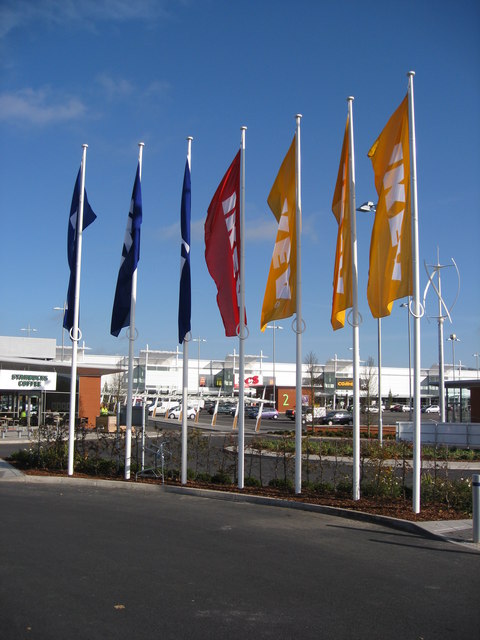
Nothing of the colliery stands. The brickworks kilns lay where the A610/A6010 roundabout at Giltbrook now is, industrial units on Arctic Way occupy the brickworks buildings' site, and the former clay pit is a recycling centre; the Giltbrook Retail Park, built from the 2000s around IKEA, stands within a few hundred metres of the recorded shaft position.
No headstocks, buildings or spoil are known to survive; the site was levelled, and the Historic Environment Record holds the colliery and its sidings only as map depictions from the Ordnance Survey county series.
Redevelopment
Road junction, industrial estate, recycling centre and retail park.
Related mines
- Gedling Colliery — Both sunk and owned by the Digby Colliery Company: Digby (1866) was the company's original Giltbrook pit, and its profits went into sinking Gedling from 1899; the 1923 Colliery Year Book lists them together with New London.
- New London Colliery — Both Digby Colliery Company pits, run from the same offices and archived together as 'New London and Digby, at Giltbrook Colliery'; New London was the larger of the two and both closed in the 1930s.
- Speedwell Colliery, Giltbrook — Worked by the same firm, returned as the Digby Coal Co. for both pits in the 1880 List of Mines, and both served by the Bennerley and Bulwell Railway.
Nearby mines
- Speedwell Colliery, Giltbrook — 0.4 miles (0.7 km) SE
- New London Colliery — 0.7 miles (1.1 km) N
- Awsworth Colliery — 1.1 miles (1.8 km) SW
- Cotmanhay Colliery — 1.3 miles (2.0 km) W, Derbyshire
- Cossall Colliery — 1.5 miles (2.5 km) S
Straight-line distance, within 9 miles (15 km). Show on the map.
Disasters & major incidents
-
Digby Colliery Explosion, 1928
5 January 1928 · Explosion · 2 fatalities
A firedamp explosion at an electrically driven coal-cutter face at Digby Colliery, Giltbrook, killed two Awsworth men, James Briggs and George Dawes, and burned a third; the inquest found the men had gone down without a flame safety lamp and could not say what ignited the gas.
What's uncertain
Points where sources disagree or the record could not be settled; both accounts are kept. All open questions in the archive.
- The colliery closed in 1937, the year the company's New London Colliery shut; a widely repeated date of 5 November 1937 is not recorded to a readable source. (uncertain) 7,2
- One published brickworks history gives the colliery's closure as 1928, which is contradicted by the 1933 Year Book listing and a fatality at the pit in March 1934. (disputed) 1,3
- The BGS mine-plans catalogue holds a Mining Remediation Authority abandonment plan titled 'Digby' (catalogue 10011, Tupton, dated 1930); the catalogue gives no location and the plan's details do not clearly tie it to this working, so it may belong to another of the same name. (uncertain) 9
Recorded claims
Individual factual claims, each attached to the source(s) that support it below. Where sources disagree, both are kept.
- The colliery at Giltbrook was sunk in 1866; the first recorded death there, a banksman who fell down the shaft, is dated October 1866. 1,2,3
- In January 1876 the Digby Colliery Company was a partnership of Thomas Potter, William Hall, Thomas Bayley, Mary Elizabeth Hardstaff, Catherine Bayley, Charlotte Bayley and Joseph Moore, trading as colliery owners at Giltbrook; Hall withdrew at that date. 4
- Thomas Bayley (died 1874), the Lenton tanner, was the principal proprietor of the Digby Colliery Company. 5
- The Lists of Mines record the pit from 1869 under Hall and Co., from 1870 under the Digby Coal Co. and from 1895 under the Digby Colliery Co., through to 1930. 6
- Employment was 230 in 1894, 360 in 1900, 187 in 1905, 332 in 1910, 376 in 1923 and 300 in 1933. 1,7
- The pit worked the Deep Hard and Deep Soft seams in the 1890s, added the Tupton by 1905, and by 1915 was working the Tupton alone. 1
- The adjoining brickworks was making 120,000 bricks a week in 1894 with plant by Wootton Brothers of Coalville installed the previous year, and was marked disused on the 1913 Ordnance Survey. 3
- The colliery and brickworks had their own wharf on the Nottingham Canal and railway sidings onto the Great Northern line, and also sent wagons onto the Midland. 8,3
- The Digby Colliery Company began sinking Gedling Colliery in 1899-1900, and by 1923 Gedling employed 3,452 against Digby's 376. 7
- Digby was still listed with 300 men in the 1933 Colliery Year Book and had closed by the 1940 edition, which records that 'the Digby and New London pits have been closed'. 7
- The colliery closed in 1937, the year the company's New London Colliery shut; a widely repeated date of 5 November 1937 is not recorded to a readable source. (uncertain) 7,2
- One published brickworks history gives the colliery's closure as 1928, which is contradicted by the 1933 Year Book listing and a fatality at the pit in March 1934. (disputed) 1,3
- The pumping and materials shaft was about 112 yards deep in November 1878, when head banksman William Downes fell to its bottom. 8
- The brickworks kilns stood where the A6010/A610 roundabout now is, industrial units on Arctic Way occupy the brickworks buildings' site, and the former clay pit is a recycling centre. 3
- The BGS mine-plans catalogue holds a Mining Remediation Authority abandonment plan titled 'Digby' (catalogue 10011, Tupton, dated 1930); the catalogue gives no location and the plan's details do not clearly tie it to this working, so it may belong to another of the same name. (uncertain) 9
Photographs & further reading
Every recorded death at the pit from 1866 to 1934 with inquest venue, and links to the newspaper inquest transcripts.
View sourceA photograph of the working colliery around 1910 in the Derbyshire and Nottinghamshire archive collection; not freely licensed, so linked rather than shown here.
View sourceThe brickworks history with 1879 and 1900 Ordnance Survey extracts showing the colliery, canal wharf and sidings, and what stands on the ground now.
View sourceSources
- (primary) Durham Mining Museum: Digby Colliery — Durham Mining Museum
- (secondary) Digby Colliery fatalities 1866-1934 — healeyhero.co.uk
- (secondary) West Notts. Brickworks: Digby Colliery — East Midlands Named Bricks
- (primary) Partnership dissolution notice, Digby Colliery Company, 22 January 1876 (DMM transcript) — Durham Mining Museum
- (secondary) Men of Nottingham and Nottinghamshire (1924): manufacturers, Thomas Bayley — Nottinghamshire History (Robert Mellors)
- (secondary) Buddlepit mine database: Digby (NMRS list entry) — Buddlepit / Northern Mine Research Society
- (primary) Durham Mining Museum: Digby Colliery Co., Ltd. (Colliery Year Book extracts 1894-1940) — Durham Mining Museum
- (primary) Inquest reports from newspapers, Digby Colliery, page 1 (1868-1903) — healeyhero.co.uk
- (primary) BGS / Mining Remediation Authority mine plans: DIGBY — British Geological Survey / Mining Remediation Authority
- (observational) Giltbrook Retail Park (Geograph photograph, 29 October 2008) — Geograph / Alan Heardman
- (primary) Inquest reports from newspapers, Digby Colliery, page 2 (1906-1934) — healeyhero.co.uk
- (primary) Nottinghamshire HER event ENT307, OS County Series: Digby Colliery and Digby Sidings map depictions — Nottinghamshire Historic Environment Record
Record created: 9 September 2026 · Last researched: 9 September 2026