 MineArchive
Annesley Colliery
| Also known as | Annesley/Bentinck Mine, Annesley-Bentinck Colliery |
|---|---|
| Location | Annesley, near Kirkby-in-Ashfield, Nottinghamshire — 53.0778, -1.2403 (exact) |
| Commodity | Coal |
| Type | Coal |
| Worked | 1867–January 2000 |
| Maximum depth | 649 yards (593 m), per an NCB leaflet of 1967 |
| Operators | Annesley Colliery Company (1865–1924), New Hucknall Colliery Company Limited (1924–1947), National Coal Board (1947–1987), British Coal Corporation (1987–1994), Midlands Mining plc (1994–2000) |
Overview
Twin shafts were sunk at Annesley from 1865 by the Worswick family of Leicestershire, reaching the Top Hard seam in 1867. That seam carried the colliery for its first fifty years, and the pit then worked steadily downwards through the Deep Hard, Deep Soft, Tupton and finally the Thick Black Shale. It was bought by the New Hucknall Colliery Company in 1924, nationalised in 1947, and merged with its neighbour to become the Annesley/Bentinck Mine in 1988. When Linby stopped in March 1988 Annesley was left as the last working pit in the Leen Valley. Production finished over the weekend of 29–30 January 2000, ending deep mining in the Ashfield region after some 180 years.
History
Sinking began on 1 January 1865, and the twin thirteen-foot shafts reached the Top Hard at 1867. Like every other pit in the Leen Valley, Annesley was built on the Top Hard, and it remained the basis of operations for roughly fifty years. The colliery village went up with it: 160 cottages in the terraces known locally as the Annesley Rows, built between 1869 and 1873. The mine inspectors’ lists and the local inquest records give a picture of the working life behind that growth — a man drowned in the sump in 1865, a fourteen-year-old killed by a fall of roof in 1869, a run of deaths under tubs through the 1880s, and in June 1877 seven men suffocated by afterdamp while clearing the site of an underground fire (see Disasters, below).
The shafts were deepened to the Deep Hard in 1914, worked until 1950 alongside the Deep Soft, and the Deep Soft continued until 1983. Employment held at around 1,300 from the 1890s to the 1930s, dipping in wartime; an NCB leaflet of 1967 described a pit 649 yards deep where 800 men produced over 450,000 tons a year from the Deep Soft. The colliery had been bought by the New Hucknall Colliery Company in 1924, and passed to the National Coal Board on 1 January 1947, becoming part of its South Nottinghamshire area in 1967. It appeared in two television documentaries in the early 1970s, on Panorama and World in Action.
The last quarter-century was one of consolidation into a larger complex. The Tupton seam was reached in 1978 and abandoned in 1980 on geological grounds. By 1981 coal had stopped coming up the Annesley shafts altogether and was being diverted underground to the surface at Bentinck. Annesley joined the Annesley, Bentinck and Newstead complex in 1985, was rebuilt in 1986 with all future work based in the Thick Black Shale, and formally became the Annesley/Bentinck Mine in 1988. Midlands Mining plc announced in January 1999 that it intended to close the pit by the end of the year, citing geological problems and market conditions; the last shift was worked on Friday 28 January 2000, with final production from the BS 101 face over that weekend.
Geology
Annesley worked the Nottinghamshire coalfield on the eastern edge of the exposed Coal Measures, where the seams dip east beneath the Permian cover. The Top Hard — the same seam known further north as the Barnsley Bed — lay at 420 yards and was the making of every pit in the Leen Valley. Beneath it the colliery took the Deep Hard, the Deep Soft, briefly the Tupton, and last the Thick Black Shale, the shafts reaching 649 yards. The Tupton was given up in 1980 because of ground conditions rather than exhaustion, and geological difficulty was one of the two reasons given for the final closure.
Geological setting: Sedimentary Beds and Seams (well documented example)
Workings
Twin shafts thirteen feet in diameter, sunk from 1865 and deepened repeatedly as the colliery worked down the succession. Haulage on the surface and underground ran on endless rope roads — the inquest lists are full of men run over by tubs and caught by clips and haulage ropes, the commonest way to die at Annesley by a wide margin. From 1981 the pit stopped winding coal of its own: output went underground to Bentinck and up that colliery’s shafts instead, an arrangement formalised when the two became one mine in 1988. A major reconstruction in 1986 abandoned the Tupton and Deep Hard workings and concentrated everything in the Thick Black Shale.
Closure
Midlands Mining plc announced in January 1999 that it intended to close Annesley-Bentinck by the end of that year because of geological problems and adverse market conditions. The last shift was completed on Friday 28 January 2000 and the final coal came off the BS 101 face over the weekend of 29–30 January. It ended deep mining in the Ashfield region of Nottinghamshire after about 180 years, and closed the last of the Leen Valley pits.
What remains
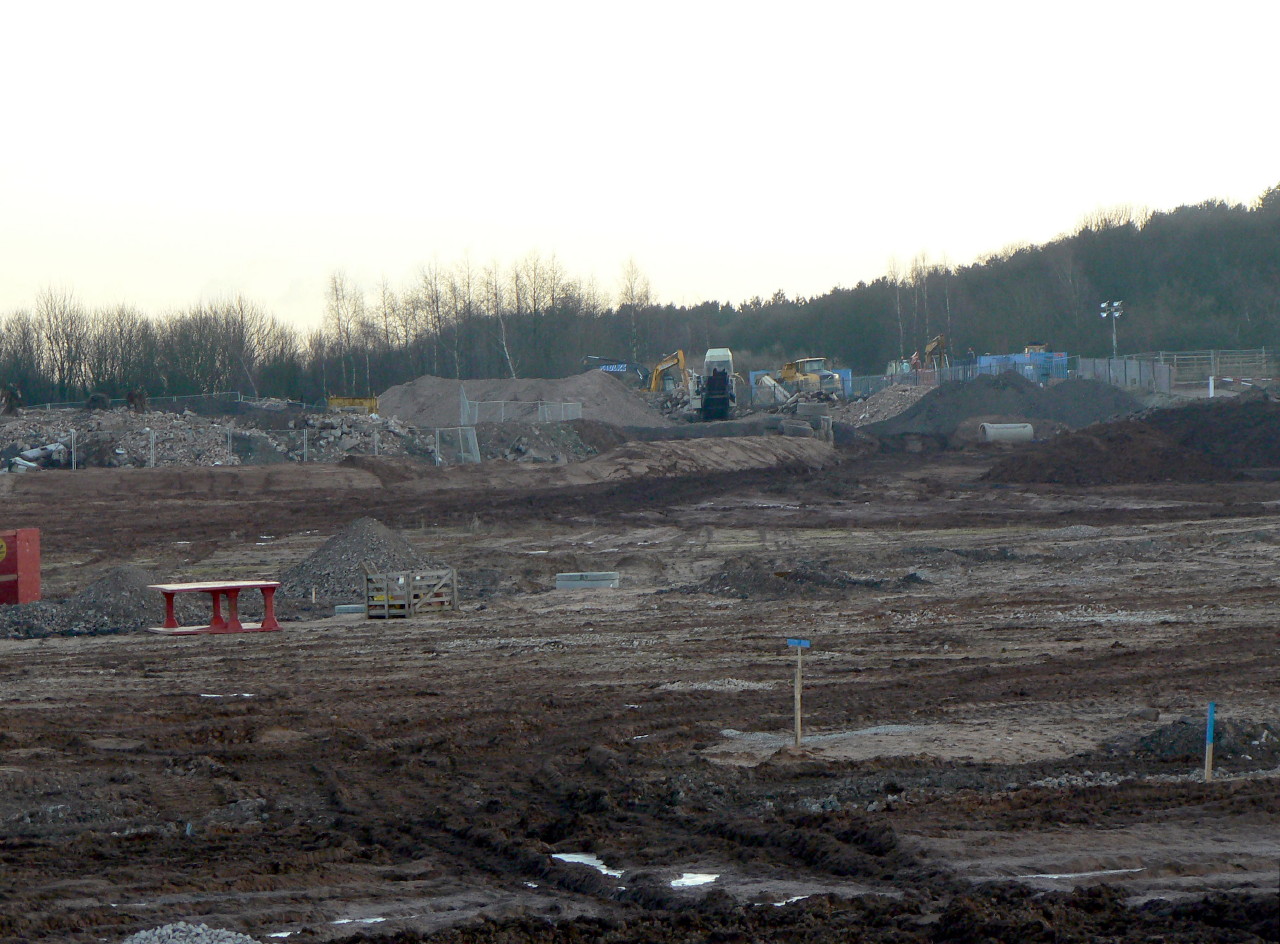
Mostly demolished, and demolished in the teeth of an argument about it. The colliery and its village were declared a conservation area in 1999, in acknowledgement that the village was a near-intact mining community, but Persimmon Homes held outline permission for up to 200 houses on the site and applied to pull down the headstock. Local support for demolition was broad: the district council backed it and Annesley and Felley Parish Council, after a public consultation, agreed not to oppose it, saying that in an ideal world it would keep the headstocks but that repairs alone would cost around £500,000. The Annesley Conservation Trust ran a campaign and sought funding for a feasibility study, and in June 2008 the headstock, pit baths and several other buildings were still standing, though work on the site had already begun. Explorers visiting in 2009 recorded what was left before it went.
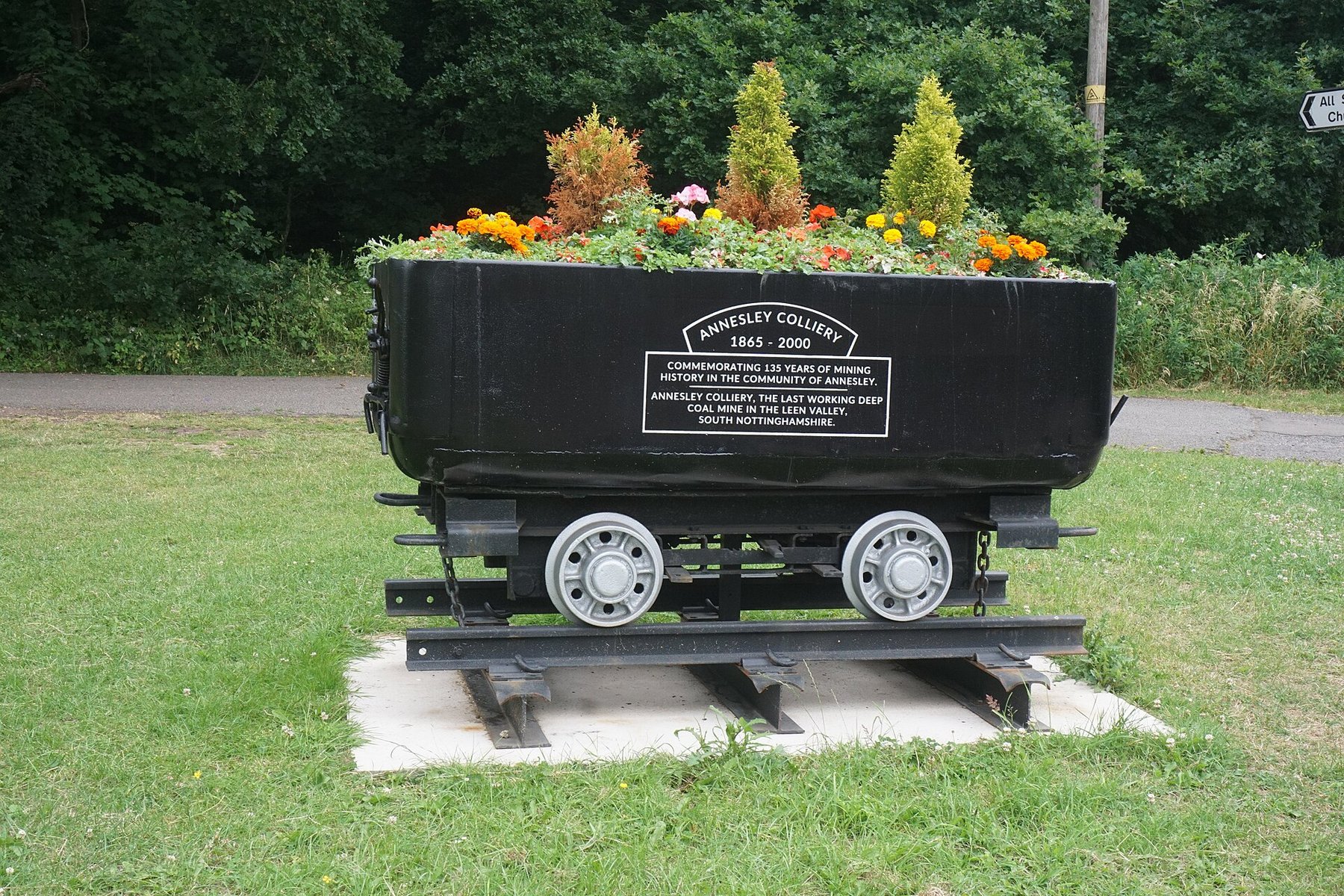
The Annesley Rows — 160 terraced cottages built between 1869 and 1873, reflecting the urban domestic vernacular of the late nineteenth century — survive as the core of the conservation area. The 1930s pit baths, in a period art deco style, and one headstock stood into the late 2000s in dilapidated and vandalised condition. A colliery memorial has since been put up on the site.
Redevelopment
Housing, under outline permission granted to Persimmon Homes for up to 200 dwellings.
Related mines
- Linby Colliery — Neighbouring Leen Valley pits founded on the same Top Hard seam and sharing its history: when Linby ceased production in March 1988 it left Annesley as the last working pit in the valley, which Annesley remained until 2000.
Nearby mines
- Newstead Colliery — 1.8 miles (3.0 km) SE
- Kirkby Colliery — 2.2 miles (3.5 km) N
- Langton Colliery — 2.3 miles (3.7 km) NW
- Linby Colliery — 2.5 miles (4.0 km) SE
- Brookhill Colliery — 3.0 miles (4.8 km) W, Derbyshire
Straight-line distance, within 9 miles (15 km). Show on the map.
Disasters & major incidents
-
Annesley Colliery fire and afterdamp
26–27 June 1877 · Gas / Asphyxiation · 7 fatalities
Seven men died of carbon monoxide poisoning at Annesley Colliery while working to reach and remove the seat of a fire that had been sealed behind a stopping since May. Some were killed going back in after the others. -
Annesley Colliery runaway tubs, 1907
15 August 1907 · Haulage / Transport · 2 fatalities
On 15 August 1907 two datallers were run down by a runaway train of tubs at Annesley Colliery, in Nottinghamshire, as they walked to their work; both died the next day.
Culture
- Harold Larwood and Annesley Colliery (Sports)
Larwood was an Annesley man for nine years, and the colliery's own signing-on books are the evidence of how he was employed while he played for Nottinghamshire.
What's uncertain
Points where sources disagree or the record could not be settled; both accounts are kept. All open questions in the archive.
- The BGS mine-plans catalogue holds a Mining Remediation Authority abandonment plan titled 'Annesley' (catalogue EM1211, Deep Soft, dated 1983); the catalogue gives no location and the plan's details do not clearly tie it to this working, so it may belong to another of the same name. (uncertain) 3
Recorded claims
Individual factual claims, each attached to the source(s) that support it below. Where sources disagree, both are kept.
- The shafts were sunk between 1865 and 1867 by the Worswick family from Leicestershire, reaching the Top Hard seam in 1867. 1,2
- An NCB leaflet of June 1967 described Annesley as 649 yards deep, with 800 men producing over 450,000 tons a year from the Deep Soft seam and output eventually to be surfaced at Bentinck. 2
- The Top Hard carried the colliery for its first fifty years; the shafts were deepened to the Deep Hard in 1914, the Deep Soft was worked until 1983, the Tupton was reached in 1978 and abandoned in 1980 on geological grounds, and from 1986 all work was based in the Thick Black Shale. 1
- The colliery was bought by the New Hucknall Colliery Company in 1924 and passed to the National Coal Board on 1 January 1947, joining its South Nottinghamshire area in 1967. 1,2
- Production finished over the weekend of 29–30 January 2000 from the BS 101 face, ending deep mining in the Ashfield region after about 180 years. 1
- Annesley Colliery and its village were declared a conservation area in 1999 in acknowledgement that the village represents a near-intact mining community; the Annesley Rows comprise 160 cottages built between 1869 and 1873. 1
- The colliery employed around 1,300 people from the 1890s to the 1930s — 1,273 in 1894 and 1,347 in 1905 — falling to 888 by 1947. 2
- The BGS mine-plans catalogue holds a Mining Remediation Authority abandonment plan titled 'Annesley' (catalogue EM1211, Deep Soft, dated 1983); the catalogue gives no location and the plan's details do not clearly tie it to this working, so it may belong to another of the same name. (uncertain) 3
Photographs & further reading
Nick Catford’s 2008 account of the colliery, tracing it seam by seam from the Top Hard in 1867 to the Thick Black Shale, and setting out the argument over demolishing the headstock and pit baths inside the 1999 conservation area.
View sourceA transcription of the Nottinghamshire coalfield inquest records for Annesley, naming each man, his age and address, the date of the accident, the inn or colliery office where the inquest was held, and how he died.
View sourceThe museum’s compiled record: owners, seams worked and employment figures taken from the mine inspectors’ lists at five-year intervals from 1894, the 1967 NCB description of the pit, and the names of those killed there.
View sourceSources
- (secondary) Annesley Colliery — Nick Catford, Subterranea Britannica
- (primary) Annesley Colliery (Nottinghamshire) — Durham Mining Museum
- (primary) BGS / Mining Remediation Authority mine plans: ANNESLEY — British Geological Survey / Mining Remediation Authority
- (observational) Annesley Colliery, Nottinghamshire (visit report, May 2009) — Derelict Places
- (primary) MNT27856 — 1877 Annesley Colliery Disaster Memorial — Nottinghamshire Historic Environment Record
- (secondary) Annesley Colliery 1865–2000: record of fatalities and inquests — Healey Hero, Nottinghamshire Coalfield
Record created: 6 September 2026 · Last researched: 6 September 2026