 MineArchive
Harold Larwood and Annesley Colliery
| Category | Sports |
|---|---|
| Dates | Born 14 November 1904 at Nuncargate; started at Annesley Colliery 1918; Nottinghamshire second eleven 1923; England debut 1926; left the colliery books 1927; Bodyline series 1932-33; emigrated to Australia 1952; died 1995 |
The fast bowler at the centre of the Bodyline Ashes was a Nottinghamshire miner: Harold Larwood worked at Annesley Colliery from 1918 to 1927, one of four England internationals the pit produced, and the colliery's signing-on books kept him on the surface so that he could play at Trent Bridge in the summer.
The mining history in this record
Harold Larwood was born on 14 November 1904 at Nuncargate, near Kirkby-in-Ashfield, the fourth of five sons of Robert Larwood, a miner, and his wife Mary. He left Kirkby Woodhouse School in 1917 at thirteen, worked briefly at the miners' co-operative store, and in 1918 began at Annesley Colliery in charge of a team of pit ponies. His father Bob and his brother Fred worked there too. He played for Nuncargate, reached its first team by 1920, went to Trent Bridge for a trial, joined Nottinghamshire's second eleven in 1923 and made his first-team debut at nineteen.
He stayed on the colliery books until 1927, by then a Test cricketer: he had played for England against Australia in 1926, the summer the Ashes came back. The Annesley signing-on books that survive from the 1920s and 1930s record him as a surface worker — a bank lad, and in 1925 a banksman — and other county cricketers appear in them the same way. Keeping them on the surface kept them on the payroll through the cricket season and out of the dangerous work underground.
Annesley has a particular place in local cricket folklore: four England internationals came out of it in the early twentieth century — Joe Hardstaff senior, Fred Barratt, Harold Larwood and Joe Hardstaff junior. Bill Voce, Larwood's fast-bowling partner for county and country, was another former miner who played for the Annesley colliery team before his 1926 trial. The district around Kirkby was known as the nursery of cricket, and the collieries provided the grounds, the amenities and a good many of the players.
People
Harold Larwood (1904-1995), fast bowler for Nottinghamshire and England, at Annesley Colliery 1918-1927; his father Robert and brother Fred, also Annesley men; Bill Voce, his fast-bowling partner, who played for the Annesley colliery team; Joe Hardstaff senior, Fred Barratt and Joe Hardstaff junior, the other England internationals who worked at the pit; Andrew McGrath, Larwood's grandson, who visited the colliery in 1993.
Legacy today
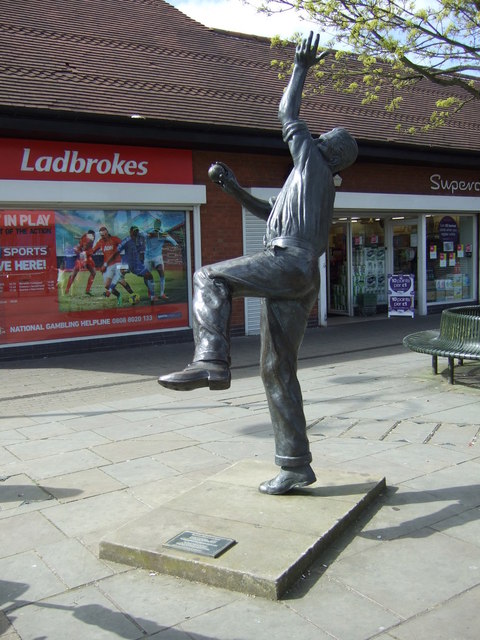
Larwood took 33 wickets in the Bodyline series of 1932-33, which England won 4-1 and which came close to breaking relations between the two countries; asked afterwards to apologise for bowling as his captain had told him to, he refused, and never played for England again. He emigrated to Australia in 1952 and died there in 1995, aged 90. In 1993 his grandson Andrew McGrath came from Australia, went underground at Annesley, and left papers from his grandfather's collection with local cricket clubs. Statues of Larwood and Voce stand at Kirkby-in-Ashfield market place, Larwood's unveiled to coincide with a 2002 booklet on the district as the nursery of cricket; a third, of Don Bradman, has since joined them. Annesley Colliery itself closed as Annesley-Bentinck in 2000 and its site is now housing.
Recorded claims
Individual factual claims, each tagged with how solidly it's grounded and attached to the source(s) that support it. Where sources disagree, both are kept.
- Harold Larwood began work at Annesley Colliery in 1918, aged fourteen, in charge of a team of pit ponies, and was employed there until 1927. (documented fact) 1,2,3
- The surviving Annesley signing-on books record Larwood as a surface worker, a bank lad, as they do other county cricketers of the period. (documented fact) 4,1
- Keeping the cricketers on surface work kept them on the colliery books through the season and away from the dangers of working underground. (reasonable inference, uncertain) 1
- Larwood's father Bob and his brother Fred also worked at Annesley Colliery. (documented fact) 1
- Annesley Colliery produced four England cricketers in the early twentieth century: Joe Hardstaff senior, Fred Barratt, Harold Larwood and Joe Hardstaff junior. (documented fact) 4,1
- Larwood took 33 wickets in the 1932-33 Ashes series, refused afterwards to apologise for the bowling he had been instructed to use, and never played for England again. (documented fact) 1,2
- In 1993 Larwood's grandson Andrew McGrath travelled from Australia, was taken underground at Annesley Colliery, and deposited papers from his grandfather's collection with local cricket clubs. (documented fact) 1
Mines
- Annesley Colliery — Nottinghamshire
Larwood was an Annesley man for nine years, and the colliery's own signing-on books are the evidence of how he was employed while he played for Nottinghamshire.
Sources
- (secondary) A Brief History of Annesley Colliery — Mining Heritage
- (secondary) Harold Larwood — Wikipedia
- (secondary) Larwood and Voce — Discover Ashfield
- (secondary) Shout Down the Shaft for a Fast Bowler — Mining Heritage
Record created: 18 September 2026 · Last researched: 24 September 2026