 MineArchive
Dolaucothi Gold Mines
| Location | Pumsaint, Carmarthenshire — 52.0436, -3.9502 (exact) |
|---|---|
| Commodity | Gold |
| Type | Metal |
| Worked | c. 70 AD–1938 |
| Maximum depth | 480 ft (146 m) at Mitchell's 1909 shaft, the deepest known on site |
| Operators | South Wales Gold Mining Company (1888–?), Ogofau Proprietary Gold Mining Company (1905–1912), Roman Deep Ltd (1930–1938), British Goldfields (No 1) Ltd (1937–1938) |
Overview
Dolaucothi is the only confirmed Roman gold mine in Britain, and one of very few Roman gold mines known anywhere in the empire outside Iberia. Worked intensively by the Romans using aqueduct-fed water power, then forgotten for over a millennium and a half before a series of Victorian and 20th-century companies tried, and mostly failed, to make it pay again.
History
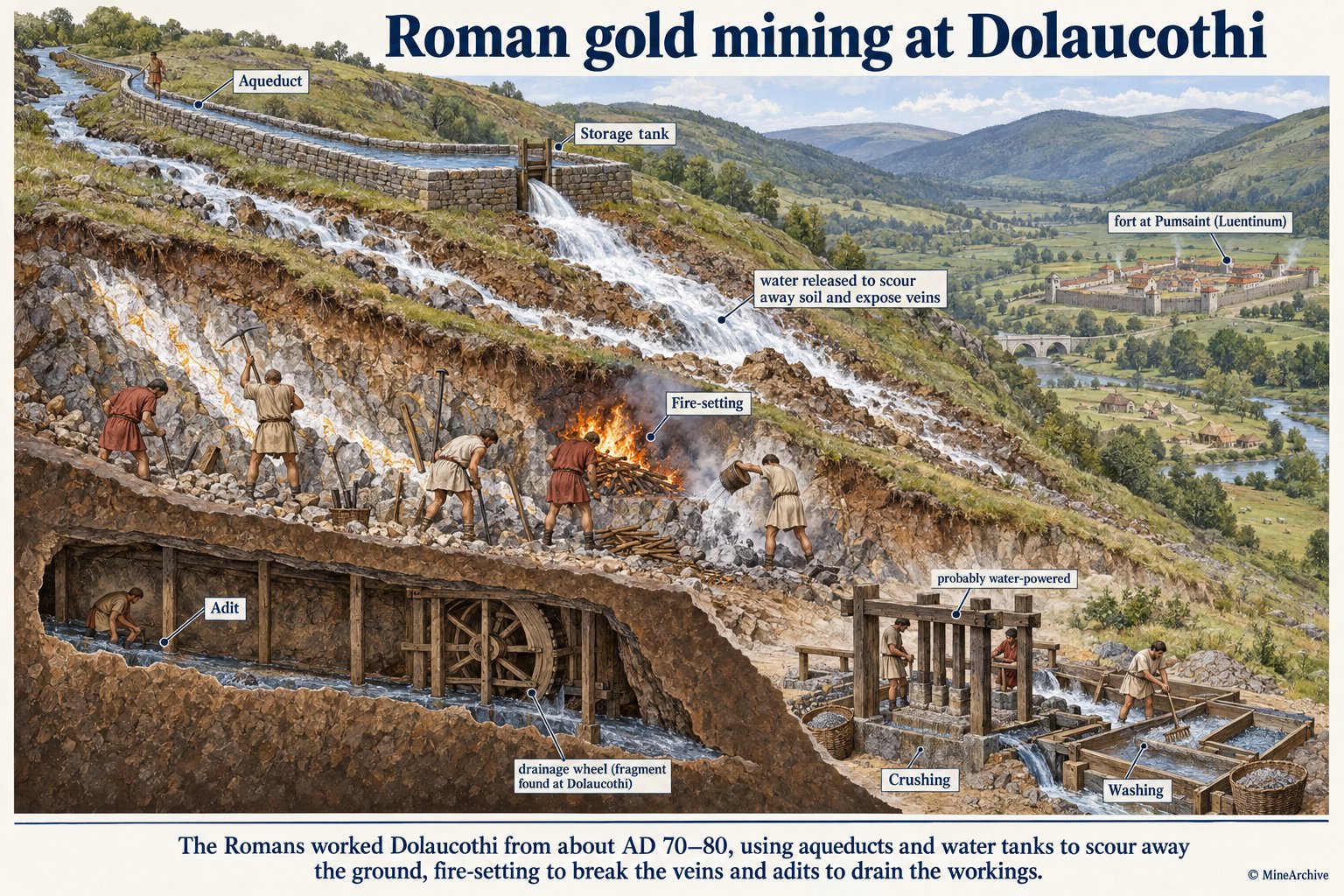
The Romans began extensively mining gold at Dolaucothi around 70 AD, using picks, hammers and, crucially, hydraulic power: aqueducts up to seven miles long carried water from the River Cothi to sluice away topsoil and wash ore as it was dug, in a technique called hushing. A fort, Luentinum, was established near the mine around 78 AD to guard the operation, sending convicts and prisoners of war to work the mine as punishment; it was seemingly abandoned around 50 years later, though coin evidence suggests some activity at the mine continued into the late 4th century. A gold bracelet fragment from a Roman-era cache found nearby in 1797 is now in the British Museum.
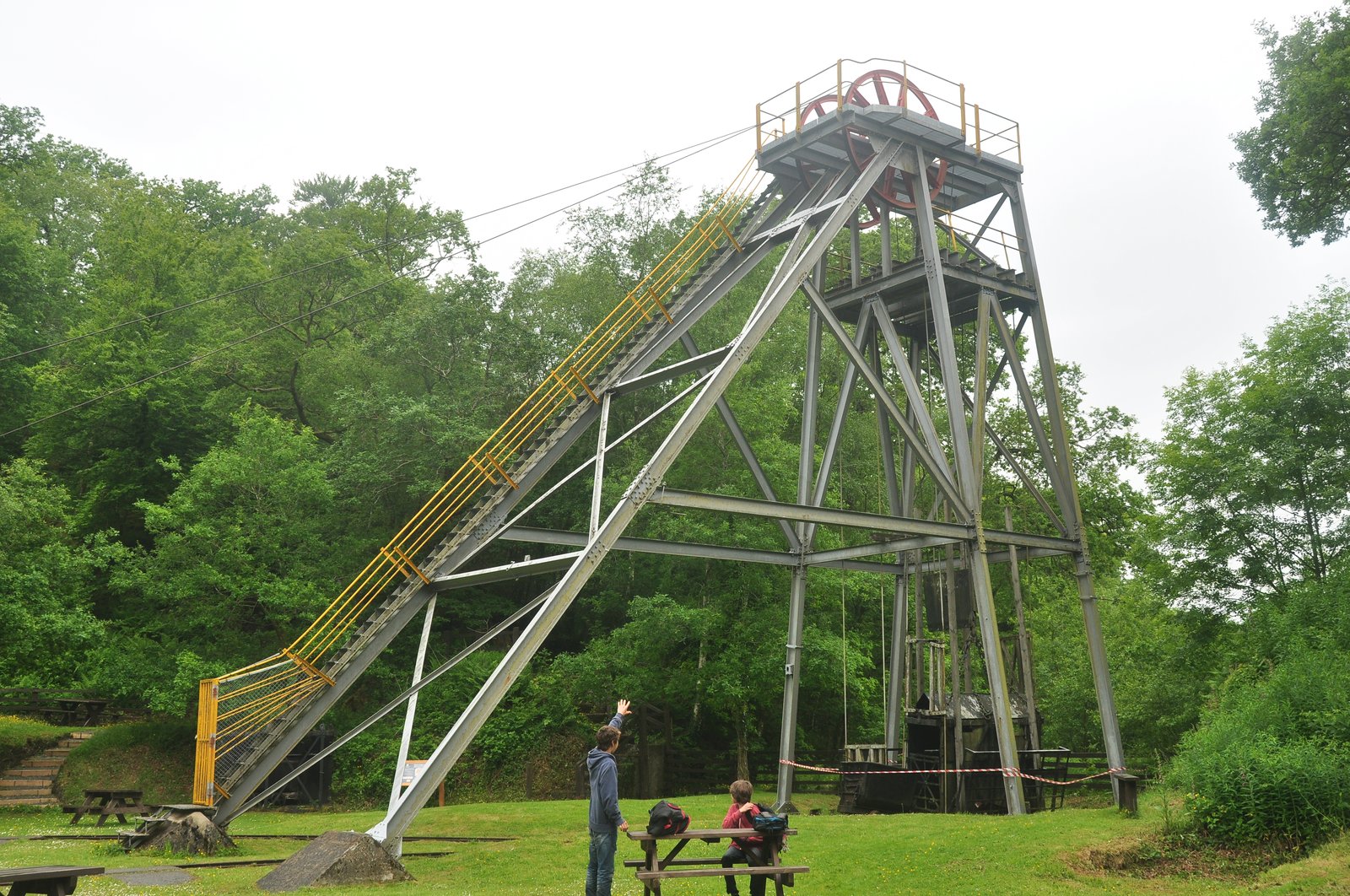
Knowledge of the mines' location and workings was effectively lost after the Roman period and not revived until the Victorian era: the South Wales Gold Mining Company, founded by Edward Jones in 1888, was the first of several companies to attempt a reopening. James Mitchell reopened the mines again in 1905 as the Ogofau Proprietary Gold Mining Company, sinking a shaft to 480 ft — the deepest known on the site — before operations ceased in 1912, defeated by flooded Roman workings and high pumping costs. Roman Deep Ltd developed the site further in the 1930s, uncovering Roman wooden ladders, scaffolding and a drainage wheel in the process, and a small quantity of Dolaucothi gold reportedly went into commemorative items for Prince George's 1934 wedding. The final operator, British Goldfields (No 1) Ltd, took over in 1937 with a workforce of 150–200 people, but mining stopped for good in October 1938, and the surface buildings were removed within two years.
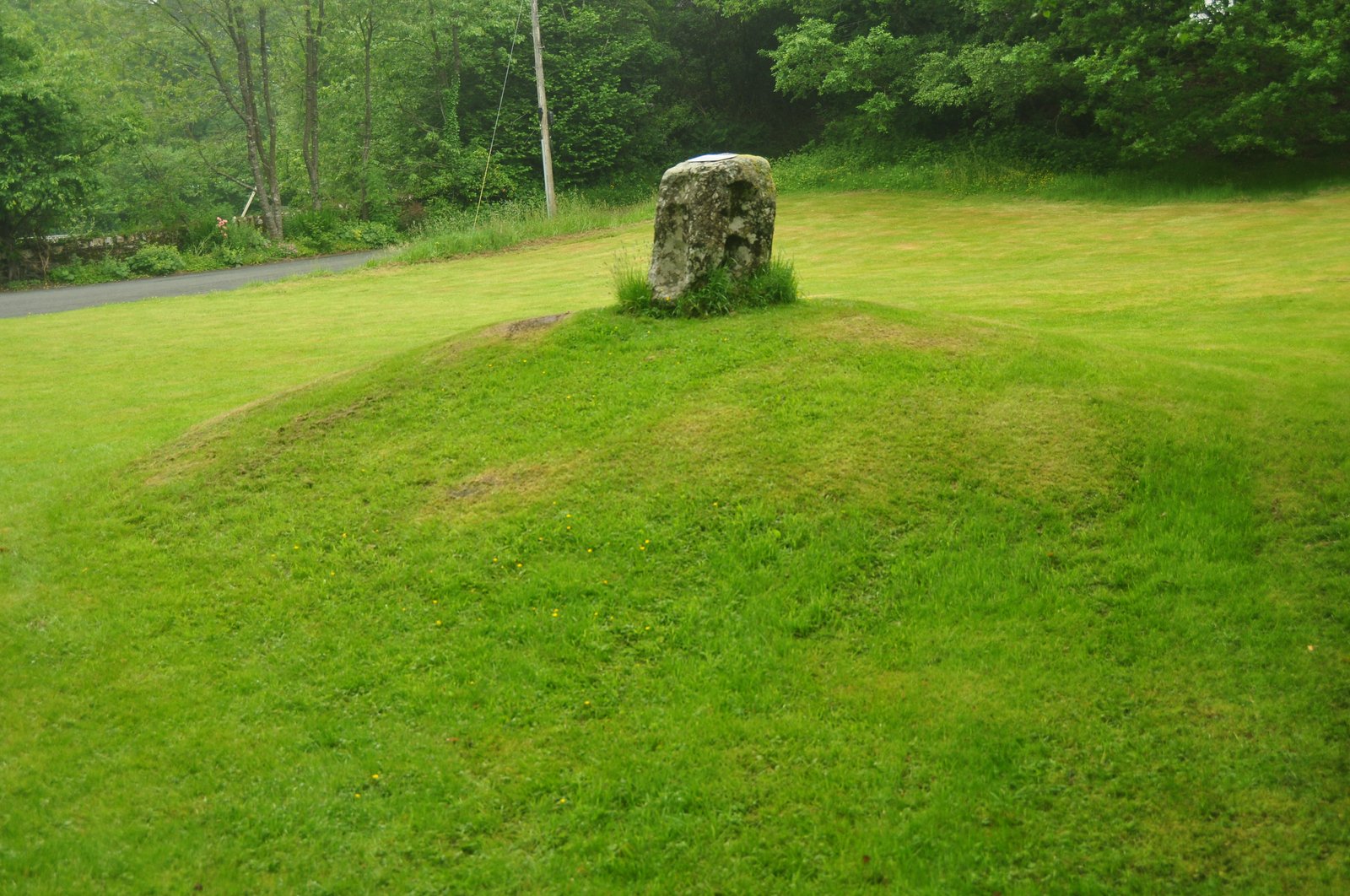
Archaeological evidence suggests gold extraction here may have begun even earlier than the Roman period, possibly as Bronze Age washing of gold-bearing gravels along the River Cothi, before the Romans' much larger-scale hushing and underground operation. Among the finds from the Roman period is the Carreg Pumsaint, a stone bearing a distinctive pattern of overlapping oval hollows thought to have been worn by a water-powered trip hammer crushing ore — among the earliest evidence anywhere for Roman use of water power to crush ore — sited near a washing cascade known as Melin-y-Milwyr. Cardiff University's School of Engineering held a lease on the underground workings from the mid-1970s to 2000, using them for mining-engineering field training while making them safe for public visits; the National Trust, which had first acquired the wider Dolaucothi estate in 1941 under a bequest that left a life interest to its last private owner, Major Herbert Lloyd-Johnes, became sole owner on his death in 1956, and Lampeter University (part of the University of Wales Trinity Saint David) is now closely involved in the site's ongoing archaeology.
Geology
Gold occurs in quartz veins along the Cothi Anticline, in bedrock around 438 million years old at the Ordovician–Silurian boundary; the richest deposit, the "Roman Lode" saddle reef, was the main target of the final 1935–38 working phase. The mining zone covers around half a square mile.
Geological setting: Anticlines and Synclines (well documented example), Placer Deposits (historical documentary reference), Veins and Lodes (well documented example)
Workings
Roman working combined opencast pits with underground tunnels, using aqueduct-fed water power for hushing (stripping topsoil) and ore washing. The 1909 shaft sunk by James Mitchell, reaching 480 ft, was the deepest working on the site; 1930s excavation uncovered surviving Roman wooden ladders, scaffolding and a water-drainage wheel.
Closure
Mining finally stopped in October 1938, and the mine's surface buildings were removed within the following two years, ending the site's long and repeatedly interrupted working history.
What remains
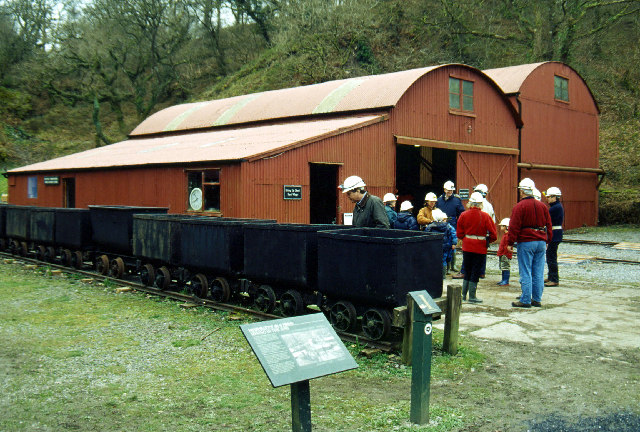
The mines are owned by the National Trust as part of the Dolaucothi Estate. Two guided underground tours are currently offered: the hour-long Victorian Tour, covering mining history from ancient times to the mine's final 1938 closure via the Mitchell Mine (steep, unhandrailed steps, so not step-free); and the shorter, level-access Level Tour, suited to visitors with limited mobility. Both require hard hats and lamps, which are provided. In the mine yard, visitors can also see 20th-century mining machinery and try gold panning.
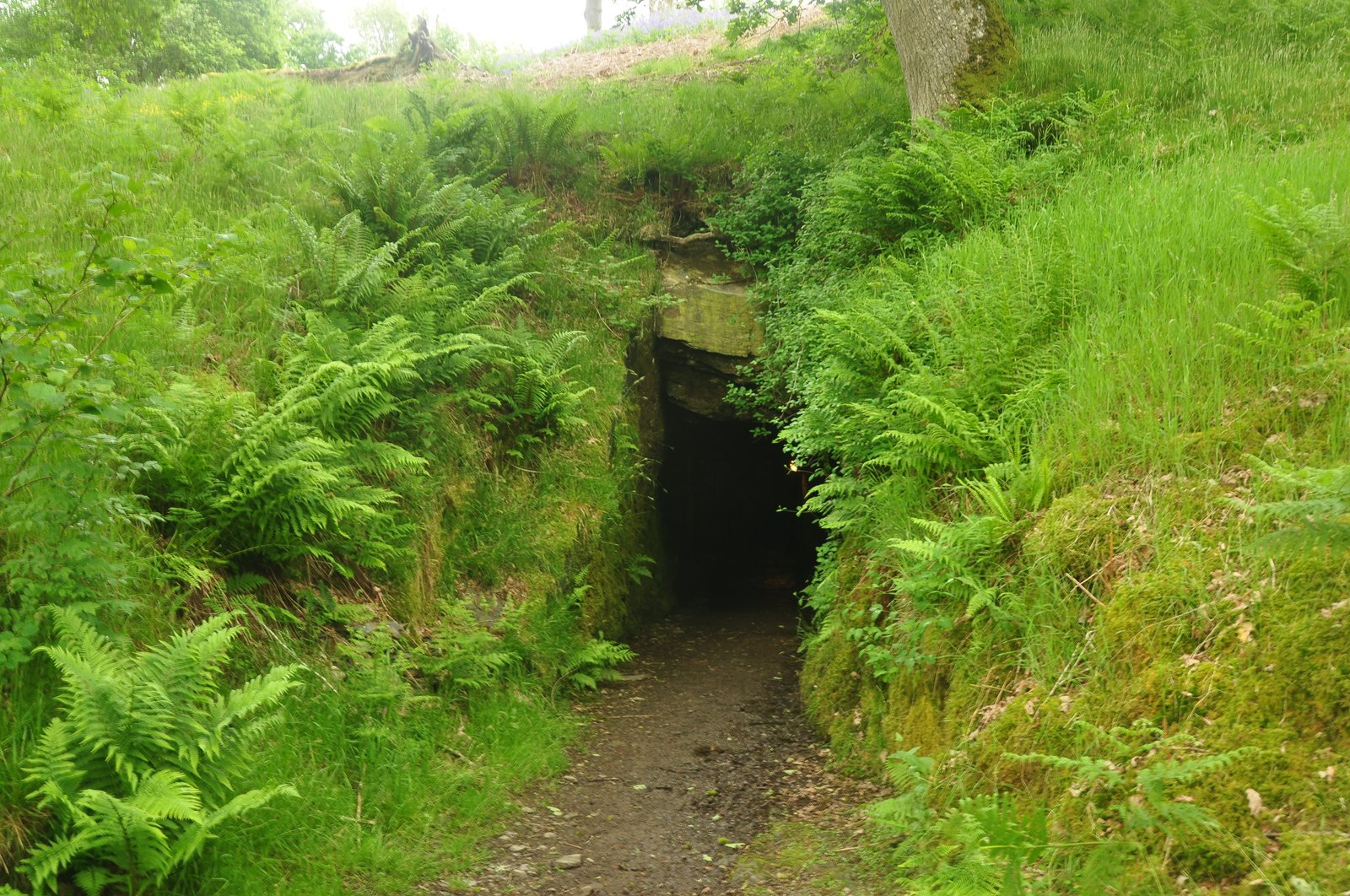
Surface and underground remains span the Roman and 20th-century working periods, including opencast pits, tunnel entrances, aqueduct routes and the 1909 shaft; the site is a Scheduled Ancient Monument.
Redevelopment
The site is managed by the National Trust as a visitor attraction, with a shop, exhibition and guided underground tours.
Related mines
- Prince Edward Gold Mine — Gold from Dolaucothi was combined with Prince Edward's into the bar used for royal rings.
Nearby mines
- Llanfair Lead and Silver Mine — 4.1 miles (6.6 km) N, Ceredigion
- Nantymwyn Mine — 8.1 miles (13.0 km) E
- Talar Wen Quarry — 8.7 miles (14.1 km) S
Straight-line distance, within 9 miles (15 km). Show on the map.
What's uncertain
Points where sources disagree or the record could not be settled; both accounts are kept. All open questions in the archive.
- A small quantity of gold from Dolaucothi was reportedly used in commemorative items for Prince George's 1934 wedding. (uncertain) 1
- Archaeological evidence suggests gold extraction at Dolaucothi may have begun as Bronze Age washing of gold-bearing gravels along the River Cothi, predating the Roman hushing and underground operation. (uncertain) 2
Recorded claims
Individual factual claims, each attached to the source(s) that support it below. Where sources disagree, both are kept.
- Dolaucothi is the only confirmed Roman gold mine in Britain. 1,2
- A small quantity of gold from Dolaucothi was reportedly used in commemorative items for Prince George's 1934 wedding. (uncertain) 1
- Excavation in the 1930s uncovered surviving Roman wooden ladders, scaffolding and a wooden water-drainage wheel in the old workings. 1
- Archaeological evidence suggests gold extraction at Dolaucothi may have begun as Bronze Age washing of gold-bearing gravels along the River Cothi, predating the Roman hushing and underground operation. (uncertain) 2
- The Carreg Pumsaint, a stone bearing overlapping oval hollows near the Melin-y-Milwyr washing cascade, is thought to have been worn by a water-powered trip hammer crushing ore, among the earliest evidence anywhere for Roman use of water power to crush ore. 2
- The Dolaucothi estate was bequeathed to the National Trust in 1941, subject to a life interest held by its last private owner, Major Herbert Lloyd-Johnes; the Trust became sole owner on his death in 1956. 3
- Cardiff University's School of Engineering held a lease on the underground workings from the mid-1970s to 2000, using them for mining-engineering field training while making them safe for public visits. 4
- The National Trust currently offers an hour-long Victorian Tour, covering mining history from ancient times to the 1938 closure via the Mitchell Mine, and a shorter, level-access Level Tour for visitors with limited mobility. 5
Photographs & further reading
The site's owner and manager, with visiting information and underground tour details.
View sourceFurther freely-licensed photographs of the Roman and later workings.
View sourceSources
- (secondary) History of Dolaucothi — National Trust
- (secondary) Dolaucothi Gold Mines — Wikipedia
- (secondary) Dolaucothi Estate — Wikipedia
- (secondary) University strikes Gold — Cardiff University
- (primary) Dolaucothi Guided Underground Tours — National Trust
Record created: 19 August 2026 · Last researched: 27 August 2026