 MineArchive
Cambokeels Mine
| Location | Weardale, between Eastgate and Westgate, County Durham — 54.7390, -2.1010 (approximate) |
|---|---|
| Commodities | Fluorspar, Lead |
| Type | Metal |
| Worked | 1868–1989 |
| Maximum depth | 340 metres (later fluorspar workings) |
| Operators | W. B. Lead Company (1868–1871), W. Hird and Co. (1905–?), Anglo-Austral Mines Ltd (1948–1960) |
Overview
Cambokeels, on the Slitt Vein between Eastgate and Westgate in Weardale, was worked twice a century apart — briefly and unsuccessfully for lead in the 1860s-70s, then, once fluorspar itself became valuable, as one of the most productive fluorite mines in the whole of the North Pennines.
History
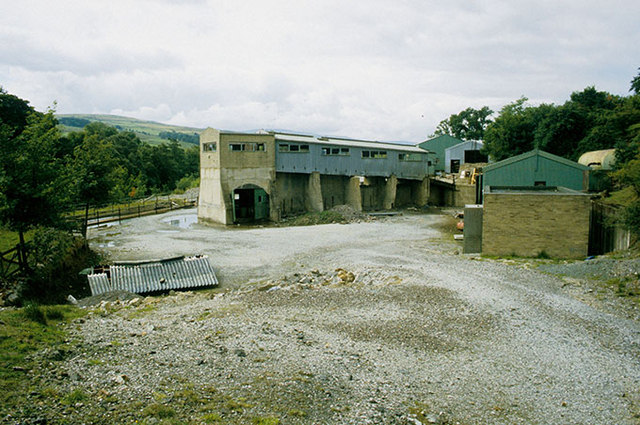
The Cambokeels section of the Slitt Vein was first worked by the Beaumont Company, who drove a level in from the banks of the River Wear between 1868 and 1871 to work it for lead; although the vein itself proved large, the lead values recovered were poor, and the mine was abandoned soon afterwards. W. Hird and Co. reopened Cambokeels in 1905, this time for fluorspar, later expanding into surface operations at the neighbouring Heights Pasture Mine; during the First World War the company built a self-acting incline, with three tracks and a passing loop, using German prisoners of war as labour. Anglo-Austral Mines Ltd operated the site from 1948 to around 1960, recovering some 26,128 tons of fluorspar alongside 1,203 tons of lead ore and 51 tons of zinc concentrate. A further reopening by Brown & Madison in 1969 made Cambokeels one of the most productive sources of fluorite in Weardale through the following decade, and later owners, including Swiss Aluminium UK and the Minworth Group, kept the mine working into the 1980s, with levels eventually reaching 340 metres. Cambokeels finally closed in 1989; the Minworth Group itself went bankrupt in 1991. Fluorspar mining continued at the neighbouring Frazer's Hush mine until 1999, when it too closed, ending commercial fluorspar production in Weardale altogether.
Geology
The mine worked the Cambokeels section of the Slitt Vein, part of the northern Pennine orefield's hydrothermal, non-magmatic mineralised system, yielding lead in its earlier working and fluorite in its later, more productive phase.
Geological setting: Hydrothermal Deposits (well documented example), Veins and Lodes (well documented example)
Workings
The mine was reached by a level driven in from the banks of the River Wear; a self-acting incline with three tracks and a passing loop, built during the First World War using German prisoner-of-war labour, served the surface workings, and underground levels eventually reached 340 metres by the mine's later years.
Closure
Cambokeels closed in 1989 and the Minworth Group, its last owner, went bankrupt in 1991; fluorspar mining continued at the neighbouring Frazer's Hush mine until 1999, when it too closed, ending commercial fluorspar production in Weardale altogether.
What remains
Mine buildings, an incline, a tippler shed and a powder house survive on the site.
Related mines
- Blackdene Mine — Weardale Minerals raised ore from both Blackdene's own workings and nearby Cambokeels before Blackdene's 1987 closure.
- Frazer's Hush Mine — Both were run by the same operators (Weardale Minerals, then the Minworth Group), which processed ore from both at a shared plant.
- Heights Pasture Mine — Both lie on the same stretch of Weardale between Eastgate and Westgate and both were tried for lead by the Beaumont Company before finding their real value in another mineral — Cambokeels in fluorspar, Heights in iron; Heights Pasture is named on the Cambokeels record.
Nearby mines
- Heights Pasture Mine — 0.8 miles (1.4 km) W
- Lady Annabella Mine — 1.0 miles (1.6 km) SE
- Stotsfield Burn Mine — 1.6 miles (2.6 km) N
- Brandon Walls Mine — 1.8 miles (2.8 km) NW
- Slitt Mine — 1.9 miles (3.1 km) W
Straight-line distance, within 9 miles (15 km). Show on the map.
Recorded claims
Individual factual claims, each attached to the source(s) that support it below. Where sources disagree, both are kept.
- Anglo-Austral Mines Ltd recovered around 26,128 tons of fluorspar, 1,203 tons of lead ore and 51 tons of zinc concentrate between 1948 and around 1960. 1
- The self-acting incline serving the surface workings was built during the First World War using German prisoner-of-war labour. 1
- Cambokeels closed in 1989; fluorspar mining continued at the neighbouring Frazer's Hush mine until 1999, ending commercial fluorspar production in Weardale. 1
Photographs & further reading
A January 2007 underground visit made when the drift had been abandoned little more than a decade, and a good deal was still in place. The find the author singles out is the ventilation fan, still standing in situ underground.
View sourceSources
- (secondary) Cambokeels Mine — Subterranea Britannica
- (primary) CAMBOKEELS mine plans — British Geological Survey / The Coal Authority (Mine Remediation Authority)
- (secondary) Cambokeels Mine, Westgate, Stanhope, County Durham — Mindat
Record created: 24 August 2026 · Last researched: 24 August 2026