 MineArchive
Blackdene Mine
| Location | Ireshopeburn, County Durham — 54.7456, -2.2050 (approximate) |
|---|---|
| Commodities | Fluorspar, Lead |
| Type | Mineral |
| Worked | By the early 15th century–1987 |
Overview
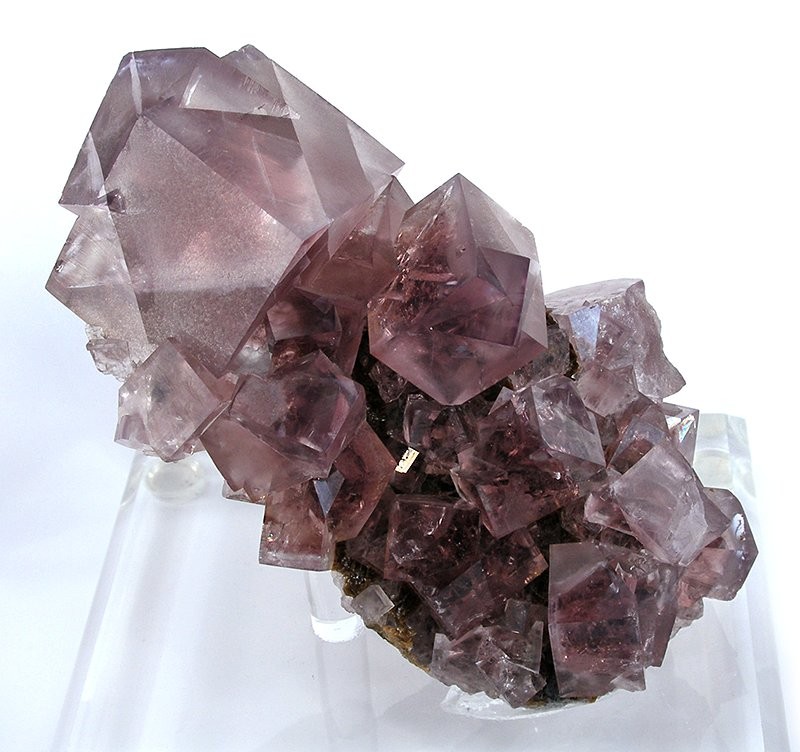
A lead and fluorspar mine at Ireshopeburn in Weardale, County Durham, worked on the Blackdene and Slitt veins from at least the early fifteenth century. Lead mining under the Beaumont/Blackett interest gave way in the twentieth century to fluorspar, and under a succession of owners — United Steel, then British Steel, then Weardale Mining and Processing — the mine remained one of the district's more productive fluorspar workings until its closure in 1987. It is a well-known source among mineral collectors of fine purple fluorite.
History
Workings at Blackdene are among the oldest recorded in the Weardale orefield, dating to at least the early fifteenth century, and the mine lies within the historic mineral leases granted to the Blackett family (later the Beaumont/Blackett or 'Beaumont Company' interest) that underpinned lead mining across Weardale from 1698 onward. As with the district generally, twentieth-century working shifted from lead toward fluorspar — once discarded as waste gangue in the lead veins, but increasingly valuable as a chemical and steelmaking raw material through the century. The mine, worked along the Blackdene and Slitt veins, passed through several owners: recorded as having been acquired by United Steel in 1949, later passing to British Steel following steel industry nationalisation, and disposed of when British Steel contracted in the early 1980s. Weardale Mining and Processing (part of the Weardale Minerals/Minworth group) went on to run a fluorspar washing, crushing and drying plant at Blackdene during the 1970s and 1980s, processing ore both from Blackdene's own workings and from other Weardale Minerals operations such as nearby Cambokeels Mine, before the mine finally closed in 1987. Blackdene is particularly well known among mineral collectors for distinctive semi-transparent purple fluorite cubes, often tinged honey-brown and up to around 6 cm across, frequently associated with bright modified galena crystals.
Geology
Lead and fluorspar on the Blackdene and Slitt veins of the Weardale orefield. Fluorspar was the gangue the lead miners discarded, and became the reason for working the same veins in the 20th century.
Workings
Worked along the Blackdene and Slitt veins; a related BGS/Mining Remediation Authority mine plan record also names the associated Lodgefield and Old Fall veins in the same immediate area, both separately recorded as small Weardale Lead Company workings.
Closure
Closed in 1987 under Weardale Mining and Processing, by which time the wider Weardale Minerals/Minworth group's fortunes were already declining; the group went into administration in the early 1990s.
What remains
No longer accessible; workings are understood to be flooded. The mine remains a well-known name among fluorite and galena specimen collectors, with material collected before closure held in mineral collections and museums.
Related mines
- Cambokeels Mine — Weardale Minerals raised ore from both Blackdene's own workings and nearby Cambokeels before Blackdene's 1987 closure.
Nearby mines
- Burtree Pasture Mine — 1.4 miles (2.3 km) NW
- Sedling Rake Mine — 1.4 miles (2.3 km) NW
- Greenlaws Mine — 1.8 miles (2.9 km) SE
- West Rigg Opencast — 1.9 miles (3.1 km) SE
- Slitt Mine — 2.3 miles (3.7 km) E
Straight-line distance, within 9 miles (15 km). Show on the map.
Recorded claims
Individual factual claims, each attached to the source(s) that support it below. Where sources disagree, both are kept.
- Workings at Blackdene are among the oldest in the Weardale orefield, dating to at least the early fifteenth century. 1
- Blackdene lies within the historic Weardale mineral leases first granted to the Blackett family in 1698, later worked by the Beaumont/Blackett interest and, from 1883, the Weardale Lead Company; the closely related Lodgefield and Old Fall Shaft workings nearby were separately worked by the same company (Lodgefield 1896-98 and 1925-26; Old Fall Shaft 1928-30). 2
- The BGS/Mining Remediation Authority mine plans catalogue holds a plan covering the Blackdene Vein together with the Lodgefield Vein and Old Fall Vein, sourced from the Geological Survey of Great Britain (Scotland). 3
- The mine was acquired by United Steel in 1949, later passed to British Steel on steel industry nationalisation, and was disposed of when British Steel contracted in 1982; Weardale Mining and Processing then operated the mine until its closure in 1987. 4
- Weardale Minerals built and ran a fluorspar washing, crushing and drying plant at Blackdene during the 1970s-80s, processing ore from Blackdene's own workings and from other group mines including nearby Cambokeels Mine, which the group acquired in August 1982. 5
- Blackdene Mine is well known among collectors for semi-transparent purple fluorite cubes, often tinged honey-brown, typically up to about 6 cm across and frequently associated with bright modified galena crystals. 1
Sources
- (observational) Galena on Fluorite — Blackdene Mine, England, UK — EarthWonders (mineral specimen dealer, with locality provenance)
- (secondary) BRITISH MINING No.5: Weardale — Northern Mine Research Society
- (primary) Mine plan: Blackdene Vein, Lodgefield Vein, Old Fall Vein, Durham (feature 19013) — Geological Survey of Great Britain (Scotland), via the BGS/Mining Remediation Authority mine plans catalogue
- (secondary) Blackdene Mine, Ireshopeburn, Stanhope, County Durham, England, UK — Mindat.org
- (secondary) Cambokeels Mine — Subterranea Britannica
Record created: 26 August 2026 · Last researched: 26 August 2026